






Dr Lim Siew Kuan, Senior Breast Consultant & Surgeon at Solis answers some questions on benign breast lumps, including the types, diagnoses and treatments.
Breast lumps refer to an area of swelling or firmness in the breast that feels different from the rest of the breast. They are the second most common breast symptom that patients present to GP clinics with breast pain being the first. Most lumps are benign (80%) and benign breast conditions affect around 8% of women.
As the breasts go through monthly hormonal cycles, the tissues change in response. Some women may be prone to ‘overgrowth’ of benign tissue, giving rise to the above-mentioned conditions.
In premenopausal women, their breasts go through cyclical hormonal changes. Breast lumps also tend to be familial and you may be more prone if your sister or mother has (had) the same condition.
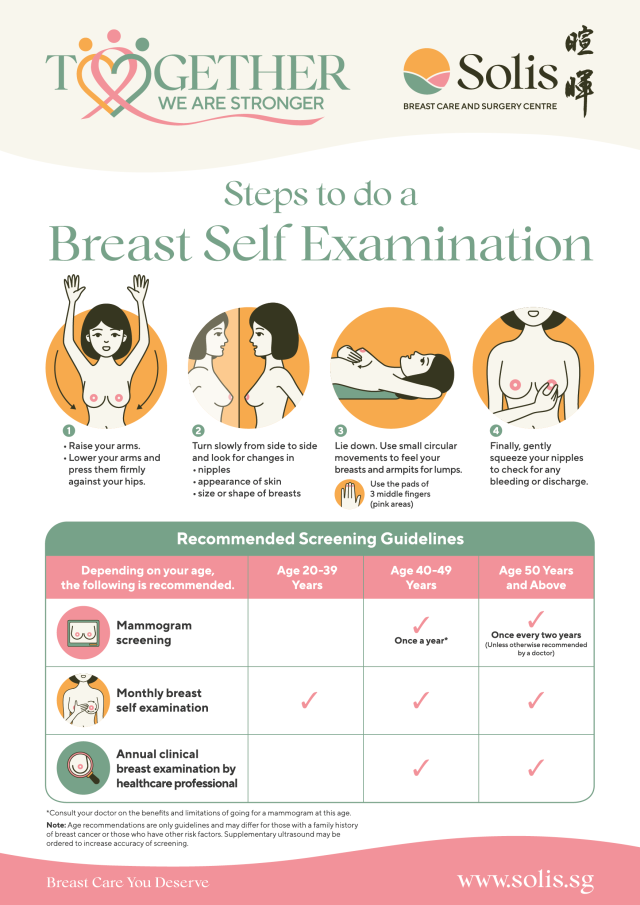
The diagnosis of breast lumps are done during clinical examination and imaging (ultrasound, with mammogram if > 40 years of age). If both clinical examination and imaging show any indeterminate features, a biopsy will be required for histological correlation.
Most benign breast lumps do not require any treatment. Treatment is required when the breast lumps cause pain or if the nature of the lump is uncertain (e.g. lump increasing in size or if it has concerning features on imaging).
Yes, as long as the cyclical hormonal changes are still happening, benign breast lumps can recur, either in same or different sites.
Article contributed and reviewed by Dr Lim Siew Kuan, Senior Consultant and Breast Surgeon at Solis Breast Care & Surgery