

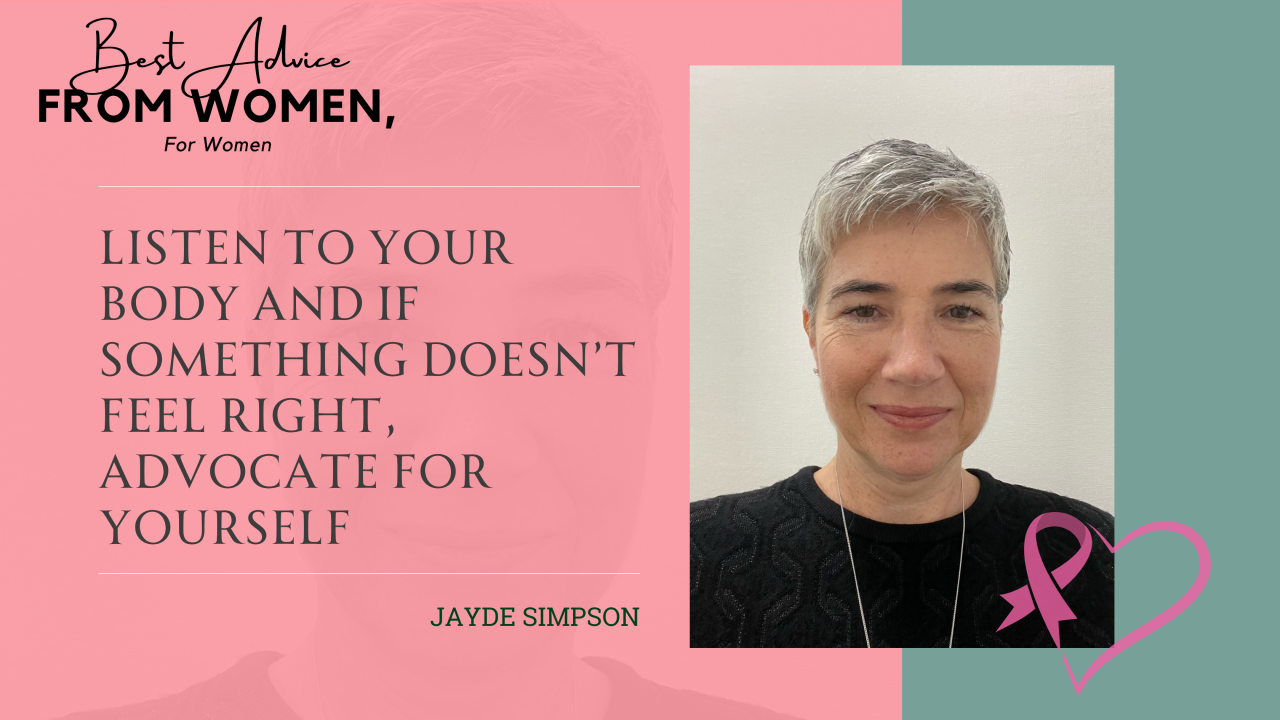
An Early Diagnosis of Cancer Leads to a Higher Chance of Treatment Success

In our new series, Best Advice from Women, for Women, Ms Jayde Simpson, an expatriate from the United Kingdom shares with us on finding out about her breast cancer diagnosis, coupled with the discovery of a high-risk gene. What kind of breast health issue did you face? I was diagnosed with Stage 2 Breast Cancer, which was ER+ PR- and HER2. How did you discover it? I felt a lump whilst on vacation that didn’t go away. Upon my return I scheduled an appointment with a breast specialist who performed an ultrasound. Within the week I had a mammogram, MRI and a PET scan which confirmed the suspicion. However, it wasn’t until a biopsy was conducted that it was confirmed as breast cancer. What was your biggest revelation after you were diagnosed? I did a gene test and discovered that I have a gene that makes my risk of breast cancer higher than the general population, although only a small number of cancers are hereditary.  Lifestyle and other factors influence an individual’s risk profile. What is one thing you wish you knew before you started treatment? Understanding the type of breast cancer (ER/PR/HER2 positive or negative) can lead to different recommendations on the type of treatment you should get.  I was upset when I had to get chemotherapy, believing what I had seen in the movies about the side effects from it.  However, I sailed through this.  A friend had recommended doing something nice around chemo and for me what stood out during my treatment was celebrating the end of each chemo with a lunch with a friend. My chemo duration had plenty of nice lunches and different friends supporting me throughout. What has the journey of dealing with or managing this issue been like for you? The absolute worst part was receiving the diagnosis as I did not truly believe this would happen to me and that all the tests would show this was a false alarm.  The biopsy I received confirmed this was not the case.  After that I did everything that I could to take a holistic integrative approach. I had a great breast surgeon and oncologist who partnered to give me the best medical treatment and tailored my treatment specific to me, e.g. my oncologist added a chemo that is shown to have more effect for people with the gene that I had, while my breast surgeon helped to add regular ultrasounds so we could measure the impact the chemo was having on reducing the tumour. This helped alleviate any anxiety on whether the treatment was working or not.  I focused on ensuring that I did everything at home that I could to help – diet, exercise and I worked with a naturopath to identify supplements that would help me through the treatment. After the chemo I had a double mastectomy with immediate reconstruction and whilst this was a challenging decision, I did everything I could to minimise any future risk.  I believe all of these things helped me to achieve a ‘pathological complete response’. The cancer diagnosis gave me the discipline I needed to prioritise me and ensure that I focused on a diet and exercise regime to best support my treatment. Despite the numerous rounds of chemo, I never once felt ill and felt stronger and fitter throughout.  I had the odd tired day and some other limited symptoms. However, the treatment was nowhere near as bad as I expected. Before this cropped up, what was your attitude toward breast health? Sadly, I had a close friend who passed away from Breast Cancer and so I was very much aware of the need to do regular self-exams.  The earlier you identify an issue, the more likely you have the chance of successfully dealing with it.  I was aware of how my breasts would change during my regular cycle and so managed to self-identify the lump early enough to have a very successful outcome. Did this journey change that attitude? It only strengthened it.  I am more in tune and aware of my body and if anything doesn’t feel right.  I take care to watch stress levels and not overreact and am focused on ensuring that I have balance in my life with adequate sleep, exercise, supplements and focusing on what I eat (80% of the time). What do you think women in general feel about breast health? Whilst I was aware of the importance, I think I still thought of myself as being invincible and that something would not happen to me.  I think women in general put other family members first and neglect to prioritise themselves.  These two things together can mean that they neglect breast health.  I also think sometimes people can feel embarrassed about seeking help or not wanting to expose themselves, or think “it’s probably nothing, I don’t want to bother anyone”. What are your thoughts when it comes to general awareness/education in this area? I hear of friends who tell me they don’t really know how to do a self-exam, or they skipped the last mammogram because they had to do something else and forgot to reschedule.  I think they are missing the 2 most important factors here:  1. prevention is always better than cure (focusing on healthy lifestyle can reduce your risk) 2. the earlier you catch these things, the better your outcome.  Whilst it’s rare, the tumour I had was not present on a mammogram but could be seen on the ultrasound, MRI and PET scan.  My advice would be to listen to your body and if something doesn’t feel right, advocate for yourself and seek a referral to a breast specialist who can help allay any fears or help ensure you get treatment early. What advice would you give women about breast health? The risk is too high so early identification will give you more chance of success.  Previously I did not prioritise myself, making excuses that I needed to attend to work, husband, children and that I had limited time.  I now consider that prioritising my health means I will be around longer to enjoy time with my family.  Ensuring I take steps to monitor my health and raising any concerns to my doctor means I’m around longer to enjoy my family.  The earlier you detect something the more chance of success you have.  Everyone I met throughout my journey was empathetic, caring, listened to me and addressed any concerns; the only downside is not acting early.

Read more

How to Regain Confidence Post-Mastectomy: 4 Tips for Breast Cancer Patients

For many women, breasts symbolise femininity and attractiveness, and a mastectomy, which is the surgical removal of one or both breasts, can significantly impact a woman’s self-confidence and body image. The scars left by the breast surgery and the physical changes that result from a mastectomy can make it difficult for women to feel comfortable in their new skin. Common struggles for women after losing a breast include feeling less “feminine” or worrying that they will be less attractive to their partner. Coping with a mastectomy’s emotional and physical aftermath can be a difficult journey. Women need access to support and resources to help them navigate this challenging experience. Impact of Mastectomy on Self-Image The patient’s perception of her new body image is amongst the psychosocial effects that emerge due to mastectomy. In the Body Image of Women with Breast Cancer After Mastectomy: A Qualitative Research, published in J Breast Health,  [1] many women spoke about the negative impact of an altered appearance on their body image. After a mastectomy, many women described what they saw as a “wretched, horrible, scary, ugly, crooked, collapsed body shape.” But the most commonly used description of their appearance was that they looked incomplete because they did not have their breast(s). Finding Emotional Support Post-Surgery Beyond physical changes, an experience with breast cancer can also affect a woman’s mental well-being. While loved ones want to be there for her, it is sometimes hard to have tough conversations with those she is closest to. Finding a like-minded community is essential so the patient can talk openly about her experiences, ask for help, and know that she isn’t alone. Club Solis provides breast cancer patients with a support network in their journey against breast cancer. Through Club’s Solis befriender programme and hearing stories from patients who have undergone breast cancer, women can find reassurance and courage to take charge of their breast health.  Club Solis also provides rehabilitation and nutrition advice for women who have breast cancer. How to boost self-esteem after mastectomy Rather than dwelling on self-blame or despair, use the opportunity to explore and redefine one’s identity after overcoming breast cancer. The experience may have uncovered hidden areas of resilience [2] previously unknown to the patient. A woman who has undergone mastectomy may have also developed a newfound appreciation for different new hobbies or gained a fresh perspective on her personal values and beliefs. In addition, revisiting priorities and aspirations can help a woman recovering from a mastectomy to set new realistic goals, and her support network or breast cancer physician can assist her in identifying achievable objectives. By pinpointing the societal messages and beauty norms that she has internalised from the media and other external sources, the patient can actively choose new standards that align with her values and priorities. It is also crucial for a woman who has undergone mastectomy to give herself the space and time to prioritise self-care over the persistent pressure to perform acts of kindness for others constantly. In doing so, the patient can shift her focus towards cultivating personal fulfilment and contentment How to address physical changes after mastectomy/ Shopping for clothes after mastectomy If the patient foregoes reconstructive surgery after mastectomy, she’ll find that many of her old clothes no longer fit her new body. Instead of despairing, use this opportunity to shop for new clothes and try out different clothing styles. Wearing the proper clothing during her recovery may also help prevent the irritation of areas that may still be tender. The patient doesn’t have to sacrifice style for comfort, either. There are many suitable outfits that the woman can wear that are chic yet casual and, most importantly, comfortable. In addition, post-cancer care partners like Can-Care offers a wide range of personalised care products for breast cancer patients, including mastectomy bra, mastectomy camisole and mastectomy swimwear. When shopping for post-mastectomy shirts, go for a gentle fabric on the skin to prevent chafing and irritation. Cotton is a good choice because it’s lightweight, soft, and allows air to flow freely. Also, consider a roomy button-up or flowy dress and skirt for a stylish look. How to move forward after mastectomy Engage in physical activity After undergoing a mastectomy or breast reconstruction surgery, it’s important to prioritise rest and physical activity. Gentle stretching, arm circles, seated side bends, and shoulder rolls are some exercises that the patient can perform in the week after surgery. During the initial recovery period, walking is a great activity to include in the patient’s routine until her breast cancer specialist gives her the okay to engage in more intense cardiovascular exercise. By starting with low-impact movement like walking, the patient can gradually build up her strength and endurance while minimising the risk of injury. When exercising in the weeks after her mastectomy or breast reconstruction surgery, it’s normal for the patient to experience some tightness in her chest and armpit, but this should decrease as she does her exercises over time, according to the American Cancer Society. Focus on good nutritious food To combat fatigue and nausea, incorporating delicious and energising food into the patient’s diet can significantly enhance her overall well-being. Breast cancer-fighting food, such as phytonutrients, is found in plant-based foods, including fruits, vegetables, beans and grains. These include dark yellow/orange/green vegetables and fruits, cruciferous vegetables, garlic, soybeans, green tea and broccoli.[4] By adopting a positive mindset, focusing on self-care and seeking support, a breast cancer patient can regain her confidence and move forward with a sense of purpose and resilience. It’s important to remember that everyone’s journey is unique, and there is no “right” way to cope with the challenges of breast cancer. Through exploring new hobbies, redefining one’s identity and cultivating a support network, a breast cancer patient can emerge from the experience with newfound strength and appreciation for life’s precious moments. [1] J Breast Health, Body Image of Women with Breast Cancer After Mastectomy: A Qualitative Research [2] Sunnybrook Health Sciences Centre, Body image and breast cancer: a resource for women [3] Healthline, Exercise After Mastectomy and Breast Reconstruction: What You Need To Know [4] Cleveland Clinic, The Best Foods To Eat When You Have Breast Cancer
Read more