
The Role of a Pathologist in Breast Cancer Diagnosis

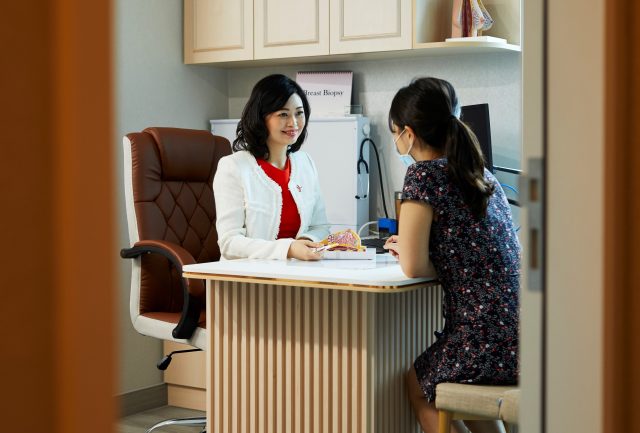
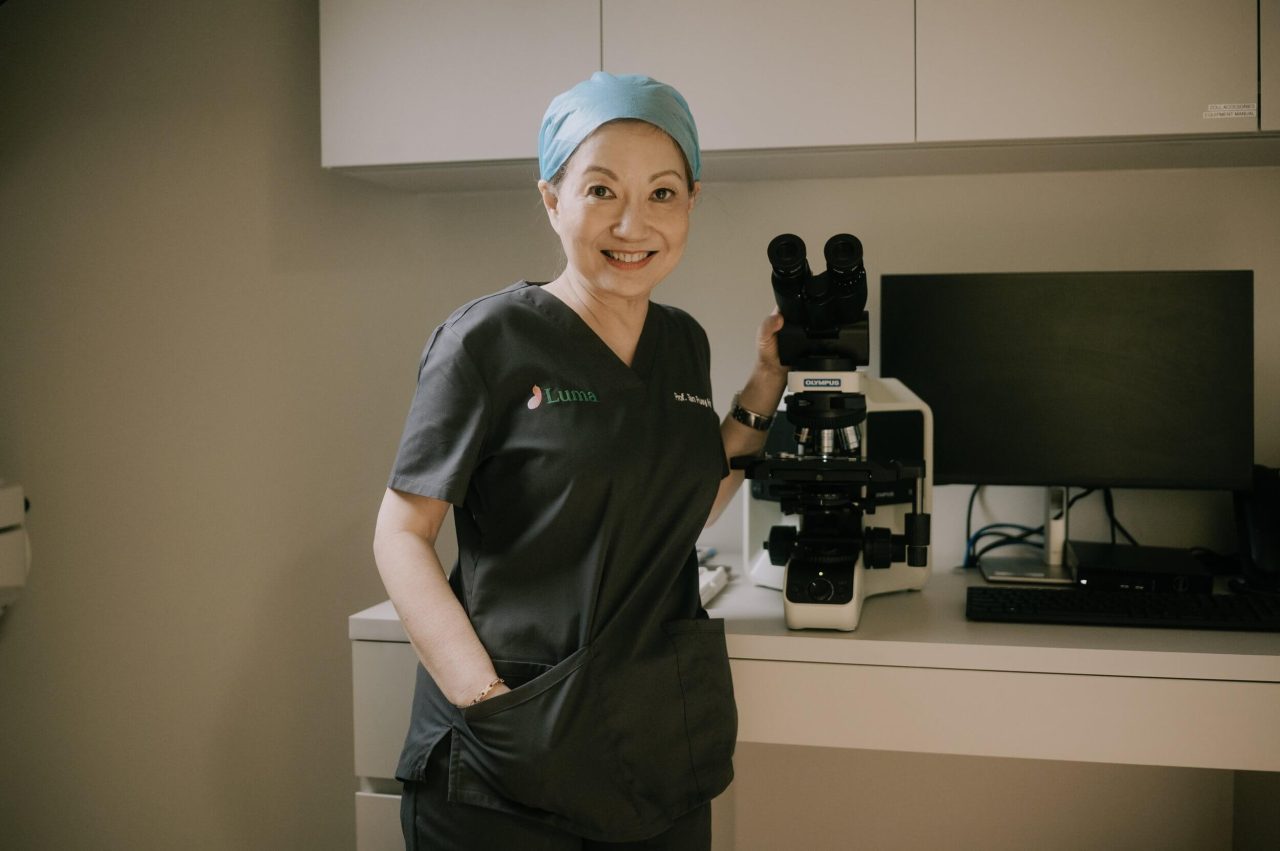
Early detection and diagnosis of breast cancer can provide patients with more treatment options and a better chance of survival. Pathology and radiology are essential to making a diagnosis of cancer. As such, close clinical-radiologic-pathologic workflow is crucial for the delivery of timely interventions for patients which can result in better clinical outcomes. When a biopsy is performed on your breast, a sample is taken and studied under a microscope by a pathologist. The pathologist is a medical doctor who makes the diagnosis of the disease by examining the sample. A pathology report generated will state the findings and diagnosis for each sample taken. This information will be sent to the doctor who will use the information to manage your care and come up with a treatment plan. The role of a pathologist is central to ensuring the correct treatment and prognosis for each patient. Pathology reporting, including for breast cancer and breast diseases, has become increasingly subspecialised, often requiring subspecialty experience for diagnosis. Consistent reporting by a pathologist with subspecialist breast pathology experience helps to support the breast surgical and radiological expertise provided to patients and any abnormalities would be picked up promptly. We are delighted to welcome Professor Tan Puay Hoon to our team of breast care specialists. As a key opinion leader in breast and urologic pathology, Prof Tan is a pathologist with subspecialist breast pathology experience. Being a passionate researcher, Prof Tan has published widely with over 500 peer-reviewed scientific papers. She is a Standing Editorial Board Member for the 5th series of the WHO Classification of Tumours, IARC, Lyon, and is also an expert member for the Breast (2019) and Genitourinary (2022) volumes in this latest series. Prof Tan initiated a well-received annual breast pathology course drawing participants from the region and internationally since 2010. She is dedicated to diagnostic, research and educational excellence in breast and urological pathology, and is a strong advocate for building support for academic pursuits in these disciplines that can be translated to improving patient care. Solis Breast Care and Surgery Centre (Solis), together with Luma, provides dedicated breast care to patients, where a dynamic team of female breast surgeons, breast radiologists and an in-house pathologist, adopt a multidisciplinary approach. The expertise of the team is able to provide integrated, coherent interpretations that would enable better-informed management decisions in a timely manner. Early detection of breast cancer often means that the patient will have more treatment options that are much less aggressive, and maintain positive treatment outcomes. Ultimately, early detection is always best, and an in-house pathologist at Solis-Luma, contributes diagnostic subspecialty expertise to breast diseases management. Here to bring breast care to another level, Solis-Luma is dedicated to improve breast cancer clinical outcomes, expedite diagnosis and treatment planning, and ensuring that patients receive the utmost care they deserve. To read more about Prof Tan’s research interests and involvement, click here.
Read more

Breast Care Nurses: Providing Hope and Light in Times of Need

With breast care nursing, it is a varied role which can range from breast care awareness for people without breast cancer, to assisting those with a breast cancer diagnosis, and helping patients going through surgery and therapy. We talked to two of our nurses, Sister Kiranjit Kaur and Sister Eleanor Wong to find out more on how they have been going above and beyond to touch lives and transform care in each of their nursing role. Nurses can be seen as serving on the frontlines of healthcare, they are the ones who spend more time with the patients with their round-the-clock presence and are often the first to notice when a patient’s condition has changed. As caregivers, nurses are responsible for attending to the various needs of patients, including giving medications, assessing different body systems, changing dressings, caring for wounds, providing education to patients, etc.  From providing medical care, to tending to the administrative side of things, nurses are often the patient’s first point of contact when it comes to all of these. And because of the amount of time spent with patients, it is often inevitable that nurses also tend to end up performing more emotional labour. Image Reference: Sister Kiranjit Kaur, Nurse Manager, Operating Theatre is ready to start her busy and fruitful day Nevertheless, passionate nurses still choose to stand strong in their career decisions, promising to serve the best interests of their patients. One of Solis’s nurses, Sister Kiranjit Kaur, Nurse Manager of the Operating Theatre (OT) at Solis didn’t chose to be a nurse at the beginning of her career. She merely followed in her sister’s footsteps. Now, Sister Kiran doesn’t see herself as anything, but a nurse that choose to dedicate herself to the care of others. With over 20 years of nursing experience, Sister Kiran shared one of the heart wrenching stories she remembered to date which happened during her student nursing days. It was a 20-years-old patient who was diagnosed with thalassemia major and the team have been looking after her for a month. When she reported to work one day, she was shocked to learn that the patient wasn’t with them anymore. The nurses then chose to perform the last office together signifying a remembrance for the patient. Being a nurse requires one to have a lot of empathy to care for their patients, yet one also needs to maintain professionalism in order to provide patients with the best end-of-life care. Dealing with death is emotionally difficult, and nurses have to manage their own emotional well-being while also helping the patient’s family deal with the grief. Aside from that, nurses also play an important role in a clinic and/or hospital to ensure a smoother process for the doctors, be it during a patient’s consultation or in a surgical procedure. When a patient is discharged from a facility, there is often some type of care that needs to be done at home. It is the nurse’s responsibility to educate the patient and their family members on proper at-home care, diagnoses or medications. Education helps the patients understand what is happening, why it is happening, and what the patient needs to do in order to heal. Image Reference: After a busy day, Sister Kiran settles down and checks on next day’s schedule to ensure that everything are well planned out for her team and the breast surgeons As Sister Kiran says, “You know you’re a nurse when your friends and family start asking you about the medications they would have to be eating!” Sister Kiran also spends most of her hours ensuring that everyone in the OT coordinates well as a team to provide a safe and conducive environment to the patient and surgeons. When it comes to breast care, many women have a fear of having their breast health checked out or, if necessary, having to go through a breast surgery advised by their doctor. For Sister Kiran, she would share about her own experience doing a breast mammogram, and how it was a painless and easy process. She believes that early detection is always the best, and hence wants to encourage women not to be afraid of getting a breast health check. Image Reference: Sister Eleanor Wong, Breast Care Nursing Lead shares that care and empathy are important traits of being a breast care nurse For Sister Eleanor Wong (Breast Care Nursing Lead), she chose to become a breast post-care nurse after working in a surgical ward during her early career days. Although Sister Wong started as a dental assistant prior to taking up the stint in nursing, she eventually chose the line of becoming a nurse. Sister Wong doesn’t like sitting behind a desk and prefers to be ‘on the ball’ being a hands-on person. She took up a specialized training in oncology nursing, and then took an interest in helping patients diagnosed with breast cancer. As someone who provides post-care services to Solis’s post-treatment patients, she shows her concern and care in assisting them in whatever way she can, through educational information and even to emotional support. For women who have a fear when they find out that they would have to wear post-op garments or mastectomy bra/wigs post-surgery, Sister Wong would let these breast cancer survivors understand the reason for them. She also encourages and empowers them to give themselves time to digest the knowledge and acceptance of the need. Image Reference: Sr. Wong is ready to start her busy and fruitful day Sister Wong’s message to the nurses and their patients is to “Be happy, love, laugh, and relax when you can. The happiest people don’t have the best of everything. They just make the best of everything they have.” Nursing truly goes beyond just the medical assistance offered, there is also a lot of heart and care that goes into the job. As such, let us not forget to recognise and appreciate the hard work of our nurses this Nurses’ Day. At the same time, let us also not forget to get our breast health checked out for our own wellbeing. As Sister Kiran mentioned, early detection is always the best. Here’s wishing all nurses a Happy Nurses Day – Thank you for dedicating your life to helping others! Article contributed and reviewed by Solis Breast Care and Surgery Centre.
Read more

Getting to Know Dr Lim Siew Kuan

Get up close with our breast specialists and hear more from them on their philosophy for patient care and interesting personal anecdotes. “Doing a biopsy on a cancerous breast lump helps in diagnosis and planning of the subsequent treatment, and does not cause the cancer to spread. A biopsy also will not cause a benign lump to change into cancer. This is something important that I wish to address and help more women to understand, and that there is nothing to be fearful of if a biopsy procedure has been advised.” Dr Lim Siew Kuan is one of our Senior Consultant and Breast Surgeons at Solis. She has a special interest in breast surgery and manages both benign and malignant breast conditions. Prior to joining Solis, Dr Lim was practicing at Mount Elizabeth Novena Specialist Centre, Singapore. Dr Lim recently received her Graduate Diploma in Acupuncture in 2021 and became a registered acupuncturist with the Traditional Chinese Medicine Practitioners Board. Being schooled in the TCM theory and diagnostics, she is able to see both Western and Eastern perspectives in patient treatment and hopes to use acupuncture as a complement to improve the general well-being of her patients. Q. Why did you choose to become a breast surgeon? I like general surgery as a whole. However, breast surgery is a specialty that tugs my heartstrings and makes me feel having the connection with the women community. Majority of women still prefer to see a female breast specialist when they experience any breast health issues. As a woman myself, I can relate and understand a woman’s life better and they play many roles – they are a daughter, a wife and a mother. Modern women now have busy lifestyles and spend more time caring for their loved ones and even their extended family but often neglect their own health (e.g. breast health) Q. Share with us a patient’s story that left a deep impression on you Many patients have left deep impressions on me, each with their unique life stories. But if I were to mention any, it would be a recent middle-aged lady who presented with locally advanced Stage 4 breast cancer. She had noted the breast tumour for several years, but was afraid to undergo treatment. By the time she came to me, she required ICU admission with ventilatory support, and was already in multi-organ failure. Yet, the tumour biopsy showed a breast cancer type that would have responded very well to treatment, had she come in earlier. It is really sad to see such cases in Singapore. We are a medical hub, with all the advanced cancer treatments readily available in both our private and restructured hospitals. Most breast cancers are curable if detected early. I think more can be done to allay the fear and anxieties of these patients. Q. What is ONE myth or message that you would like women to know about breast cancer? Many patients have come up to me with this deep-rooted myth in mind. They have the misconception that doing a biopsy will cause a cancer to spread or cause a benign lump to become ‘more aggressive’ or cancerous. Doing a biopsy on a cancerous breast lump helps in diagnosis and planning of the subsequent treatment and does not cause the cancer to spread. A biopsy also will not cause a benign lump to change into cancer. This is something important that I wish to address and help more women to understand, and that there is nothing to be fearful of if a biopsy procedure has been advised. Q. What do you do during your free time? Other than catching up on the latest developments on breast cancer, I will also take time to read up on TCM since I have a keen interest in this as the “Eastern” alternative medicine. Keeping an open mind has allowed me to see and understand the wisdom that lies in the Chinese culture. I take this reading as sort of a hobby now. I practise Tai-ji outdoors during the weekend. It helps me relax and unwind my mind. I will also join my friends for golf whenever I need extra dose of fresh air. Q. What do you think you would be doing if you didn’t become a breast surgeon? I like working with my hands, so I guess it would still be something that allows me to use my hands skilfully. Who knows, I could otherwise have become a dentist or a potter! Article contributed and reviewed by Dr Lim Siew Kuan, Senior Consultant and Breast Surgeon at Solis Breast Care & Surgery
Read more