

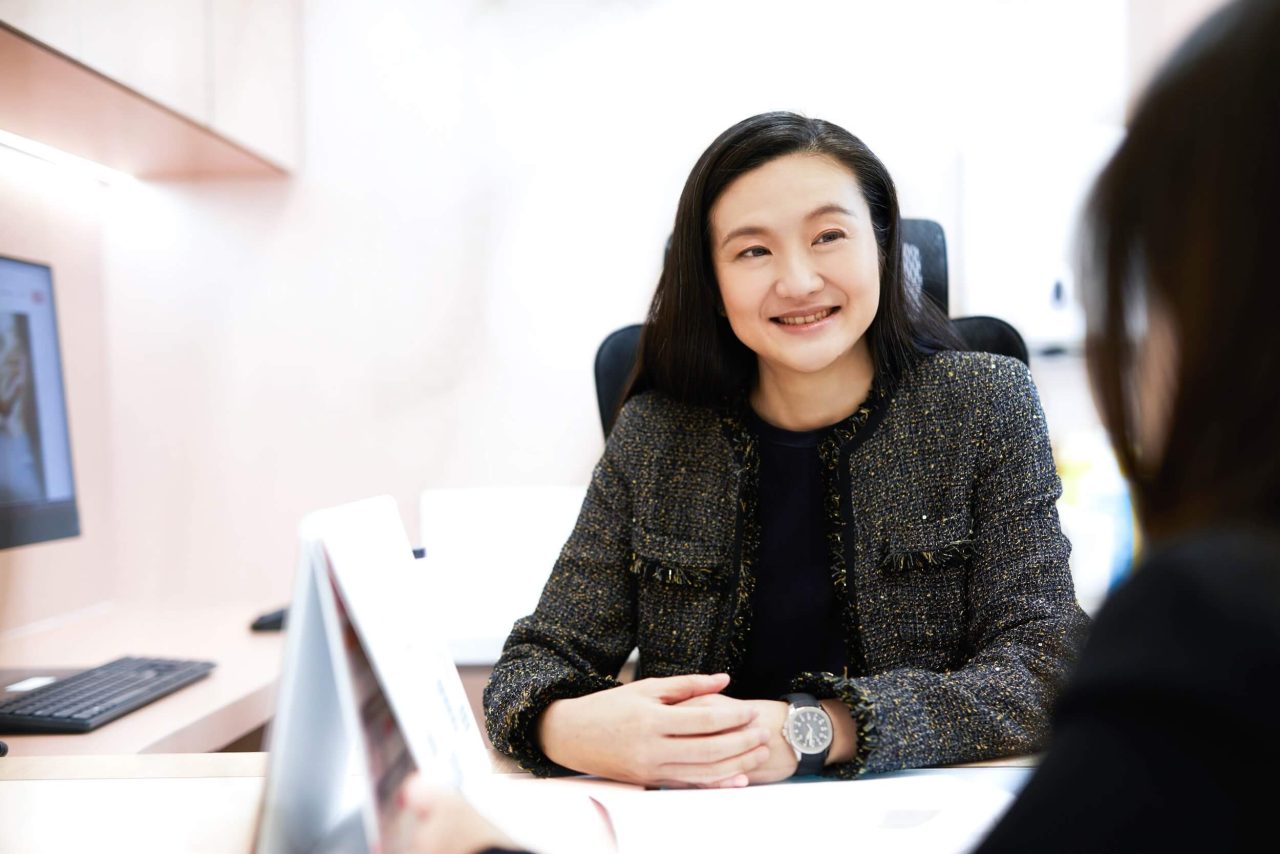
Getting to Know Dr Chan Ching Wan

Get up close with our breast specialists and hear more from them on their philosophy for patient care and interesting personal anecdotes. "Breast cancer is NOT painful. It is a lump that is painless most of the time. The number of times I have heard “I felt a lump, but it wasn’t painful so I didn’t think it was dangerous” Please come forward when you feel any lump, whether it is painful and especially if it isn’t painful." Dr Chan Ching Wan is our Senior Consultant and Breast Surgeon and has a special interest in the formation of cancer, and how it can be inhibited and treated. Dr Chan is also an Assistant Professor at Yong Loo Lin School of Medicine, NUS, since 2009. Prior to joining Solis, she was the Cluster Sub-specialty Lead for Breast Services in Singapore’s National University Health System. Dr Chan was also the Tumour Programme Lead for Breast Oncology for National Cancer Institute Singapore. Q. Why did you choose to become a breast surgeon? I didn’t really choose to become a breast surgeon – it was almost as though I was guided to eventually take this path. Before I started my advanced training, I was offered the chance to take up a research degree (MSc, which then became a PhD) and the topic was on the growth of breast cancer cells. To cut a long story short, I enjoyed the research which piqued my interest in breast surgery. After I completed my surgical training, oncoplastic surgery was just starting to flourish and my head of service had a good friend who was at the forefront of this new surgical method. I was able to get a job to train with him, and the rest is history Q. Share with us a patient’s story that left a deep impression on you There are so many, and people don’t know that I can’t just mention one (laughs). I remember the mum, and her husband, who had already used up their Medisave accounts to treat their sons’ chronic medical conditions, without avail only to find out that she now had breast cancer. Fortunately, we were able to save her. Then there is the grandmother who was looking after her three young grandchildren and suffered from bilateral breast cancer. She survived both well, and her grandchildren are all grown up now and looking after her. There was also this young lady who discovered she had breast cancer just before she got married. She delayed her marriage and underwent treatment, and things looked good for a while, but she relapsed and it started to spread. Just then, when we knew we were unlikely to win, her fiancé who had been with her all the way asked her to marry him, and she did. She passed on shortly after that. There are many more, but I will stop here. Q. What is ONE myth or message that you would like women to know about breast cancer? Breast cancer is NOT painful. It is a lump that is painless most of the time. The number of times I have heard “I felt a lump, but it wasn’t painful so I didn’t think it was dangerous” Please come forward when you feel any lump, whether it is painful and especially if it isn’t painful. Like the common saying – early detection saves lives and have a breast screening done for a peace of mind. Q. What do you do during your free time? Whenever I have free time, I will try to keep myself in a relax mode – like “relaxing” my mind and try not to think about work. I will take this time to pick a book and read it, listen to music or watch my favourite TV shows. Q. What do you think you will be doing if you didn’t become a breast surgeon? I cannot imagine any other surgery that gives me quite so much satisfaction and is so challenging and yet rewarding to do. I may have considered plastic surgery, but I may have switched career tracks and become an anaesthetist too! Article contributed and reviewed by Dr Chan Ching Wan, Senior Consultant and Breast Surgeon at Solis Breast Care & Surgery

Read more

Restoring Confidence Through Breast Reconstruction

Depending on the degree to which breast cancer has developed, a mastectomy (breast removal surgery) may be necessary to remove all traces of breast cancer. The result, however, is one many women would prefer to avoid. Dr Chan Ching Wan, our Senior Consultant and Breast Surgeon shares how breast reconstruction can help restore the cosmetic appearance of the breast and elaborates on the types of breast reconstruction and what to expect in the short and long term. Breast reconstruction surgery entails the use of tissue flaps taken from other parts of the body, such as the tummy and thighs, or the use of breast implants to restore the symmetry of the breasts. Generally, patients who have had a significant amount of tissue removed during breast surgery, are prime candidates for breast reconstruction. The best cosmetic results are achieved when breast reconstruction is conducted in the same sitting as cancer surgery. When done together with the cancer surgery, much, if not all, of the breast skin, including the nipple-areolar complex can be preserved, which enhances the appearance of the reconstructed breast. Immediate breast reconstruction is usually possible, however there are certain situations when it is not advisable and then a delayed procedure would have to be planned. Some patients do require radiotherapy which may cause the reconstructed breast to either lose volume, change colour, texture or appearance. If reconstruction needs to be delayed, it can still be scheduled months to years later. Types of Breast Reconstruction Modern advancements have spawned a variety of breast reconstruction techniques. The type employed will depend on personal preferences, the amount of breast tissue removed, and the shape and size of the breast. There are two main techniques used to reconstruct the breast: implant reconstruction and autologous or ‘flap’ reconstruction. Implant reconstruction involves the use of a breast implant filled with saline, silicon gel or a combination of the two inserted in the breast. Meanwhile, flap reconstructions involve the use of tissue taken from other parts of the body, such as the belly or thigh, to create a new breast. It’s also worth noting that in certain situations, implant and flap reconstruction are used together. Additionally, with both techniques, it is possible to reconstruct the nipple, especially in situations where immediate reconstruction is not an option. Nipple sparing mastectomy, where the nipple and the skin surrounding it is preserved, is performed only if there is immediate reconstruction. Depending on your condition, your breast specialist will provide you with all the information necessary to make the best decision. Breast Reconstruction Risks As with any surgery, breast reconstruction comes with certain risks. Infection may set in from having a foreign body (implants) introduced into the body. This can be treated with antibiotics; however, if the infection increases in severity, the implant may need to be removed. Furthermore, there’s always a risk (very small) of implants leaking or causing the surrounding tissues to harden (scarring also known as capsular contracture), making the reconstructed breast hard and/or lumpy to the touch. Stiffness and tightness around the chest and shoulder is common but can be addressed with early ambulation and physiotherapy. When reconstruction is done using a flap, the blood supply may sometimes not be sufficient to keep the flap alive resulting in flap failure. A re-operation may be necessary to replace the flap with another flap or implant. Fortunately, this does not happen very often at all. Oncoplastic Surgery Oncoplastic surgery differs slightly from breast reconstruction, in that plastic surgical techniques are used to restore the shape of the breast after a lumpectomy (partial breast removal). The removal of the cancer and the restoration of the breast shape is done in one operation. Occasionally, the unaffected breast will be surgically altered to be more uniform with recently treated breast. How Reconstructed Breasts Evolve with Time and Age Most implants can be used for 10 – 15 years before needing replacement. The general shape of the breasts will not change and evolve with time or with weight gain and weight loss as natural breasts would. In addition, there’s always a risk that implants will leak or rupture. Breasts reconstructed with autologous flaps, however, can change with weight loss, weight gain and ageing, and hence are the better option for longevity. Road to Recovery For several days after breast reconstruction surgery, you will experience some soreness and fatigue. You should expect 5 – 7 days in hospital recovering. In the next 6 – 8 weeks, sports and other similar intensive activities should be avoided. Generally, most patients will resume normal activity after 2 – 3 months. Bruising and swelling will take up to 8 weeks to go away, and the reconstructed breast will look and feel different from a normal breast. It will feel numb, but that feeling will gradually improve over time (this may take a few years). However, there will always be some loss of sensation for all patients. Depression and anxiety may happen during recovery. It helps to seek support from your doctor, friends and family, as well as support groups. It will take 1 – 2 years for the scars to fade and tissues to heal. But fade they will – although not completely – and in time, survivors can and will feel normal and whole again. With modern surgical techniques, the benefits of plastic surgery can alleviate the negative impact of a mastectomy. Reach out to us to learn what options exist for your present needs, our breast specialists stand ready to be there with you each step of the way. Article contributed and reviewed by Dr Chan Ching Wan, Senior Consultant and Breast Surgeon at Solis Breast Care & Surgery
Read more