


Benign lumps – how common are they and should I worry?

Not all lumps that are discovered during routine breast self-examination or screenings are cancerous. Often, many lumps are not. Dr Lim Siew Kuan, Senior Breast Consultant & Surgeon at Solis answers some questions on benign breast lumps, including the types, diagnoses and treatments. Q.What are breast lumps, and how common are they? Breast lumps refer to an area of swelling or firmness in the breast that feels different from the rest of the breast. They are the second most common breast symptom that patients present to GP clinics with breast pain being the first. Most lumps are benign (80%) and benign breast conditions affect around 8% of women. Q.What are some common types of benign breast lumps among Singapore women? Fibrocystic change: this is the most common type of benign breast lump. Many women feel that their breasts are generally lumpy and rubbery. This is due to a benign condition consisting of fibrous and cystic changes in the breasts. Breast cysts: Breast cysts are fluid-filled sacs and are not harmful. They tend to change in size, position and numbers according to a woman’s monthly hormonal cycles. However, attention should be paid whenever there is a solid component observed within the cysts. Histological correlation may be required as these solid-cystic lesions have a 10% risk of cancer. Fibroadenomas: A fibroadenoma is a mobile and smooth lump with a rubbery feel. It is termed a ‘breast mouse’ as it slips away easily from the fingers during palpation. Fibroadenoma breast lumps are formed by fibrous and glandular tissue and do not give any cancer risk. Q.Why do some women get benign breast lumps? As the breasts go through monthly hormonal cycles, the tissues change in response. Some women may be prone to ‘overgrowth’ of benign tissue, giving rise to the above-mentioned conditions. Q.Which groups of women tend to be more prone to getting such benign breast lumps? Why? In premenopausal women, their breasts go through cyclical hormonal changes. Breast lumps also tend to be familial and you may be more prone if your sister or mother has (had) the same condition. Q.How are breast lumps diagnosed? The diagnosis of breast lumps are done during clinical examination and imaging (ultrasound, with mammogram if > 40 years of age). If both clinical examination and imaging show any indeterminate features, a biopsy will be required for histological correlation. Q.What are the treatment options for breast lumps? Can they be treated non-surgically or is surgery always needed? Most benign breast lumps do not require any treatment. Treatment is required when the breast lumps cause pain or if the nature of the lump is uncertain (e.g. lump increasing in size or if it has concerning features on imaging). Q.Can breast lumps recur after treatment? When might they recur? Yes, as long as the cyclical hormonal changes are still happening, benign breast lumps can recur, either in same or different sites. Q.Some questions on breast self-examination: Is it advisable to do breast self-examinations, and why?  Yes, conducting self-examination encourages awareness of one’s own breasts, so that any new findings can be flagged up earlier by the woman. How frequently should this be done? Once a month When is it a good time to do a self-examination? Breast self-examination should be conducted on day 7-10 of your menstrual cycle, when the breasts are least lumpy and sensitive What to look out for during the self-examination? Keep a look out for new lumps/firm areas, breast asymmetry, skin changes, nipple discharge Article contributed and reviewed by Dr Lim Siew Kuan, Senior Consultant and Breast Surgeon at Solis Breast Care & Surgery

Read more

Healthy Breasts for Life and the ‘East-Meet-West’ Approach

It is important to detect any abnormalities early as breast cancers are the most common cancer among women, both in Singapore and worldwide. 1 in 13 women in Singapore will get breast cancer in their lifetime. It is also an integral part of women’s health and wellness to take special care of their breast health. Hence, having healthy breasts for life should be an essential commitment that women should pay attention to. Dr Lim Siew Kuan, our Senior Consultant and Breast Surgeon sheds light on this quick-fire Q&A and tells us why women should take charge of their breast health. Q: Is there a specific age group who falls under the “extremely important” to have regular check-ups done? A: Women after the age of 40 should get their breasts checked as the incidence of breast cancer increases after that. Q: Just like any other cancer, ‘breast cancer’ are two dreadful words. What are the chances of survival and are there any pre-care and prevention tips? A: Though it is the most frequently diagnosed female cancer, the survival and cure rates are one of the highest amongst the cancers. There is an immense amount of ongoing research, and many recent advances in the field. Generally, more than 80% of breast cancers are curable, and the earlier the diagnosis is made, the higher the cure rates. From the age of 18, women should be breast aware and do regular breast self-examinations on the 7th – 10th day of the menstrual cycle. Women should consider and discuss with their doctor regarding starting mammogram screening from the age of 40. Women above the age of 50 should have mammogram screenings done twice a year. Q: We would love to know how the amalgamation of western medicines and Traditional Chinese Medicine (TCM) practices like acupuncture help in breast care or breast cancer? A: In the treatment of breast diseases and breast cancer, Western medicine is certainly still the standard of care. TCM is a useful complement in many ways. Acupuncture can alleviate perimenopausal symptoms which may result from breast cancer treatments, eg. nausea, insomnia, hot flashes, night sweats, as well as chemotherapy induced peripheral neuropathy. TCM herbs can also be useful in helping patients maintain and/or regain their health and wellbeing. However, it is important to only go to registered TCM practitioners. Q: There’s a huge mental trauma associated with breast cancer. Are there any ‘remedies’ to alleviate this emotional and physical challenge? A: It is important to have social support from family, friends, and other breast cancer survivors. Patient and caregivers need to be educated in terms of knowledge about the disease and follow-up care so that they will become empowered to fight the cancer. From the breast surgery perspective, we want to minimise psychological impact and trauma on the patient by optimizing cosmetic outcomes while removing the tumour. Using oncoplastic techniques, breast conservation rates are increased, even in cases of larger tumours. In the event that mastectomy is required, options of full breast reconstruction are available so that the patients find it easier to resume her previous active lifestyle. Article contributed and reviewed by Dr Lim Siew Kuan, Senior Consultant and Breast Surgeon at Solis Breast Care & Surgery Article also published on Rainbow Dairies: https://rainbowdiaries.com/2022/07/breast-care-faqs-with-dr-lim-siew-kuan-of-solis-breast-care-centre.html
Read more

Getting to Know Dr Lim Siew Kuan

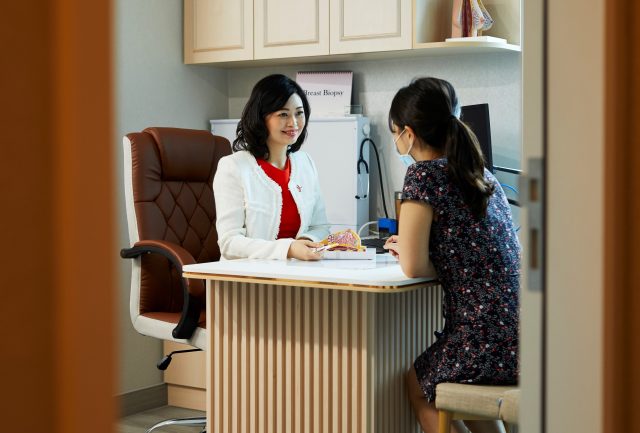
Get up close with our breast specialists and hear more from them on their philosophy for patient care and interesting personal anecdotes. “Doing a biopsy on a cancerous breast lump helps in diagnosis and planning of the subsequent treatment, and does not cause the cancer to spread. A biopsy also will not cause a benign lump to change into cancer. This is something important that I wish to address and help more women to understand, and that there is nothing to be fearful of if a biopsy procedure has been advised.” Dr Lim Siew Kuan is one of our Senior Consultant and Breast Surgeons at Solis. She has a special interest in breast surgery and manages both benign and malignant breast conditions. Prior to joining Solis, Dr Lim was practicing at Mount Elizabeth Novena Specialist Centre, Singapore. Dr Lim recently received her Graduate Diploma in Acupuncture in 2021 and became a registered acupuncturist with the Traditional Chinese Medicine Practitioners Board. Being schooled in the TCM theory and diagnostics, she is able to see both Western and Eastern perspectives in patient treatment and hopes to use acupuncture as a complement to improve the general well-being of her patients. Q. Why did you choose to become a breast surgeon? I like general surgery as a whole. However, breast surgery is a specialty that tugs my heartstrings and makes me feel having the connection with the women community. Majority of women still prefer to see a female breast specialist when they experience any breast health issues. As a woman myself, I can relate and understand a woman’s life better and they play many roles – they are a daughter, a wife and a mother. Modern women now have busy lifestyles and spend more time caring for their loved ones and even their extended family but often neglect their own health (e.g. breast health) Q. Share with us a patient’s story that left a deep impression on you Many patients have left deep impressions on me, each with their unique life stories. But if I were to mention any, it would be a recent middle-aged lady who presented with locally advanced Stage 4 breast cancer. She had noted the breast tumour for several years, but was afraid to undergo treatment. By the time she came to me, she required ICU admission with ventilatory support, and was already in multi-organ failure. Yet, the tumour biopsy showed a breast cancer type that would have responded very well to treatment, had she come in earlier. It is really sad to see such cases in Singapore. We are a medical hub, with all the advanced cancer treatments readily available in both our private and restructured hospitals. Most breast cancers are curable if detected early. I think more can be done to allay the fear and anxieties of these patients. Q. What is ONE myth or message that you would like women to know about breast cancer? Many patients have come up to me with this deep-rooted myth in mind. They have the misconception that doing a biopsy will cause a cancer to spread or cause a benign lump to become ‘more aggressive’ or cancerous. Doing a biopsy on a cancerous breast lump helps in diagnosis and planning of the subsequent treatment and does not cause the cancer to spread. A biopsy also will not cause a benign lump to change into cancer. This is something important that I wish to address and help more women to understand, and that there is nothing to be fearful of if a biopsy procedure has been advised. Q. What do you do during your free time? Other than catching up on the latest developments on breast cancer, I will also take time to read up on TCM since I have a keen interest in this as the “Eastern” alternative medicine. Keeping an open mind has allowed me to see and understand the wisdom that lies in the Chinese culture. I take this reading as sort of a hobby now. I practise Tai-ji outdoors during the weekend. It helps me relax and unwind my mind. I will also join my friends for golf whenever I need extra dose of fresh air. Q. What do you think you would be doing if you didn’t become a breast surgeon? I like working with my hands, so I guess it would still be something that allows me to use my hands skilfully. Who knows, I could otherwise have become a dentist or a potter! Article contributed and reviewed by Dr Lim Siew Kuan, Senior Consultant and Breast Surgeon at Solis Breast Care & Surgery
Read more