

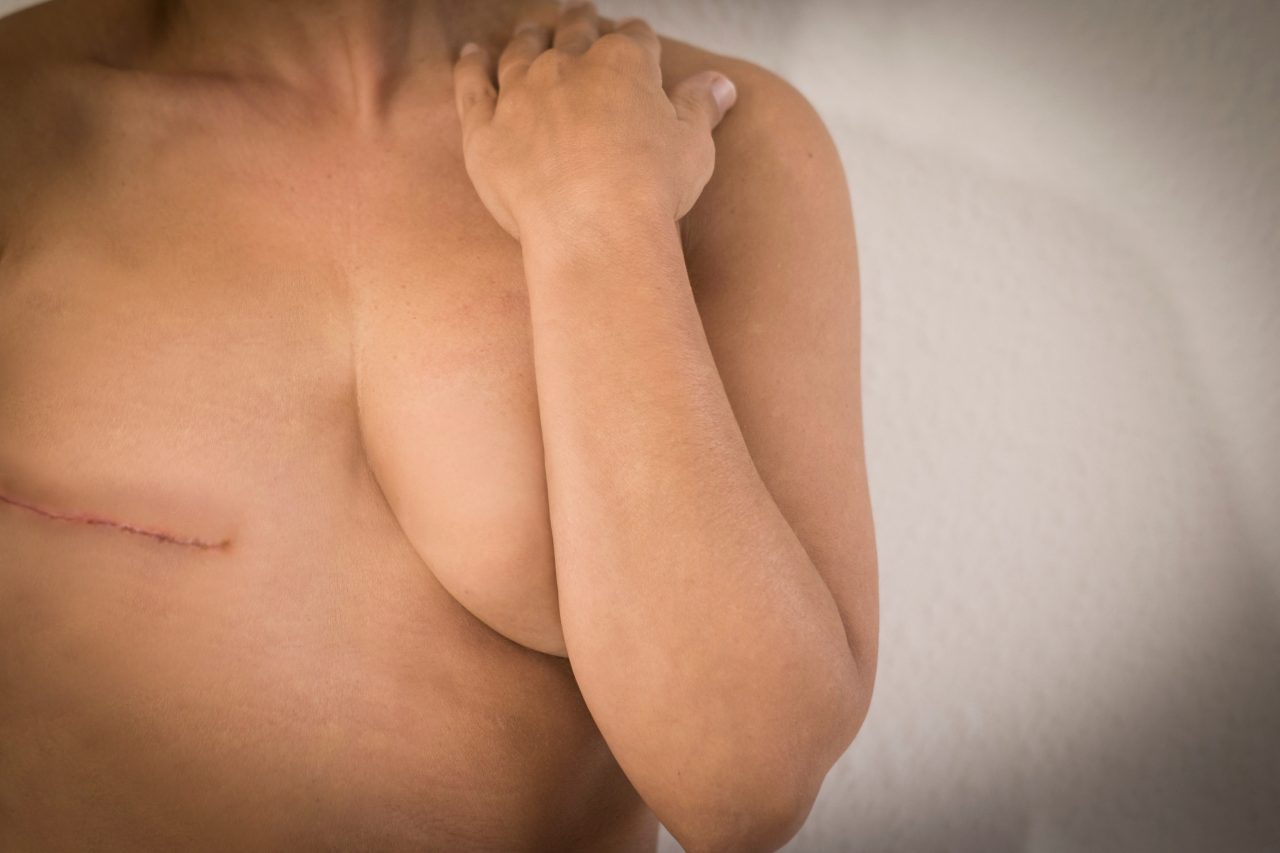
What is Preventive Mastectomy and Who Should Consider It?

Does a family history of breast cancer put you at a higher risk of getting the disease? We speak with Dr Tan Yah Yuen, Senior Consultant and Breast Surgeon about preventive mastectomy for individuals with elevated risk of breast cancer. What is preventive mastectomy and can I remove a single breast? Preventive mastectomy (or risk-reducing mastectomy) is surgery that is done to remove one or both breasts to reduce the risk of developing breast cancer. All of the breast tissue is removed, maintaining the skin overlying the breast, and may include maintaining the nipple and areola. This is followed by an immediate breast reconstruction. By definition, a mastectomy means the removal of the entire breast. A partial removal of the breast will not be suitable if the aim is to reduce the long-term risk of cancer, which can occur in any part of the breast. For risk-reducing mastectomy, the nipple and original skin of the breast can be conserved, together with immediate reconstruction. This will restore the appearance of the breasts to as near normal as possible. Who should consider risk-reducing mastectomy? Women who are at significantly elevated risk of breast cancer may consider preventive or risk-reducing mastectomy. These include: Women with BRCA 1 or 2 genetic mutations where the life time risk of breast cancer can be as high as 70- 85%. Women with biopsy-proven breast abnormalities that place them at a significantly higher life time risk of breast cancer e.g. lobular carcinoma in situ, atypical ductal hyperplasia, atypical lobular hyperplasia etc. The risk of breast cancer in this group varies from 20-50%, generally not as high as BRCA gene mutations. For women with a strong family history of breast cancer but without BRCA gene mutations, it is debatable whether they should consider risk-reducing mastectomy. It is best for these women to have a discussion with their breast specialist about their individual risk and circumstances. Are there many women who consider risk-reducing mastectomy? How old are they? A majority of the patients who consider risk-reducing mastectomy are fairly young, with ages ranging from mid 30s-50s. Is risk-reducing mastectomy considered a last-resort measure? Rather than a looking at risk reducing mastectomy as a last resort, risk-reducing mastectomy should be seen as a pro-active, self-empowered decision on the woman’s part to reduce her life time risk of breast cancer.  This frees her from the constant psychological burden of elevated breast cancer risk, and the desire to be in control of their own fate outweighs their fear or anxiety of the surgery. How does risk-reducing mastectomy help women with elevated risks of breast cancer? A risk-reducing mastectomy will reduce a woman’s risk of breast cancer by at least 90%.  Hence, if a woman with a BRCA1 gene mutation who has a 70% lifetime risk of breast cancer undergoes bilateral risk-reducing mastectomy, her risk of breast cancer will be reduced to 7%.  This is a very significant reduction. The reduction in risk cannot be 100% because there is usually a very small amount of residual breast tissue in the nipple, under the skin or peripheral chest wall that cannot be completely removed. Hence the term “risk-reducing” is preferred over “preventive”. It is important to note that for women who choose double mastectomy when a breast cancer has already been diagnosed, the surgery does not eliminate or reduce the risk of distant organ relapse of the original breast cancer. Aside from risk-reducing mastectomy, what other options are there for women with high-risk factors/family history? A non-surgical option to reduce one’s risk is chemoprevention, which is the use of oral medication to prevent cancer. The risk of breast cancer is estimated to be halved with chemoprevention.  However, the medication is associated with side effects and as such, is not a popular option among women. A woman may also opt for high-risk surveillance. This allows for early detection but technically does not reduce one’s risk.  High-risk surveillance includes a yearly MRI of the breasts, in addition to mammogram and ultrasound. Leading a healthy lifestyle may modify one’s risk – this includes a healthy diet comprising plenty of fresh fruits and vegetables, reducing consumption of processed and red meats and reducing alcohol intake. Regular exercise and avoiding weight gain can also modify a woman’s risk of breast cancer. When can reconstructive surgery take place? Can it be done during the mastectomy itself? Are there different types of reconstruction surgeries available?  Reconstruction of the breasts is preferably done at the same time as the mastectomy. This will achieve the most favourable aesthetic outcome. Reconstruction for double mastectomy is ideally performed with silicone implants, which will result in a symmetrical appearance of the reconstructed breasts. Alternatively, women may opt for reconstruction using their own body tissue (autologous) such as tummy fat, or back muscle.  For women with small-volume breasts, sometimes fat transfer using liposuction alone may even be sufficient for reconstruction. How has reconstructive surgery helped your patients in their daily lives?  Reconstruction is definitely very helpful for women to move on after a single or double mastectomy.  It restores her body image and allows her to dress and carry out her daily activities including sports without worrying about appearance. Because of improved reconstruction techniques in recent years, this has made risk-reducing mastectomy more acceptable. Do you have any advice to give to women who are scared or too busy to take charge of their breast health?  Women should not be scared to, or say they are too busy to take charge of their breast health.  After all, health is most important thing in our lives. Breast cancer is a very curable disease and the key is early detection and treatment. Hence, breast cancer screening is very important and I advise women to be pro-active in taking charge of their breast health. Screening will really make all the difference. Article contributed and reviewed by Dr Tan Yah Yuen, Senior Consultant and Breast Surgeon at Solis Breast Care & Surgery 

Read more

Taking Care of Your ‘Breast Friends’ from 20s to 50s

Breast cancer remains the most common cancer in women in Singapore and most developed countries in the world. In Singapore, the incidence peaks in women in their 40s to early 50s. The good news is that breast cancer is highly curable when detected in the early stages. The best strategy for early detection of breast cancer is to have screening regularly. Types of breast cancer screening include: Breast self-examination: This should be conducted monthly, preferably when the period is over (for women who are pre-menopausal). Women should check themselves for lumps, skin changes such as redness/swelling/asymmetry/dimpling of skin, nipple discharge/rash/retraction Clinical breast examination: Getting a healthcare professional such as a doctor or trained nurse to examine the breasts Radiological examination: Mammogram is the gold standard for breast cancer screening. Modern techniques such as 3D mammography improves detection rate and reduces discomfort. Breast ultrasound is a very useful adjunct to mammographic screening.  It is particularly useful in young women and women with dense breasts on mammography. MRI of the breasts can be used in special circumstances. These include women who have a strong family history of breast cancer, personal high risk of breast cancer, and women with implants who prefer to avoid mammographic compression Recommendations for screening according to age group In your 20s: Breast self-examination monthly, clinical breast examination every 2 years In your 30s: Breast self-examination monthly, clinical breast examination every year. Consider breast ultrasound if breasts are very lumpy and difficult to examine, or if the woman has a history of recurrent lumps In your 40s: Breast self-examination monthly. Mammography screening yearly is recommended from age 40. In your 50s: After menopause, mammography can be conducted 1-2 yearly depending on individual risk factors. Prior to menopause, mammography should continue yearly Keeping yourself breast-healthy While many cancers including breast cancer cannot be prevented, modifications to lifestyle may reduce one’s risk to some degree. American Society of Cancer recommends the following measures that can possibly help reduce a person’s risk of breast cancer. Regular exercise of moderate intensity 30 minutes for at least 5 times a week, or 150 minutes per week. Avoid sedentary lifestyle such as sitting, lying down for most of day Avoid weight gain / obesity especially after menopause Dietary modifications: Calorie adjustments to avoid weight gain Plenty of vegetables and fruits daily – those which are brightly coloured contained high levels of antioxidants which are beneficial Reduce highly processed foods and refined grains Limit intake of red meat and processed meats Avoid sugar sweetened beverages which cause weight gain Whole grains such as brown rice, wholemeal bread Limit alcohol intake Avoid tobacco smoke The best strategy to combat breast cancer is to lead a healthy lifestyle and try to reduce stress in our daily lives as much as possible. This includes maintaining a positive outlook in life, getting adequate rest and sleep, which will in turn keep our immune system strong. Most importantly, please attend regular screening and it will make all the difference! Article contributed and reviewed by Dr Tan Yah Yuen, Senior Consultant and Breast Surgeon at Solis Breast Care & Surgery Article also published on PORTFOLIO: https://www.portfoliomagsg.com/article/journey-to-better-breast-health.html
Read more

Getting To Know Dr Tan Yah Yuen

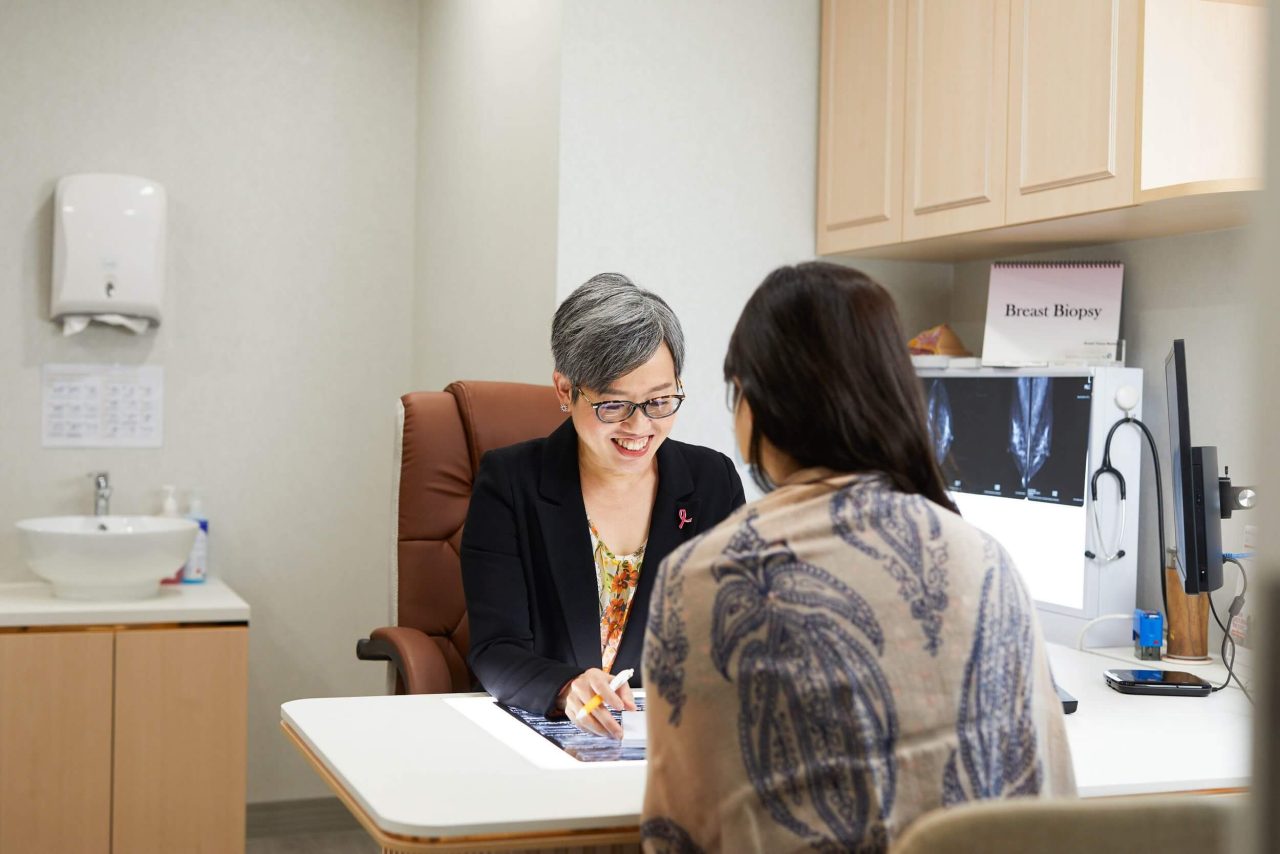
Get up close with our breast specialists and hear more from them on their philosophy for patient care and interesting personal anecdotes. “I enjoy doing my work because it is not static – we are always looking at new and better ways at treatment, doing less to achieve more, and ultimately improving patients’ outcomes and quality of life.” Dr Tan is our Senior Consultant and Breast Surgeon practicing at Solis. She is a key opinion leader in her field and is actively involved in the training of breast surgeons in the region. Q. Why did you choose to become a breast surgeon? During my surgical training, I opted to sub-specialise in breast surgery because as a woman, I felt I was able to relate and empathize with the patients better. Breast cancer treatment also involves multiple disciplines, a lot of interaction and discussion with colleagues such as radiologists, medical oncologists, radiation oncologists, pathologists, genetic counsellors and more, and the science behind breast cancer is fascinating and constantly evolving. I enjoy it because it is not static, we are always looking at new and better ways at treatment, doing less to achieve more, and ultimately improving patients’ outcomes and quality of life. Q. Share with us a patient’s story that left a deep impression on you There are countless stories of my patients that have become unforgettable memories for me. A handful are sad stories – when the patient comes at a terminally ill stage due to fear of treatment at the beginning. But most memories are wonderful and encouraging stories of courage and faith in battling cancer, and of triumph year after year when they return for reviews in the pink of health and with a zest of life! These patients constantly inspire us to improve cancer care, from screening to diagnosis, to surgical techniques and multi-disciplinary care. Q. What is ONE myth or message that you would like women to know about breast cancer? Breast cancer is one of the most treatable cancers and many women continue to lead fulfilling lives after treatment, sometimes even better lives! The key is early diagnosis and treatment. Therefore, women who have worrying symptoms of breast cancer should not fear coming forward to seek treatment. Surgical outcomes are getting better all the time, including breast reconstruction. Chemotherapy is also often not required especially in early stages. Hence, it is important that women consult a doctor early and it may make all the difference! Q. What do you do during your free time? I enjoy the outdoors – currently my go-to weekend activity is hiking and my favourite place is MacRitchie Reservoir where I used to jog. I have tried my hands at table tennis, dragon boat racing, kayaking, diving, tennis and marathons during different phases of my life! Regular exercise is important because it reduces the risk of various cancers including breast cancer. When at home, I explore different cooking recipes especially desserts! Q. What do you think you will be doing if you didn’t become a breast surgeon? My first ambition as a young child was to be a fireman (or firewoman)! This was after watching a thrilling movie where the fireman saved many people stranded in a burning skyscraper. When I grew older, I realized that I enjoy working with my hands, so if I didn’t become a doctor I would probably try something like woodwork or metal work, although I am not sure if I am artistic enough! Article contributed and reviewed by Dr Tan Yah Yuen, Senior Consultant and Breast Surgeon at Solis Breast Care & Surgery
Read more