

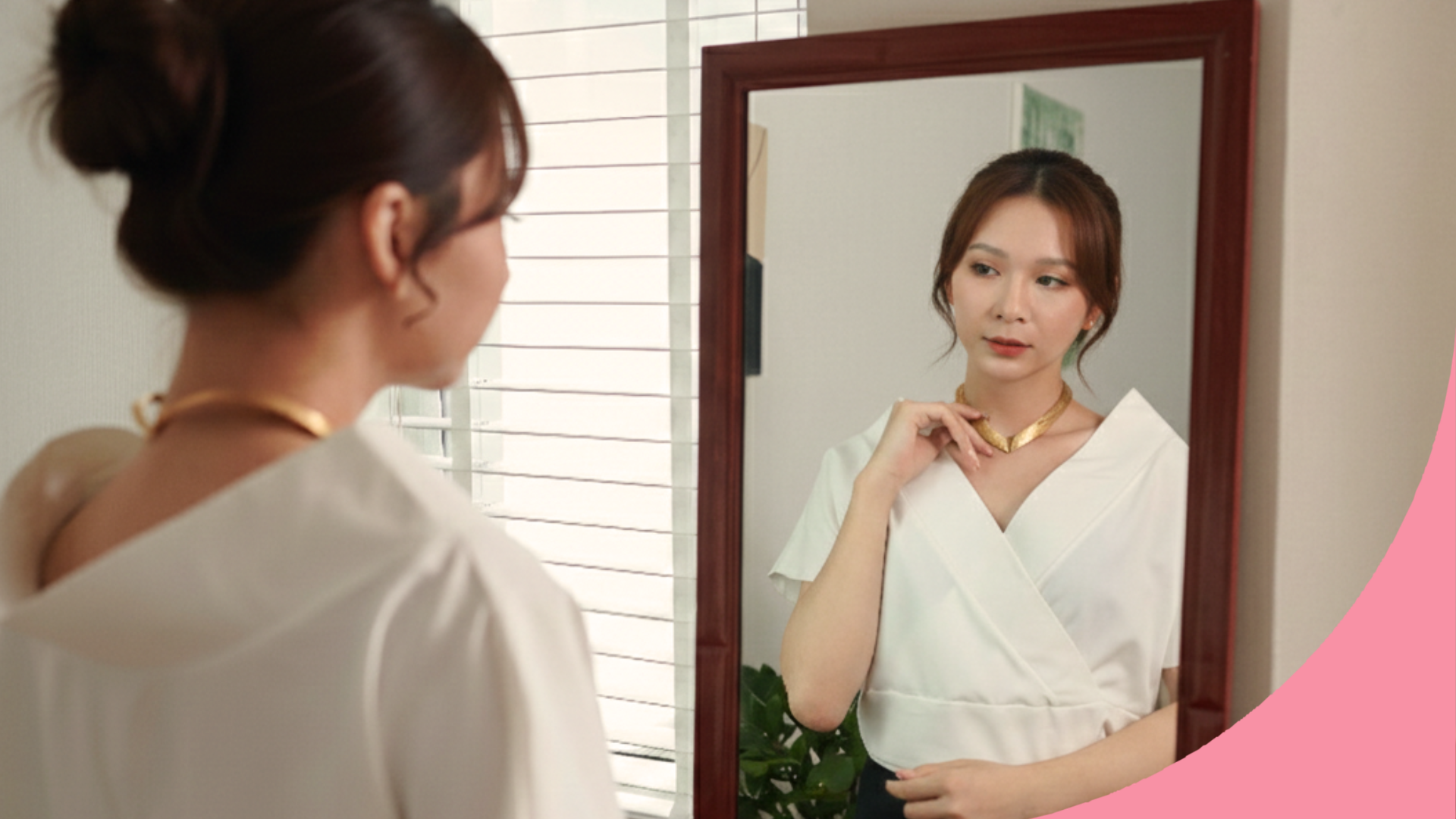
When Care Sounds Like Criticism: Understanding Body Talk in Asian Families

“Look at her, why is she dressed like that?”“You look fat.” “That colour doesn’t suit you.”Sometimes, the people who hurt you most are the ones you love. Why Are Bodies All We Talk About In Asian families, love is rarely spoken outright. It shows up through reminders to eat, questions about your future or even a plate of sliced fruit after dinner. Asking about your weight and commenting on how you look becomes a way to express concern [1]. Many women grow up learning that this is how ‘care’ sounds [2]. Blunt words are softened with teasing, and contradictory messages — being told to eat more, then criticised for gaining weight — are absorbed almost automatically [2] [3].  Outside the home, the noise grows louder. Media and social platforms amplify narrow beauty ideals, signalling what women “should” look like [4]. In Singapore, adults at risk of body-related anxiety spend over three hours a day online, where they continue to be exposed to harmful messaging [5]. These pressures affect women of all ages. Over 60% of women over 50 think about their weight daily [6]. About one in four Singaporeans — typically young women — report worries about their body shape [5]. When external pressures echo what you hear at home, it becomes harder to separate care from criticism. When Weight Talk Hits Harder at HomeRespect for elders and family harmony run deep in Asian cultures [7] [8]. Questioning parents or older relatives can feel disrespectful, especially when their approval still carries weight well into adulthood [3]. Many older relatives grew up hearing the same comments and internalised them as normal, often without realising the harm [9]. Children swallow emotions and avoid these conversations to keep the peace [7]. While this may prevent immediate conflict, it quietly widens emotional distance between you and your family, as well as you and your body.You may notice how you shrink when a relative comments on your legs, the way you smile and nod while tensing inside. That discomfort isn’t just embarrassment; it’s a habit your body has learned over years of critiques. Of course, not every family operates this way. Some create spaces where feelings and boundaries are respected. But for many women, navigating body talk remains a delicate balancing act. Reclaiming Your Body Without Burning BridgesOwning your body doesn’t have to start with confrontation. It begins with a simple truth: your body belongs to you, and only you decide its value.Setting boundaries can mean gently redirecting conversations or calmly saying that certain comments are hurtful without arguing [7].In cultures where relationships matter deeply and conflict ripples, reclaiming your body often takes quieter forms:These small steps add up, helping rebuild your trust with your body over time. Learning a New Language of CareFamily dynamics are complex. Unlearning years of conditioning takes patience, and not every conversation will go the way you hope. Some relatives may be reluctant to change.But reclaiming your body starts with you — how you speak to yourself, the clothes you wear and recognising that most remarks are ingrained habits, not truths about you. This understanding weakens their hold and restores your confidence.Care doesn’t have to sound like criticism, and love doesn’t have to sting. You’re allowed to take up space, fully and unapologetically. Caring for Your Body Beyond AppearanceWhen conversations about your body focus only on how it looks, it’s easy to forget what your body does for you. Your breasts, like the rest of your body, are not defined by appearance — they are part of your health.Reclaiming your body also means caring for it proactively - through regular screenings, noticing changes, and seeking medical support when needed. Health is not about diminishing yourself. It’s about knowing yourself. References[1] International Journal of Cross-Disciplinary Subjects in Education, Reconsidering Intercultural Communication Competence Development in Different Social Patterns - Starting from the Study of Greetings [2] Asian American Journal of Psychology, “I’m not White, I have to be pretty and skinny”: A qualitative exploration of body image and eating disorders among Asian American women[3] Public Library of Science (PLOS) Mental Health, Parental teasing and body dissatisfaction in White and South Asian females: An exploratory cross-sectional analysis using moderated mediation[4] Frontiers in Psychiatry, Gender-based analysis of body dissatisfaction among youths in Singapore: findings from the National Youth Mental Health Study[5] The Straits Times, Adults here at risk of body image anxiety more likely to spend 3 hours or more daily on TikTok, Instagram: Study  [6] Advances in Eating Disorders, Body Image in Adult Women: Moving Beyond the Younger Years[7] Applied Family Therapy Journal, Cultural Silence and Emotional Suppression in Asian-American Families: A Phenomenological Exploration [8] Journal of Cross-Cultural Psychology, Autonomy in Family Decision Making for Chinese Adolescents: Disentangling the Dual Meaning of Autonomy[9] Journal of Obesity & Metabolic Syndrome, Weightism in Asia: A Narrative Review and Implications for Practice[10] Frontiers in Psychology, Culture and body image: subcultural variations in coping strategies and their associations with psychological distress among European Canadians and East Asian Canadians

Read more

Heart Health and Breast Cancer: Why It Matters

Breast cancer is the most commonly diagnosed cancer in women, while cardiovascular disease remains the leading cause of death among women in Singapore. Together, they account for a large proportion of morbidity and mortality. The important thing to note is that they are connected in many ways, especially for breast cancer patients and survivors.The strong link between heart health and cancer has led to the growth of cardio-oncology - a multidisciplinary approach dedicated to protecting the heart throughout the cancer journey and improving long-term survival for cancer survivors at higher risk of heart disease.¹Why Breast Cancer Survivors Are at Higher Heart Risk Treatment-related cardiac effects of cancer therapy play a major role. Some common breast cancer treatments can affect heart health: Anthracycline chemotherapy (e.g. doxorubicin) is linked to heart damage.² Risk increases with higher cumulative doses and in patients with pre-existing cardiovascular risk factors. Trastuzumab (Herceptin) can affect cardiac function, especially when combined with other agents that affect the heart.² Unlike anthracyclines, trastuzumab-related heart dysfunction is often reversible when detected early. Radiotherapy, especially to the left side of the chest, can unintentionally affect the heart.² Modern techniques have reduced but not eliminated this risk. These effects may not appear immediately; slow, cumulative damage can develop years after treatment.²Heart-Healthy StrategiesA. Stay Active Physical activity is one of the most powerful ways to reduce cardiovascular risk after breast cancer³: Survivors who are physically active have a significantly lower risk of cardiovascular death and all-cause mortality.³ Even adding ~2,500 extra steps per day or moderate exercise can reduce risk.³ Guideline recommendation: According to the Health Promotion Board (HPB) and World Health Organisation, aim for at least 150-300 minutes of moderate-intensity aerobic physical activity per week, or 75 minutes of vigorous activity, plus strength training on 2 days/week.³B. Eat a Heart-Healthy Diet Nutrition plays a key role in cardiovascular health: Diets similar to DASH (Dietary Approaches to Stop Hypertension) or Mediterranean patterns are associated with lower risk of heart disease in breast cancer survivors.⁴ Focus on fruits, vegetables, whole grains, lean proteins, and healthy fats, while minimising processed foods, added sugars, and excessive salt.⁴ This supports healthy blood pressure and overall heart function.C. Monitor Key Risk Factors Regular monitoring of cardiovascular risk factors is essential: Blood pressure Blood cholesterol Blood sugar Weight Physical inactivity Smoking status These factors contribute to cancer-related heart risk and can often be improved through lifestyle changes or medication.²D. Work with Your Healthcare Team Collaborating with oncology and cardiology teams improves outcomes¹,²: Tailored cardiovascular risk assessments before, during, and after treatment - including heart imaging (such as echocardiograms) and functional evaluations when appropriate - help detect issues early.² Shared-care models that involve oncologists, cardiologists, primary care, and rehabilitation professionals achieve the best long-term results.¹E. Consider Structured Rehabilitation Some programmes, called Cardio-Oncology Rehabilitation (CORE), integrate cardiovascular and cancer survivorship care¹,³: Exercise training Nutritional counselling Psychological support Education on risk factors Smoking cessation support These programmes are similar to traditional cardiac rehabilitation programmes but adapted for cancer survivors, and can reduce long-term heart risk and support overall health.Summary Breast cancer survivors face elevated long-term risk for cardiovascular disease due to treatment effects and shared risk factors.1,2 The good news is that this risk can be managed and reduced through: Regular physical activity³ Heart-healthy eating⁴ Routine monitoring of cardiovascular risk factors² Close collaboration with healthcare providers¹ Many cancer centres and breast surgeons in Singapore now work closely with cardiologists to monitor heart health during and after treatment. With proactive care, breast cancer survivors can improve long-term heart health and overall quality of life.Article reviewed by Dr Benji Lim, Interventional Cardiologist at Novena Heart Centre.References Mehta LS, Watson KE, Barac A, Beckie TM, Bittner V, Cruz-Flores S, et al. Cardiovascular disease and breast cancer: where these entities intersect: a scientific statement from the American Heart Association. Circulation. 2018;137(8):e30-e66. doi:10.1161/CIR.0000000000000556. Epub 2018 Feb 1. PMID: 29437116. https://pubmed.ncbi.nlm.nih.gov/29437116/ Bostany G, Chen Y, Francisco L, et al. Cardiac dysfunction among breast cancer survivors: role of cardiotoxic therapy and cardiovascular risk factors. J Clin Oncol. 2025;43(1):32-45. PMID: 38833638. https://pubmed.ncbi.nlm.nih.gov/38833638/ Wilson OWA, Wojcik KM, Cohen CM, Kamil D, Butera G, Matthews CE , Dieli-Conwright CM , Jayasekera J, et al. Exercise and cardiovascular health among breast cancer survivors: a scoping review. Cardio-Oncology. 2025;11:24. PMID: 40012001. https://pubmed.ncbi.nlm.nih.gov/40012001/ Vo JB, Ramin C, Veiga LHS, Brandt C, Curtis RE, Bodelon C, Barac A, Roger VL, Feigelson HS, Buist DSM, Bowles EJA, Gierach GL, González ABE, et al. Dietary patterns and cardiovascular risk in breast cancer survivors. J Natl Cancer Inst. 2024;[Epub ahead of print]. PMID: 38718210. https://pubmed.ncbi.nlm.nih.gov/38718210/
Read more

Out with the Old: Let Go of These 5 Breast Cancer Survivorship Myths in 2026

Out with the Old: Let Go of These 5 Breast Cancer Survivorship Myths in 2026As we step into a new year, it’s time to leave behind outdated myths and move forward with hope, courage, and fresh perspectives.Life after cancer can feel like a blank canvas, inviting you to write your next chapter in your own way. Survivorship is deeply personal, and others may not always understand the physical and emotional journey you’re carrying.This article highlights common myths about survivorship, offering clarity, support, and encouragement for those navigating life beyond cancer.Myth 1: “Survivorship is only for those who are cancer-free.” Many people see survivorship as life after treatment – a shift from active care to maintaining health and watching for signs of cancer returning [1].In reality, it also includes those living with metastatic (Stage IV) breast cancer, even if some do not identify as “survivors” in the strictest sense [2]. For women needing ongoing treatment, survivorship means managing symptoms, embracing the present moment and planning for the future [1] [2].Every journey is valid. Survivorship isn’t defined solely by the absence of cancer; it’s about living with, through and beyond a diagnosis.Myth 2: “Once treatment ends, I no longer need to see my doctor.” Completing cancer treatment can feel like crossing a finish line, a milestone worth celebrating. However, follow-up care remains a vital compass guiding your long-term health.Regular check-ins help your care team monitor your recovery, manage lingering side effects and address concerns promptly [3]. Your follow-up plan depends on your overall health, the cancer type, and the treatment received [4].Even if you feel anxious before appointments, showing up is an act of quiet courage [5]. Staying connected with your doctor helps you maintain control and provides reassurance as you move forward.Myth 3: “Surviving cancer means I should ‘bounce back’ quickly and be the same as before.” It’s natural to long for life before diagnosis. Loved ones may expect you to “return to normal” and not understand why cancer still casts a shadow, leaving you feeling alone [6] [7].Beyond bodily changes and lingering side effects, many survivors live with the fear of recurrence, where minor aches can trigger deep worry [6]. You may also grieve the person you once were or the life you imagined [8].Yet life after cancer, while complex, holds space for new strength and growth. Healing means honouring your feelings and granting yourself grace, and embracing each day as a gradual step toward new beginnings.Myth 4: “If I have difficult days, it means I’m not coping well.” There’s no right or wrong way to cope with life after cancer. Everyone’s journey is unique, and comparing yourself to others only adds pressure [4].Feeling anxious, low or overwhelmed doesn’t mean you are failing. These feelings are simply part of the healing journey.It’s okay to not feel positive all the time [8]. Allowing yourself to experience difficult emotions, such as sadness or fear, is a healthy way to process what you’ve been through.Crying isn’t weakness – it’s a gentle release that eases emotional burden and improves mood [9]. If sharing your feelings feels hard, writing them down can be a helpful alternative [4]. Instead of locking away your emotions, be honest with yourself and let them out in ways that feel right for you [5].On tough days, pause and reflect on how far you’ve come and celebrate the strength and resilience you’ve shown [5].Myth 5: “I’m unable to lead an active or vibrant life as a survivor.” For those who’ve finished treatment, reconnecting with yourself and your purpose takes time. The physical changes and emotional weight of the cancer journey can make living meaningfully feel more challenging [10].Yet a cancer diagnosis can spark reflection and encourage you to reassess what matters most [1] [10].Whether you’re post-treatment or living with advanced cancer, cherishing small moments, rediscovering old interests or exploring new ones at your own pace can fill everyday life with meaning and joy [4] [6]. There’s no need to rush or do everything all at once [5]. Living fully doesn’t mean living exactly as before – it means discovering what brings warmth to your heart right now.Creating Space for Compassion At Solis and Luma, we believe survivorship is about creating a safe space for healing – where survivors feel understood, respected and empowered to move forward on their own terms.As we enter 2026, let’s leave behind limiting myths and make room for compassion, nuance and hope. Survivorship isn’t a journey walked alone. It’s shaped by those around us – the assumptions we make, the words we use, and the spaces we create.By challenging misconceptions, we become more empathetic listeners, friends and family members. We can help survivors feel seen, believed and supported – free from the pressure to explain or the rush to heal.The Breast Years of Your Life: Living Well After Cancer is a compassionate companion for those navigating life beyond cancer. From nutrition and exercise to sexual intimacy, each chapter is a gentle guide through the journey. Learn more and grab your copy here: https://www.solis.sg/the-breast-years-of-your-life/References [1] Journal of Surgical Oncology, Breast cancer survivorship [2] ASCO Educational Book, Survivorship Care for People Affected by Advanced or Metastatic Cancer: Building on the Recent Multinational Association of Supportive Care in Cancer-ASCO Standards and Practice Recommendations [3] American Cancer Society, Follow-up Care After Breast Cancer Treatment [4] National Cancer Institute, Facing Forward: Life After Cancer Treatment [5] Mayo Clinic, Cancer Survivors: Managing Your Emotions After Cancer Treatment [6] European Society for Medical Oncology, The Guide for Patients on Survivorship [7] Annals of Palliative Medicine, Is cancer back?—psychological issues faced by survivors of breast cancer [8] Cancer Council, Living Well After Cancer [9] International Journal of Environmental Research and Public Health, Crying Therapy Intervention for Breast Cancer Survivors: Development and Effects [10] Journal of Cancer Survivorship, Psychosocial experiences of breast cancer survivors: a meta-review
Read more