

Reassurance in Breast Care: Your Path to Clarity and Confidence

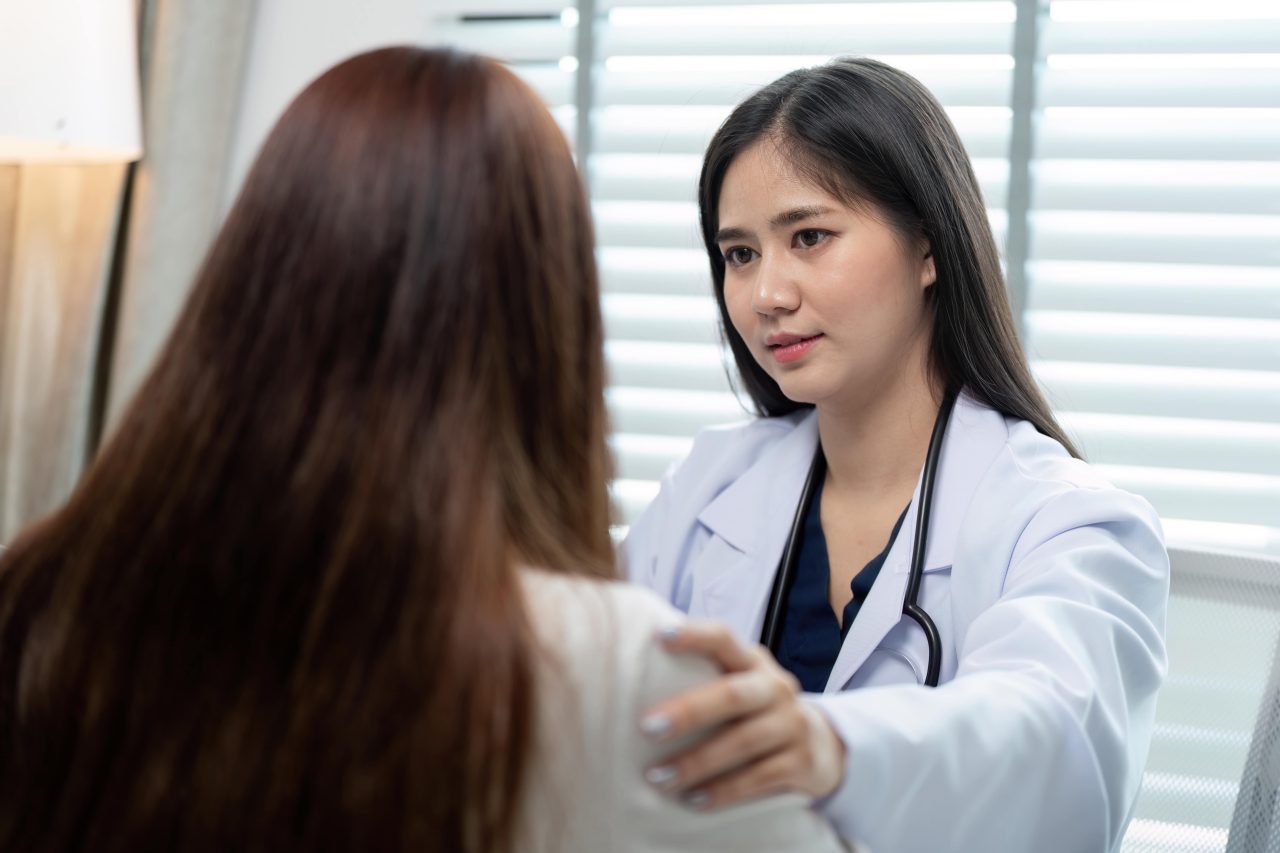
Breast screenings can be anxiety-inducing, and facing breast cancer is life-changing. At Solis and Luma, we prioritise open communication and compassionate care to ensure you feel supported every step of the way.Called Back After Mammogram: Finding ClarityCatching breast cancer early can make it easier to treat and improve survival, which is why regular screenings are crucial[1].  While screenings can be stressful enough, receiving a recall—callback for additional tests—can add to that anxiety. You may worry about what a recall might mean. Remember, a recall does not necessarily mean you have breast cancer[2].1. Specialised ExpertsIf you are recalled, you will likely have a diagnostic mammogram to examine a suspicious area, and some patients may also have a breast ultrasound[2]. The breast sub-specialised sonographers and radiologists at Luma are skilled at spotting subtle signs of cancer. Using advanced technology such as 3D mammograms, they provide greater clarity and accuracy.2. Mammogram with Greater PrecisionA 3D mammogram (or digital breast tomosynthesis) takes multiple X-ray images of your breasts from different angles, creating a detailed 3D image[3]. Research shows this method increases detection of invasive cancers by almost 54% and reduces callbacks for repeat tests by about 37%[4].3. Clear ExplanationsFeeling a mix of emotions—such as disbelief, anxiety, or fear—after a recall is normal[2]. Studies show that the attitude of clinic staff, quality of information provided and the physical environment can affect one’s satisfaction[5].Solis’ all-female surgical team is here to reassure you and answer your questions, providing an affirming space where your concerns are heard. Clear explanations of test results can help bring you peace amid uncertainty[5].Newly-Diagnosed: Now What?While not every abnormal mammogram result indicates breast cancer, receiving such test results and facing a diagnosis can be overwhelming. You may be full of uncertainty on what to expect next. Patients appreciate clear information throughout their journey, from their disease and treatment options to psychosocial and supportive care[6].1. Shorter Wait TimesWaiting to start treatment can be stressful. It is common to worry that delays may affect outcomes or that your cancer may spread before treatment begins[7]. That is why Solis partners with Luma to offer seamless care under one roof. This allows you to access all your breast care needs from warm staff and an expert team—all while keeping wait times minimal.2. Financial AdviceWorries about treatment costs and their impact on family can be a heavy burden for many patients. Understanding your financial options and finding support can help ease some of the stress[6]. Solis offers personalised financial advice tailored to your specific symptoms, treatments and circumstances.3. Personalised Care PlansA multidisciplinary approach helps address the complex needs of each patient, ensuring appropriate and effective care[8]. In weekly multidisciplinary tumour board sessions, Solis’ doctors and Luma’s radiologists and pathologist discuss treatment recommendations with partner oncology experts. Each patient receives tailored practice recommendations without the stress of navigating multiple opinions alone.4. Female Surgical TeamBefore surgery, you may worry about changes to your body. Solis’ experienced female surgeons specialise in advanced breast-conserving techniques, such as oncoplastic breast surgery. Combining cancer surgery and plastic surgery techniques, it allows for tumour removal while preserving the breast, thereby improving a patient’s quality of life[9]. It can be done in a single surgery, reducing the need for more operations[10].5. Same-Day Surgery At Luma’s Day Surgery Operating Theatre (DSOT), many patients—especially those with early-stage cancers—can often have surgery and return home on the same day. An on-site pathologist can assess surgical specimens for the margins of clearance (healthy tissue surgically removed with the cancer) in real-time during procedures[11]. This ensures complete cancer removal and minimises the chance of needing a second surgery.Life Beyond Treatment1. Post-Treatment CareBattling breast cancer and going through treatment can affect your self-esteem and identity[12]. Partnering with organisations such as Can-Care Asia, Solis offers personalised care that goes beyond just treatment. To help you feel more comfortable and confident, Can-Care offers high-quality post-care products, including breast prostheses, mastectomy bras, wigs, hair care items and more.2. Strength in CommunitySupport from counsellors and connecting with other survivors can empower you, relieve anxiety and enhance quality of life[6]. Club Solis is a supportive network for Solis patients to connect and uplift each other. Through engagement events and inspiring stories from fellow pink warriors, you can find reassurance and the courage to take ownership of your journey.Whether you’re going for screening or require treatment, remember: you are not alone. The expert multidisciplinary team at Solis and Luma is here to make sure you feel informed, supported and cared for at every stage of your breast health journey.References[1] Cancer Research UK, Survival for Breast Cancer [2] American Cancer Society, Getting Called Back After a Mammogram [3] Breastcancer.org, Mammography Technique and Types[4] Implementation of Breast Tomosynthesis in a Routine Screening Practice: An Observational Study[5] Improving screening recall services for women with false-positive mammograms: a comparison of qualitative evidence with UK guidelines [6] What information do cancer patients want and how well are their needs being met? [7] Cancer patients’ concerns regarding access to cancer care: perceived impact of waiting times along the diagnosis and treatment journey [8] The Impact of Tumor Boards on Breast Cancer Care: Evidence from a Systematic Literature Review and Meta-Analysis [9] Oncoplastic breast surgery [10] American Cancer Society, Breast Reconstruction After Breast-conserving Surgery [11] Breastcancer.org, Breast Cancer Surgical Margins [12] Irish Cancer Society, Body image and self-esteem after breast cancer
Read more

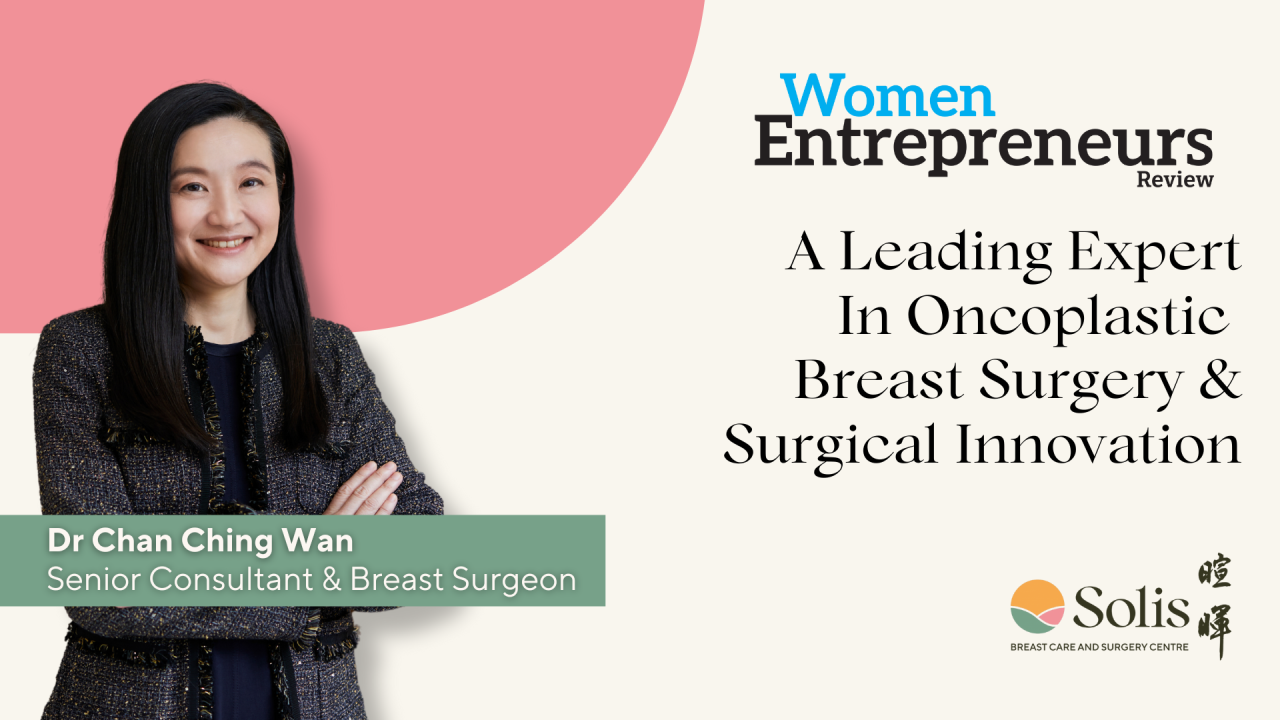
Dr Chan Ching Wan: A Leading Expert In Oncoplastic Breast Surgery & Surgical Innovation

The field of surgery is traditionally dominated by men; however more and more women are entering the arena as they bring additional insights and perspectives for their patients, especially in the field of breast cancer. Dr. Chan Ching Wan, Senior Consultant & Breast Surgeon at Solis Breast Care & Surgery Centre, has a deep understanding of breast cancer formation, inhibition, and treatment. With a distinguished career that includes leadership roles in Singapore’s National University Health System and the National Cancer Institute Singapore, Dr. Chan combines her expertise in cancer research and surgical innovation with a commitment to medical education and patient care. Her extensive training and academic contributions have solidified her reputation as a leading figure in breast cancer treatment and research.In an exclusive interaction with Women Entrepreneur Review, Dr. Chan Ching Wan enlightened us about her professional journey and her leadership traits.Can you share your educational journey and what motivated you to pursue a career in healthcare, specifically as an oncoplastic surgeon?My educational path was deeply influenced by my father, a surgeon, who first inspired me to pursue medicine. He took me to the operating theater at a young age, hoping it might deter me, but instead, it solidified my passion for surgery. Initially, I focused on general surgery, but my interest in breast cancer started during my PhD training, leading me towards oncoplastic surgery. At that time, breast surgery was primarily limited to lumpectomies and mastectomies, with little emphasis on aesthetic outcomes. It wasn’t until I met a pioneering breast surgeon in the UK that I was introduced to oncoplastic surgery. Under his mentorship at the Nottingham Breast Institute, I learned how to integrate cancer treatment with cosmetic reconstruction. This approach transformed my perspective, making each surgery a unique challenge to preserve both the patient’s health and the natural appearance of the breast. Today, oncoplastic surgery continues to evolve, offering innovative techniques for more personalized and effective treatments.What have been some of the most crucial moments in your professional journey so far?A pivotal moment in my career was discovering my passion for caring for breast cancer patients. While it may seem unusual to find joy in treating cancer, my fulfillment from surgery and patient care affirmed my commitment to this field. It’s the small, meaningful experiences along the way that solidified my decision to dedicate my career to oncoplastic surgery.A pivotal moment in my career was discovering my passion for caring for breast cancer patients Can you introduce us to Solis Breast Care and explain the concept behind it and its key areas of expertise?Solis Breast Care & Surgery Centre, in partnership with Luma Women’s Imaging Centre, brings together a multidisciplinary team of breast surgeons, breast sub-specialised radiologists and pathologist – essential for accurate diagnosis and effective treatment. Our imaging facility, staffed by breast sub-specialised radiographers and sonographers offer ultrasound, mammograms, and MRI scans. With the convenience of an in-house Day Surgery Operating Theatre, we streamline the process of breast cancer screening, diagnosis, and treatment, ensuring timely and compassionate care for all our patientsShare the key areas of expertise you’ve developed as an oncoplastic surgeon. What are your main focus areas when working with patients?As an oncoplastic surgeon, my expertise lies in performing oncologic surgeries that remove cancer completely while using plastic surgery techniques to reshape or reconstruct the breast, preserving its natural appearance as much as possible. My primary focus with patients is ensuring they fully understand their condition and the necessary steps in their treatment. While the internet provides vast information, it can be overwhelming and misleading. My role is to clarify what is relevant to their case, guiding them through each step of the process. Patient understanding is crucial because it directly impacts their compliance with treatment, which is essential for successful outcomes. I even encourage second opinions if it helps the patient better understand and feel confident in their care.Highlight the most significant professional milestones in your career. What has been your success mantra over the years?I’m relatively new to the private healthcare sector, having transitioned into my current role just over two years ago. Before this, I spent many years at the University Hospital, where, apart from clinical work, I was involved with teaching medical students, postgraduate training, and conducting research. I continue to contribute to academia by participating in undergraduate assessments and postgraduate exams, ensuring high standards in surgical education. I was also active on Singapore’s national breast screening steering committee, helping to maintain and update screening protocols. My success mantra has always been to know what you want, enjoy what you do, and pursue it with dedication.Dr. Chan Ching Wan, Senior Consultant & Breast Surgeon, Solis Breast Care & Surgery CentreDr. Chan Ching Wan is a distinguished Senior Consultant and Assistant Professor specializing in breast oncology. Since 2009, she has served as an Assistant Professor at the Yong Loo Lin School of Medicine, NUS. Before joining Solis, Dr. Chan led breast services at Singapore’s National University Health System and spearheaded the Breast Oncology Tumour Programme at the National Cancer Institute Singapore. She holds a medical degree from the University of Edinburgh and completed advanced surgical training at Singapore General Hospital. A Fellow of the Royal College of Surgeons, she also earned a PhD in Neuroendocrinology from the University of Bristol.Article originally published in Women Entrepreneurs Review.
Read more

Staying Aware, Staying Strong: Why Early Breast Cancer Detection Matters for Women

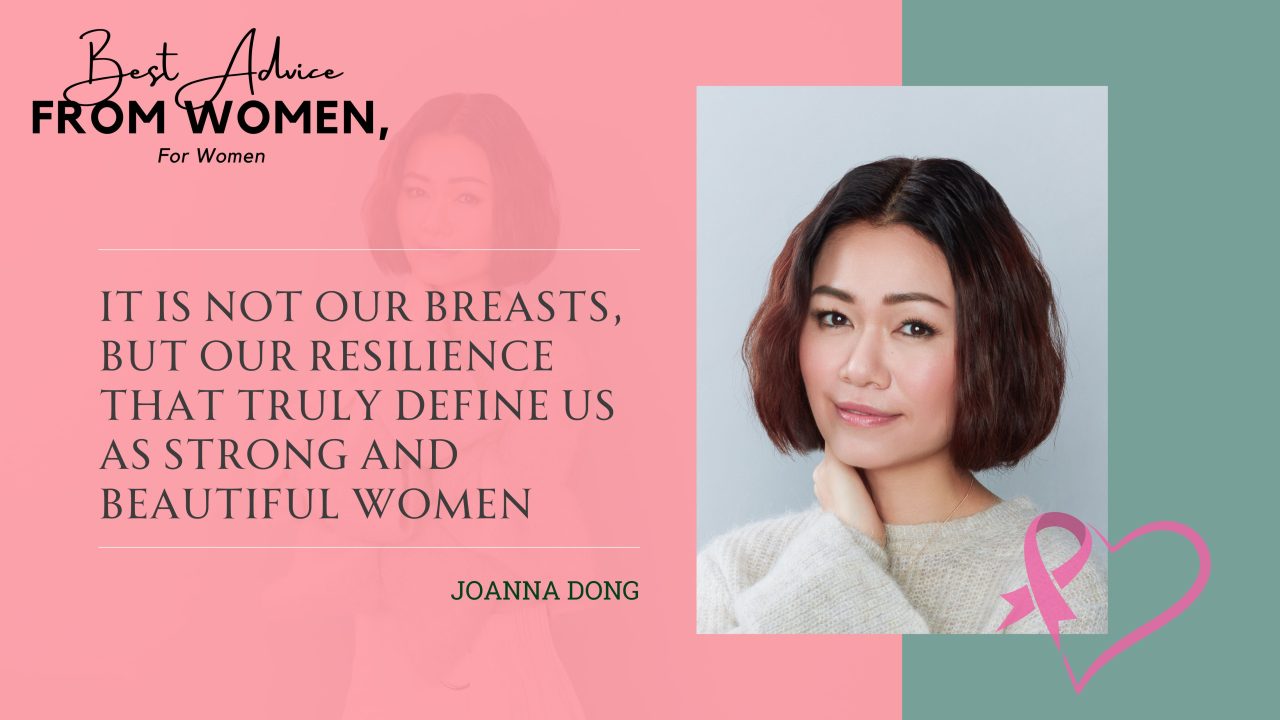
Awareness of your body is vital, as it empowers you to notice any changes or abnormalities early on. We spoke with Joanna Dong, singer and actress, about her breast cancer journey. Her vigilance in observing changes and taking quick action to address her concerns led to a less invasive treatment path.What kind of breast health issue did you face? I was diagnosed with stage 1 hormone sensitive breast cancer.How did you discover it? I went to see my breast specialist because I noticed some discharge from my right breast. MRI revealed blood pooling in breast ducts on both breasts, and my surgeon suspected DCIS (stage 0 breast cancer) at first, but the biopsy revealed that whilst I did not have cancer in my ducts, there was an incidental finding of a 7mm cancer tumour in the excised tissue adjacent to my right breast ducts.What was your biggest revelation after you were diagnosed?I realised that medical science has come a long way in breast cancer surgery, reconstruction, and treatments in the last two decades. I have a few friends who’ve lost their mothers to breast cancer when they were little, but today the survival rate is so much higher, especially when you discover it early like I did.What is one thing you wish you knew before you started treatment?The internet is a double-edged sword. It helped me learn more about my condition, but sometimes too much information without proper context and expertise can also be overwhelming. There were definitely moments when I had read something online and went on an unnecessary anxiety spiral, before meeting with my doctors who calmly and patiently addressed my concerns.What has the journey of dealing with or managing this issue been like for you? I was very fortunate that my surgery was minimally invasive, and that I did not have to undergo chemotherapy (only 8 sessions of radiation therapy). It was very manageable, and I honestly experienced relatively little physical discomfort throughout the whole process. Most of the challenge was in dealing with the psychological and emotional stress, and that’s where I am proud of the efforts I had made over the years in strengthening my mental health, and building strong relationships with my husband, family, and friends who have been amazing in supporting me.Before this happened, what was your attitude toward breast health? I do believe the public health campaigns have paid off, and I was already pretty well-informed about the importance of mammograms and self-checks. I am really grateful, because thanks to this awareness, I was observant of changes to my breasts, and caught the cancer early.Did this journey change that attitude? If anything, I think my personal experience with breast cancer has prompted me to be more vocal about breast health issues, in the hopes that more women will benefit from early detection like I did.What do you think women in general feel about breast health? It really depends on which generation of women you are speaking with. I think younger generations are much more comfortable discussing breast health, but for older generations, breasts are still somewhat taboo to talk about, and that’s totally understandable because the cultural norms were different for them. As an entertainer, I have a lot of older fans, so I felt compelled to speak more openly, in the hopes of de-stigmatising the topic for them.What are your thoughts when it comes to general awareness/education in this area? I think in general we understand much more about breast health now than before, but there are still many misconceptions regarding the specific treatments and procedures. For example, I didn’t realise that not every patient with cancer needs to go through chemotherapy, or that breast reconstruction techniques are so varied now. However, I am not sure it is necessary for the general public to know too many details either, because the treatments are constantly evolving and improving as well, and by the time the public learns about it, the information might already be irrelevant. What is essential and urgent for everyone to know, is that early detection saves lives.What advice would you give women about breast health?It is not our breasts but our resilience that truly define us as strong and beautiful women. Let’s take charge of our own health!Staying breast aware and keeping up with regular screenings can provide peace of mind.Remember, not all abnormalities indicate cancer. Let Solis & Luma provide the reassurance you need. Schedule your mammogram today.
Read more