


Benign lumps – how common are they and should I worry?

Not all lumps that are discovered during routine breast self-examination or screenings are cancerous. Often, many lumps are not.Dr Lim Siew Kuan, Senior Breast Consultant & Surgeon at Solis answers some questions on benign breast lumps, including the types, diagnoses and treatments.Q.What are breast lumps, and how common are they?Breast lumps refer to an area of swelling or firmness in the breast that feels different from the rest of the breast. They are the second most common breast symptom that patients present to GP clinics with breast pain being the first. Most lumps are benign (80%) and benign breast conditions affect around 8% of women.Q.What are some common types of benign breast lumps among Singapore women? Fibrocystic change: this is the most common type of benign breast lump. Many women feel that their breasts are generally lumpy and rubbery. This is due to a benign condition consisting of fibrous and cystic changes in the breasts. Breast cysts: Breast cysts are fluid-filled sacs and are not harmful. They tend to change in size, position and numbers according to a woman’s monthly hormonal cycles. However, attention should be paid whenever there is a solid component observed within the cysts. Histological correlation may be required as these solid-cystic lesions have a 10% risk of cancer. Fibroadenomas: A fibroadenoma is a mobile and smooth lump with a rubbery feel. It is termed a ‘breast mouse’ as it slips away easily from the fingers during palpation. Fibroadenoma breast lumps are formed by fibrous and glandular tissue and do not give any cancer risk. Q.Why do some women get benign breast lumps?As the breasts go through monthly hormonal cycles, the tissues change in response. Some women may be prone to ‘overgrowth’ of benign tissue, giving rise to the above-mentioned conditions.Q.Which groups of women tend to be more prone to getting such benign breast lumps? Why?In premenopausal women, their breasts go through cyclical hormonal changes. Breast lumps also tend to be familial and you may be more prone if your sister or mother has (had) the same condition.Q.How are breast lumps diagnosed?The diagnosis of breast lumps are done during clinical examination and imaging (ultrasound, with mammogram if > 40 years of age). If both clinical examination and imaging show any indeterminate features, a biopsy will be required for histological correlation.Q.What are the treatment options for breast lumps? Can they be treated non-surgically or is surgery always needed?Most benign breast lumps do not require any treatment. Treatment is required when the breast lumps cause pain or if the nature of the lump is uncertain (e.g. lump increasing in size or if it has concerning features on imaging).Q.Can breast lumps recur after treatment? When might they recur?Yes, as long as the cyclical hormonal changes are still happening, benign breast lumps can recur, either in same or different sites.Q.Some questions on breast self-examination: Is it advisable to do breast self-examinations, and why?  Yes, conducting self-examination encourages awareness of one’s own breasts, so that any new findings can be flagged up earlier by the woman.How frequently should this be done? Once a month When is it a good time to do a self-examination? Breast self-examination should be conducted on day 7-10 of your menstrual cycle, when the breasts are least lumpy and sensitive What to look out for during the self-examination? Keep a look out for new lumps/firm areas, breast asymmetry, skin changes, nipple dischargeArticle contributed and reviewed by Dr Lim Siew Kuan, Senior Consultant and Breast Surgeon at Solis Breast Care & Surgery
Read more

All You Need to Know about Breast Cancer Screening: Breast Mammogram and Ultrasound

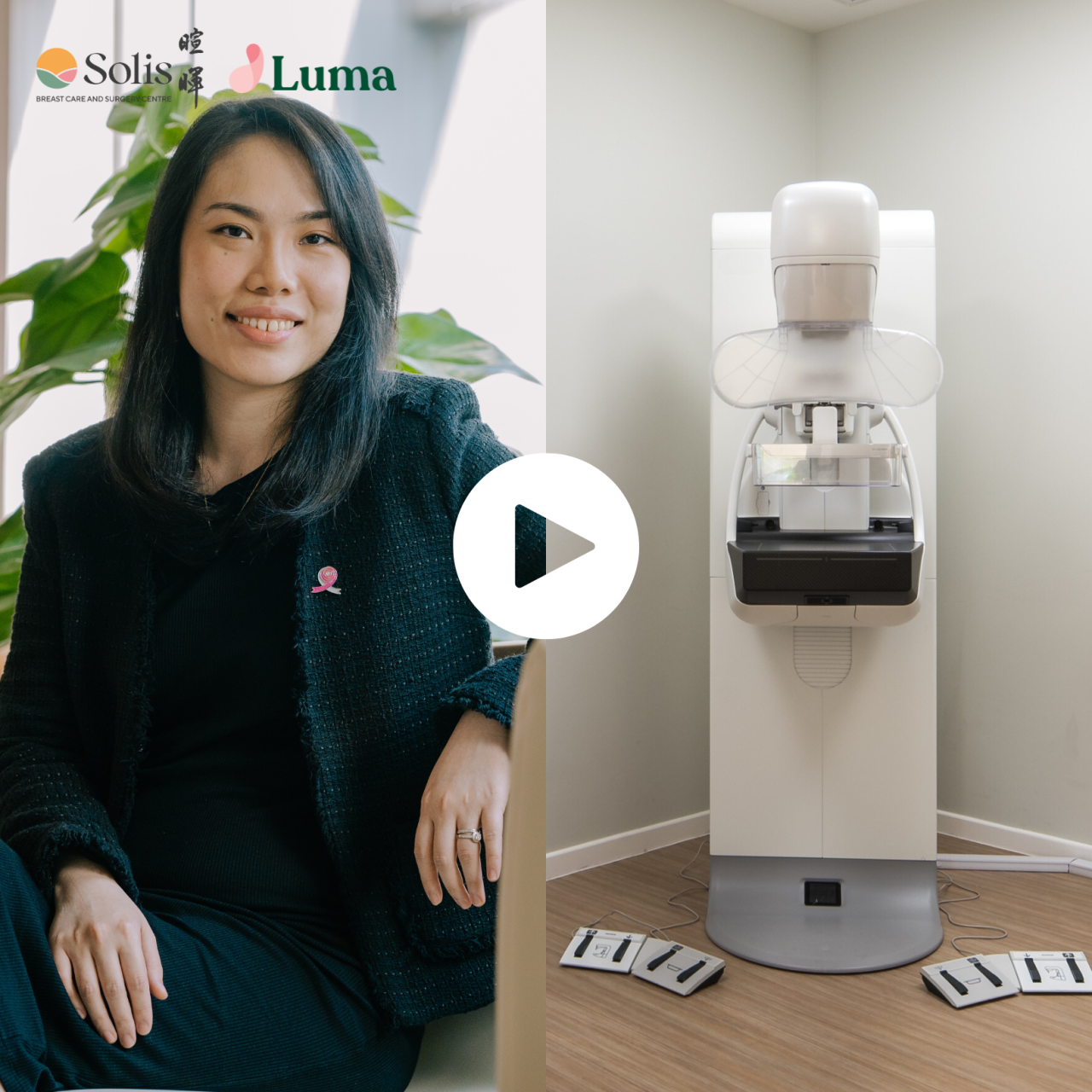
Mammograms are the globally recommended standard in breast cancer screening for women aged 40 and above. However, many women avoid talking about, or going for regular breast screening because of several concerns: I’ve heard from family/friends that mammograms are painful and uncomfortable There is no radiation exposure for mammograms, which is dangerous and can cause cancer My previous mammograms have resulted in false positive results, so I do not want to deal with the hassle and anxiety I feel healthy so I do not need any screening – I already do my own breast self-examination regularlyIn this educational video, Dr Sonia Lee, Consultant Radiologist from Luma Women’s Imaging Centre addresses these concerns, and more. By walking you through the process of what to expect during a mammogram, Dr Lee will address your concerns, alleviate fear and provide reassurance and information on breast screening and assessment. Please be mindful that while some breast conditions may be asymptomatic, most abnormal breast conditions are not cancerous.The team at Solis Breast Care & Surgery Centre and Luma Women’s Imaging Centre believe in the importance of breast health education. By equipping you with the knowledge, we want to encourage women to make breast screening a priority.Share this video with your loved ones too – sharing is caring! The content is intended for general information only and does not replace the need for personal advice from a qualified health professional.Video reviewed by Dr Sonia Lee, Consultant Radiologist from Luma Women’s Imaging Centre
Read more

Managing Breast Cancer Treatment Costs

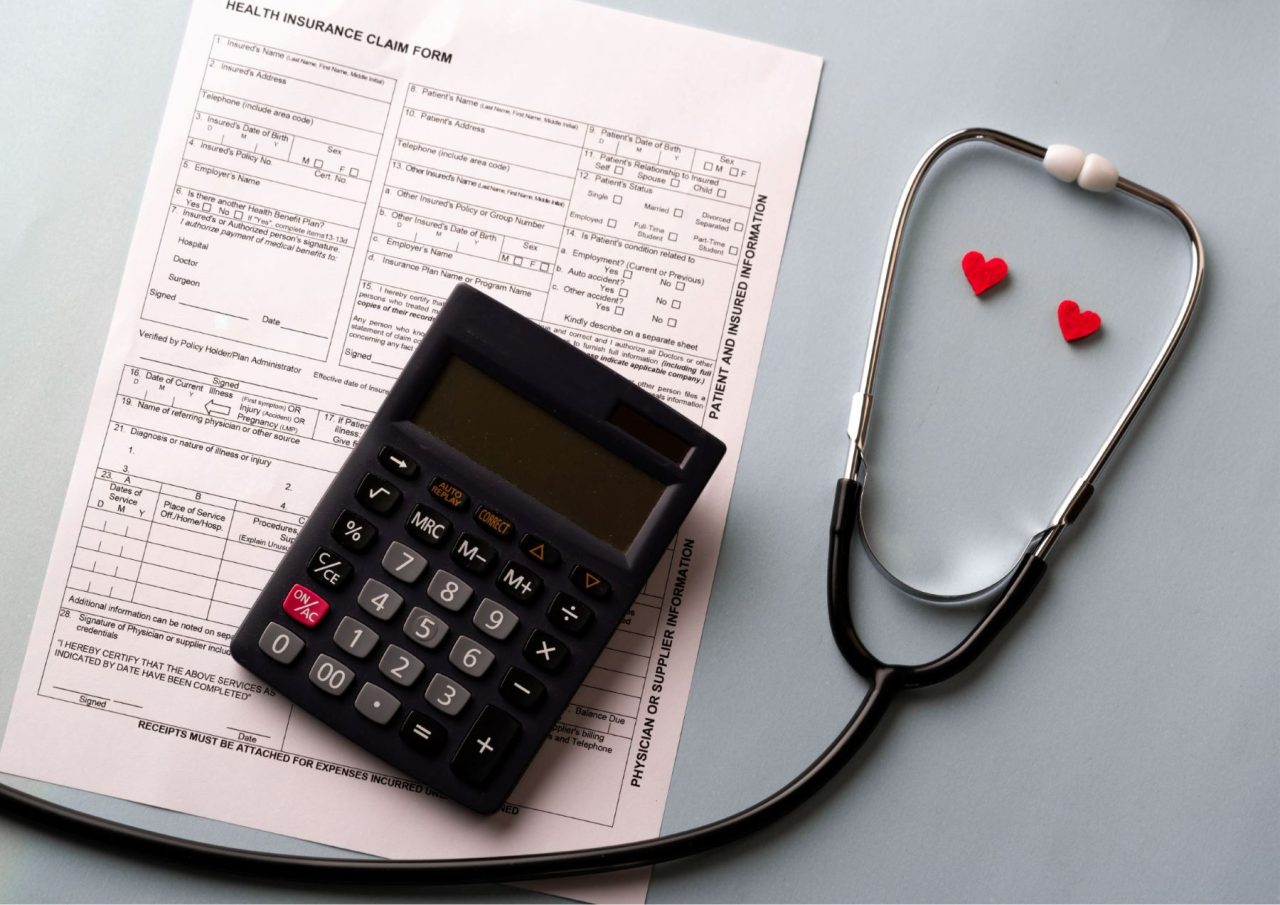
How to Navigate Breast Cancer Treatment Costs with Confidence: Taking Control of Your Financial JourneyEarly detection of breast cancer plays a vital role in saving lives and minimising the financial burden on patients. When breast cancer is detected early, treatment options are usually less invasive and more effective, leading to better outcomes and lower treatment costs.According to a WHO article, studies in high-income countries have shown that treatment for cancer patients who have been diagnosed early are 2 to 4 times less expensive compared to treating people diagnosed with cancer at more advanced stages [1].When detected early, breast cancer can often be treated with surgery and radiation therapy, which are generally less expensive than extensive treatments required at more advanced stages, such as chemotherapy.In the past, cancer treatment mostly relied on surgery alone, while nowadays, combining two or more treatment options may achieve a greater likelihood of cure than a single therapy. Below are treatment options available [1]:Breast Surgery Radiation Therapy: this uses high-energy X-rays to kill cancer cells and shrink tumours Chemotherapy: This uses drugs to destroy cancer cells Hormone Therapy: This uses anti-oestrogen therapy (such as Tamoxifen) or an aromatase inhibitor (such as Anastrozole) to stop hormone-responsive cancer cells from growingEstimated Cost of Breast Cancer Treatment in SingaporeThe estimated total bill for breast cancer treatment is from $3,000 onwards for Day Surgery and from $17,000 onwards for Inpatient treatment at private hospitals and clinics.Financing Breast Cancer Treatment & Screening in SingaporeUsing MedisaveFor women aged 50 years old and above, they can use their Medisave or the Medisave account of an immediate family member for their mammogram at Medisave-approved centres, including participating centres under HPB’s Screen for Life [2]. The full list of approved centres can be found on the Ministry of Health’s (MOH) website. Individuals can use up to $500 per Medisave account a year under the Medisave500 scheme [2].Treatment cost is always a pressing concern after a cancer diagnosis. Besides worrying about your health, you may also be concerned about your financial status.It is helpful if the Clinic share about the estimated costs required for the whole treatment process including follow up treatment or consultation so you can look out for financial support (if needed).Health InsuranceAll three critical illness, early-stage critical illness and cancer insurance plans cover breast cancer, as it is listed among the 37 common critical illnesses acknowledged by insurers.Self-payingThe Ministry of Health (MOH) has increased the MediShield Life claim limit for cancer drug services from $1,200 per calendar year to $3,600 per calendar year with effect from 1 April 2023.[3]For needy Singaporeans who cannot afford their subsidised medical bills, even with Medisave and Medishield coverage, they can tap into Medifund, which is a medical safety net set up by the government [4]. Those who have difficulties paying their medical bills can approach social workers at Medifund-approved institutions for assistance.Patients can also tap into the Cancer Care Fund, which is a one-time financial assistance scheme to relieve the financial burden of newly diagnosed cancer patients from low or middle-income families within the first six months of their diagnosis [5].Since the inception of this fund in 2015, more than $5.64 million in financial aid has been disbursed, helping more than 6,200 patients [5].Seeking financial advice with Solis Breast CareSeeking financial advice is essential for patients navigating the complexities of breast cancer treatment costs. Solis Breast Care offers customised financial advice tailored to each patient’s specific symptoms and required treatments. Our team of experts understand the financial challenges that patients may face, and we can offer valuable insights and support.By seeking financial advice, patients can better understand their options, explore potential financial assistance programmes and alleviate the burden of navigating the financial aspect of their breast treatment journey. Reach out to us via hello@solis.sg or Whatsapp to +65 91396472.1. HealthHub, “Breast Cancer”2.  HeatlhHub, “Breast Screening Subsidies in Singapore”3.  Ministry of Health, “Higher Medishield Life Claim Limit For Cancer Drug Services”4. Singapore Cancer Society, “Financing Your Treatment” 5. Singapore Cancer Society, “Apply for Financial Assistance” 
Read more