

A Mammogram for Mothers: The Gift of Breast Cancer Screening
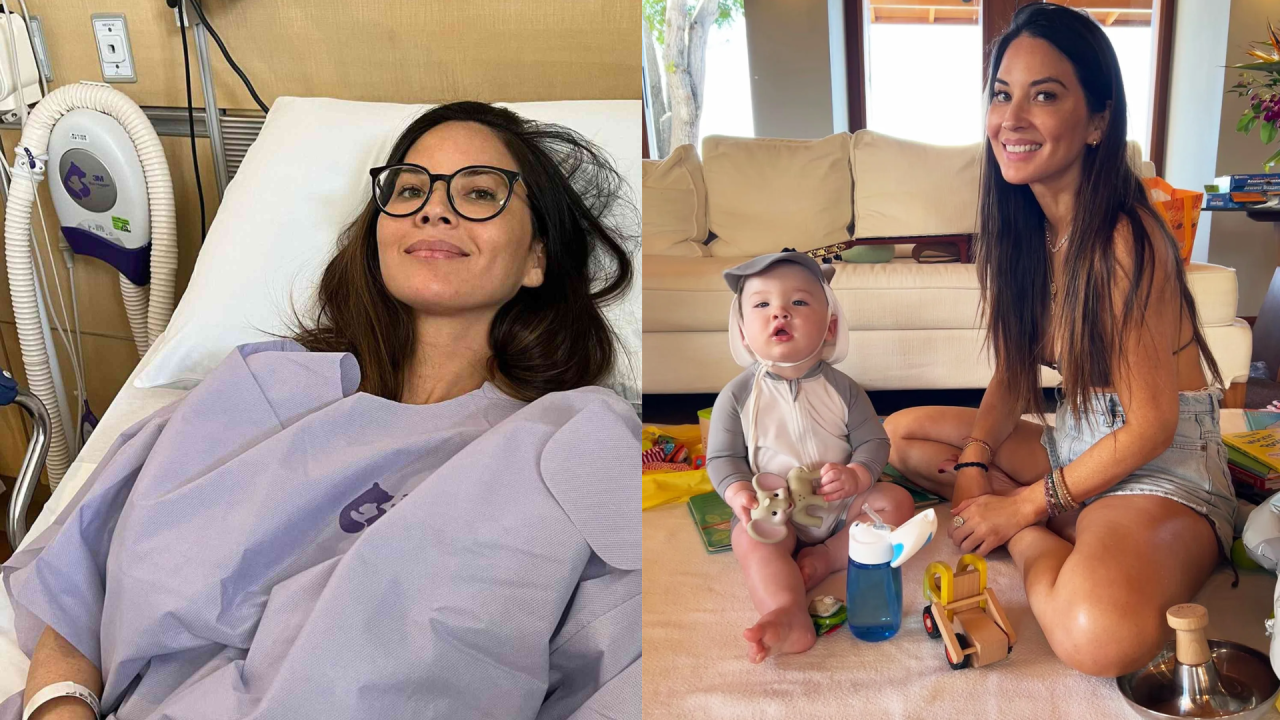
Even princesses can get cancer. Last month, the world was shaken by Princess of Wales Kate Middleton’s cancer diagnosis. And just before that, actress Olivia Munn’s candid revelation of her battle with breast cancer made headlines. Their stories are a reminder that cancer does not need permission to disrupt lives.Both young mothers in their early 40s, their high-profile diagnoses have sparked conversations about early detection, as well as the effects a cancer diagnosis can have on motherhood.Know Your BreastsWhile cancer survival rates have improved over the years, cancer remains the highest cause of death in Singapore, accounting for 28.2% of all deaths from 2017-2021 [1]. Breast cancer constitutes 24.6% of all diagnoses, making it the most common cancer among women in Singapore, contributing to 1 in 6 cancer deaths among females in the country [1].Breast cancer treatments are more effective and less invasive when the cancer is found early. One key to early detection is monthly breast self-examinations. If you are aged 20 years or older, it is important to be familiar with the way your breasts normally look and feel, to stay abreast of any worrying changes.Regular breast screenings are another key to detecting breast cancer at an early stage, when it is most treatable. According to the National Population Health Survey 2022, despite 9 in 10 women in Singapore aged 50 to 69 being aware of mammograms, only 37.6% of this demographic had undergone one in the last two years. The primary reason cited for this low mammography uptake is the perception that screening is unnecessary when you are healthy [2].Munn’s cancer would have been detected later had it not been for proactive health measures, which included an annual mammogram. If there had been any further delay, her treatment options would be limited [3]. Some breast cancer symptoms may not be noticeable to the naked eye, therefore regular screenings are essential regardless of symptoms. Waiting until symptoms develop to have a mammogram may result in the cancer being detected at an advanced stage.Source: Ministry of Health Singapore [4]
How Early Detection Makes a DifferenceIt is important to act early than react late.Breast self-examinations complement, but do not replace screenings like mammograms. Mammograms are instrumental in helping to detect lumps before they can be felt by touch and become worse.Another reason women in Singapore cited for not doing their mammograms is the fear of the outcome [2]. Information about your body through screening tests is key. While anxiety surrounding testing results is understandable, the benefit of early detection for improving one’s chances of survival cannot be stressed enough. Annual mammograms can reduce mortality by approximately 40% [5].The BB (Boob Bead) keychain and infographic below illustrate the differences between the size of lumps detected through breast self-examination vs regular screening. Each bead on the keychain represents different lump sizes based on the detection method. With regular mammograms and ultrasound, it is possible to detect lumps that are 2-3 mm in size, a vivid reminder of why regular screenings matter.The boob bead keychains at Solis (left) are made by survivors and volunteers, as part of efforts to educate and encourage women to be breast aware.Being a Mother and Cancer PatientBeing a cancer patient is mentally draining, as one copes with the shock of the diagnosis and is wrapped up in a whirlwind of testing, treatments and decisions to make. For mothers with young children, this mental load is exacerbated, as they also need to worry about how their children will emotionally cope.“You realise cancer doesn’t care who you are; it doesn’t care if you have a baby. It comes at you and you have no choice but to face it head-on,” says Munn [6]. The young mother of one notes that one of the hardest things when recovering post-mastectomy was not being able to carry her son (who was only one-year old then) despite his pleas [7].Studies have highlighted the emotional burden experienced by mothers with cancer. Not only do they need to grapple with the physical, mental and emotional toll of the disease, but they may also struggle with guilt from a perceived failure to meet parenting expectations [8]. Amidst additional stress from other aspects of their lives such as relationships and employment, these mothers demonstrate remarkable resilience in balancing dual roles as parents and patients.Let us make this Mother’s Day count by honouring the mothers whose strength and love light up the world. Give your mother the gift of clarity by reaching out to us to schedule a mammogram, and help spare her from the anguish of a late diagnosis.1 Health Promotion Board, “Singapore Cancer Registry Annual Report 2021” 2 Ministry of Health Singapore, National Population Health Survey 20223 People, “Olivia Munn, 43, Reveals She Was Diagnosed with Breast Cancer and Had Double Mastectomy”4 Ministry of Health Singapore, Health Screening Guidelines5 “Benefits and Risks of Mammography Screening in Women Ages 40 to 49 Years”6 People, “Olivia Munn’s ‘Terrifying’ Breast Cancer Diagnosis After Baby Joy: 4 Surgeries in 10 Months, and Medically Induced Menopause (Exclusive)”7 People, “Olivia Munn Says Not Being Able to Pick Up Son After Mastectomy Was ‘One of the Hardest Things’ (Exclusive)”8 “Mothers with Cancer: An Intersectional Mixed-Methods Study Investigating Role Demands and Perceived Coping Abilities”
How Self Love can Change Your Life – Say No to Breast Cancer
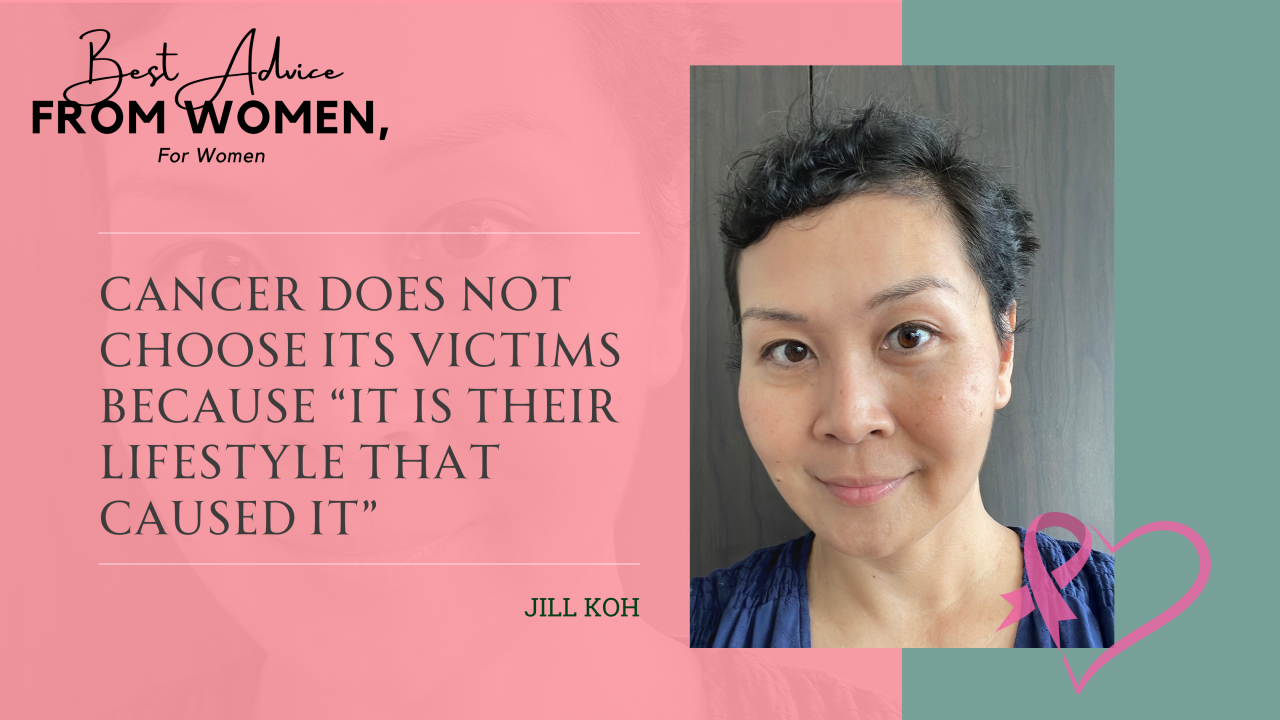
It is important to conscientiously practice breast self-examinations so that we are aware of any changes/abnormalities and seek medical attention early. Early medical intervention increases one’s chance of recovery.In this edition of Best Advice from Women, for Women, we speak with breast cancer survivor Jill Koh, who helps us quell some of the misconceptions that many women have about breast cancer.QuestionsWhat kind of breast health issue did you face?I was diagnosed with invasive lobular carcinoma (stage 3 as it had spread to the lymph nodes in my right arm) in January 2021.How did you discover it?I was in Bangkok on personal business and as I was lying sideways in bed, I found a lump in my right breast as I did my own routine check-up. I went to a local hospital the next day. The doctor did an ultrasound and mammogram for me and told me it was highly likely breast cancer but as my flight home was in three days, she said to continue with the treatment in Singapore. After I served my two-week quarantine, I went to see a breast specialist where we did a biopsy and the cancer was confirmed.What was your biggest revelation after you were diagnosed?Two years prior in 2019, I had a lump removed in the same breast after the initial sample biopsy showed presence of cells that could turn cancerous. However, the lump and its surrounding tissues were benign and no traces of the earlier cells were found in the final biopsy. My doctor and I agreed to check regularly to be safe but I think that had already prepared me mentally that I could be at risk. So when I was really diagnosed with cancer in 2021 , I was quite prepared to accept it and move on immediately to treatment. Not much emotional upheaval involved.What is one thing you wish you knew before you started treatment?Breast cancer is not just “one type of breast cancer” but there are many variations and most of them can be controlled as long as we receive treatment soonest. I was undergoing treatment at the same time as a friend and while my cancer was hormone receptive, hers wasn’t and our treatment was thus different. Our experiences with chemotherapy and radiation were somewhat the same in general (baldness and occasional fatigue), yet it was also vastly different as it depended on the type of chemotherapy treatment administered, our own physical limits, resilience and outlook as well as family/friends’ support.Hence, we can’t just believe what we watch on TV that hair drops once you start chemo (takes about a fortnight actually) and you would get sickly and weak – this is true for some but not all! It really depends a lot on various factors starting with what type of breast cancer we have, what stage we are at and treatment options. My skin was absolutely glowing during treatment as I drank so much fluid to flush the chemotherapy medication out after each treatment!What has the journey of dealing with or managing this issue been like for you?I am generally an optimist and fairly active person. Not sporty, just a fidgety type of active. I can’t really sit still, and I am always on a project or another. So I tried not to worry too much about the entire process from start to end and I definitely did not try to google and self-diagnose every side effect etc. It is good to be informed but it is unnecessary to be a cyberchondria.I placed full trust in my doctors to provide me with the best medical options and care. My family and friends who knew of my condition were also supportive and nobody treated me “differently”. My husband would insist I get out there almost daily for short walks, fresh air and we would continue to gallivant after dropping my daughter off school in search of good food. I continued with housework and cooking (although I had to delegate the taste test to the kids as the treatment affected my sense of taste somewhat) and we worked to maintain as normal a routine as possible.I felt blessed that I found my lump (which was supposedly fairly buried under the areola) by chance and managed to get treatment quickly, that I had good doctors and I responded quite positively throughout the treatment with mild side effects. So I cannot be upset about or blame anything really. Just be positive and look towards the end of treatment.Before this cropped up, what was your attitude toward breast health?My step grandmother had a mastectomy and I remembered as a kid how she had a sponge pad for her bra. My aunt had stage zero breast cancer and my mom has had a few scares. I had a lump removed in 2019 too. So I have been exposed to the topic of breast cancer for a long time. And I used to head up the Pinktober project in my child’s school (when we were based overseas) to fundraise and provide the school’s contract staff with regular medical, breast and PAP smear check-ups. We would also have nurses come into the school annually to educate all local staff on the importance of breast check ups. So breast health has always been important to me even before my diagnosis.Did this journey change that attitude?I think it further reinforced the message that women have to take responsibility for their breasts and health. In fact, 5 months before my diagnosis I had a full check-up as part of my insurance package (for ladies). It was a manual check by the doctor and she did not notice any anomaly then. When I was diagnosed and I shared the news with my family and friends, it triggered a wave of check-ups among them as many were indeed procrastinating and until it happened to someone close, I guess it felt like “oh, it won’t happen to me” to many. And that push factor was a positive as since then 2 more friends had been diagnosed early during their check-ups.What do you think women in general feel about breast health?I can’t comment on the general attitude in Singapore, but among family and friends, I know they are educated and aware of breast health. However, many have prioritised themselves last, putting the needs of their children, families and work ahead, and procrastinating on the check-ups or not scheduling them at all.Based on my experience with the lower income local staff in my child’s previous school overseas, their concerns were different. They would rather be ignorant so that they can continue to work, have an income to support the family and not worry/think about medical costs for treatment as many did not have proper insurance coverage.What are your thoughts when it comes to general awareness/education in this area?Perhaps because I am a breast cancer survivor, I am more aware of all the advertisements, events and activities that are organised by Breast Cancer Foundation, and various medical bodies and support groups to promote breast health. They pop up on my Facebook feeds, in support group Whatsapp chats and the intensity ups in October during Breast Cancer Awareness Month.However, for others who have not had the opportunity or time to think about it, they may not consciously sight or notice these efforts to educate. And what they learn through watching dramatic soap operas about breast cancer might just give them the wrong impression – that everyone MUST have chemotherapy, radiation, then go bald, sit and look withered in a wheelchair, or that breast cancer makes one less of a “woman” if she had to undergo mastectomy. It could be refreshing for a TV soap series to for once portray a positive case!What advice would you give women about breast health?I don’t drink, smoke and I keep an active lifestyle. I try to eat healthy and breast-fed both kids for 18 months each from birth. Even when I was diagnosed, I had no obvious textbook symptoms like orange peel skin, pus, pain, fatigue, loss of appetite etc. Cancer does not choose its victims because “it is their lifestyle that caused it”. It happens, so always dedicate some time to care for yourself, do your annual check-up head to toe. Don’t hesitate to seek treatment. Also, if you can afford it, invest in a good insurance package. Since diagnosis my treatment has probably cost $200,000 plus minus and most of it has been covered by my insurers thankfully, so that really helps as it is one less thing to worry about – finances.Practice good breast health habits, and stay positive!If you have any questions on breast health but were too afraid to ask your doctor, let our Solis doctors help you.