
Hear From A Breast Cancer Survivor: Listen To Your Body

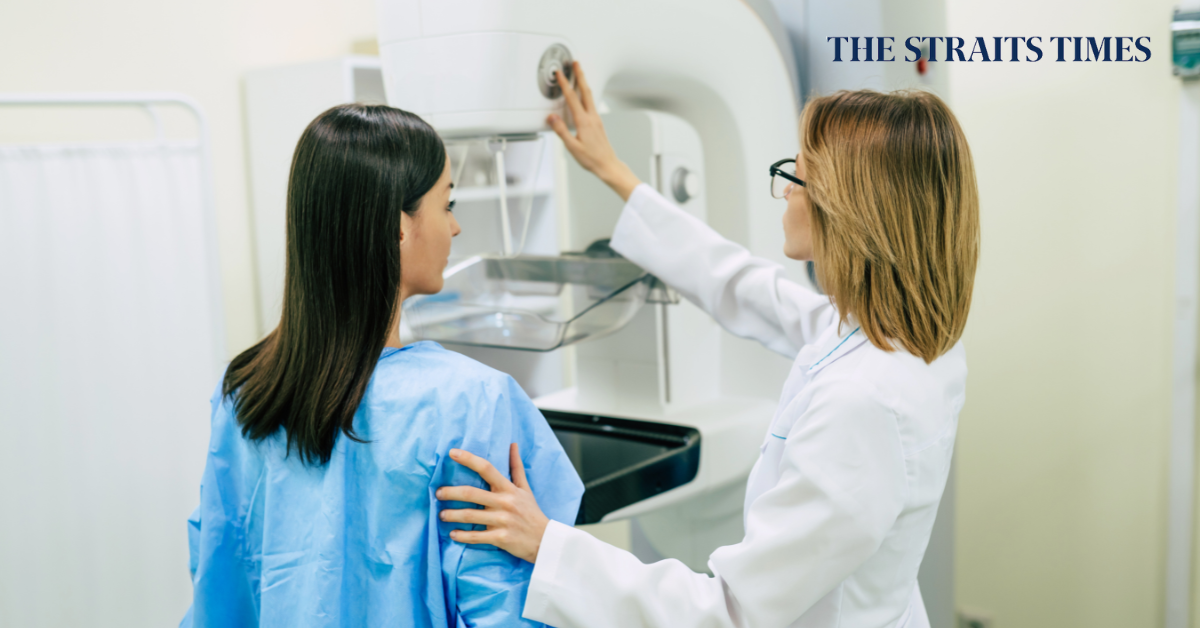
Learn how a breast cancer survivor stayed positive and survived her first health scare with courage, determination, and an effective treatment plan When Lay Peng felt a lump on her right breast in mid-2019, she brushed it off, thinking that it was due to hormonal changes and would soon go away. However, she became worried when the lump remained after six months. After completing an ultrasound scan and mammogram at her next annual health screening, she was advised to seek medical attention. “I was concerned about the lump but I did not think it was breast cancer,” Lay Peng related. “I have no family history of cancer and I also have been healthy all along.” Lay Peng came to know of her breast cancer diagnosis through a biopsy and consultations with a Breast Surgeon. When the news of her breast cancer broke, her mind immediately went blank. “I was worried for my family – my daughters, my husband and my elderly folk,” Lay Peng recalled. “I came to realise the fragility of life.” Understanding breast cancer and undergoing treatment Breast cancer is a type of cancer arising from the milk glands of the breast, described Dr Tan Yah Yuen, Breast Surgeon at Solis Breast Care & Surgery Centre. There are a wide variety of symptoms for breast cancer, she explained, with the most common symptom being a painless breast lump. However, some patients manifest no signs nor symptoms at all. Hence, in the very early stages of breast cancer, findings can only be discovered via mammography. Ultrasound scans are also useful in complementing these screenings, while 3D mammography is recommended for a more thorough examination of dense breast tissues. Dr Wong Chiung Ing, Senior Consultant, Medical Oncologist at Parkway Cancer Centre, observed that the chance of cure is more than 95% for early-stage breast cancers that are confined in the breast. However, breast cancer is generally not curable if there is spread to other organs such as the liver, lungs, bones, or brain. Nonetheless, treatment options such as chemotherapy, radiation therapy, hormonal therapy, targeted therapy, and immunotherapy are available to improve survival rates and the quality of life. “In determining the treatment regimen for each patient, we perform tests on cancer cells before tailoring the type of treatment,” Dr Wong said, adding that the patient’s general health and condition would also be taken into consideration. The treatment of breast cancer thus involves a multi-disciplinary team of doctors and specialists which includes surgeons, medical oncologists, radiation oncologists, and pathologists. Strong support is also needed from nurses and other health professionals such as physiotherapists, dieticians, and psychologists. “With so many treatment options available, it is therefore very important for us to come together as a team to derive the most effective treatment plan for patients,” Dr Wong shared. In Lay Peng’s case, her doctors had advised for her to receive neoadjuvant chemotherapy, or chemotherapy before surgery, as initial treatment for her cancer. The primary objective of neoadjuvant chemotherapy is to downstage the tumour which may allow less extensive surgery on the breast/axilla, and to reduce the risk of distant recurrence. Despite her initial concerns, Lay Peng mustered the courage and determination to undergo treatment and get well. “I only have one life,” she reflected. “Instead of asking why, I accepted reality and embarked on the recovery journey. While there were tough moments along the way, I think the focus on getting well is important for you to get going.” Feeling well and cancer-free Lay Peng and her doctors’ efforts paid off post-surgery in September 2020. The treatment had resulted in a complete pathological response at surgery, meaning that no cancer cells were detected from tissue samples after surgery. Besides surviving breast cancer, Lay Peng was also able to conserve her breast, and did not require mastectomy. While treatment was manageable on the whole, Lay Peng revealed challenging moments such as hair loss, loss of appetite, nausea, and diarrhoea. Nonetheless, she remained grateful for the time and space to recover, as well as for the strong support from her doctors and nurses in Allied Health, as well as her family, friends and colleagues. It is never too late to seek medical help, Dr Tan assured, though there is a lower risk of relapse if breast cancer is detected earlier. Today, just slightly more than 50% of women in Singapore undergo regular breast cancer screening. Yearly screenings are recommended for women who are 40 years of age and older, or earlier for women with a family history of breast or ovarian cancers. For postmenopausal women, screenings should be done at one- or two-yearly intervals, depending on their individual risk factors. Most importantly, women should not put off their breast cancer screenings and should remain alert to bodily changes. “Listen to your body and trust your instincts,” Lay Peng encouraged. “If you sense something wrong, it is best to get it verified.” Article contributed and reviewed by Dr Tan Yah Yuen, Senior Consultant and Breast Surgeon at Solis Breast Care & Surgery and jointly produced with Parkway Cancer Centre
Read more

Knowing the Right Mammogram Screening to Choose, Makes A Difference.

Have you ever been asked if you would like a 2D mammogram or a 3D mammogram? Do you know the differences? An annual mammogram screening is proven to be the best way to detect breast cancer but the type of mammogram you choose can be crucial. In Singapore, breast cancer is the most common form of cancer in women, and the leading cause of cancer mortality in women, contributing about 17% of cancer deaths. The good news is that a yearly mammogram for women aged 40 and above helps to detect breast cancer earlier, leading to less aggressive treatment and a higher rate of survival. “The threat of breast cancer remains a reality for women from all walks of life. The number of new breast cancer cases has increased exponentially in the last 40 years and this underscores the importance of women taking charge of their breast health. Early detection helps us to achieve higher cure rates for patients with breast cancer,” shared Dr Tan Yah Yuen, Senior Consultant & Breast Surgeon of Solis Breast Care and Surgery Centre. 3D mammogram is extensively used to detect the onset of breast cancer. Each breast is imaged in two different positions. Compared to conventional 2D mammogram where the X-ray tube takes a single picture from each position, the 3D X-ray tube scans the breast in arc in four seconds. In conventional 2D imaging, overlapping structures at various depths within the breast are superimposed and may be difficult to distinguish as separate structures. With 3D imaging, the images slice through the breast at various depths, allowing these structures to be seen clearly and distinctively. Small early cancer growth can be more readily distinguished from the overlapping normal glandular tissues within the breast. 3D mammogram has been clinically proven to increase the early detection of invasive breast cancer by 54%. Up to 30% of cancers are not detected by the standard mammograph, and mammographic sensitivity decreased up to 48% in women with extremely dense breasts. Early detection leads to an almost 100% cure rate and reduces unnecessary call-backs for additional images by 37%. On top of that, it also reduces radiation and it is more cost effective, especially if 2D requires more views. Luma Imaging Women’s Centre utilizes the latest generation of 3D mammogram that has lower radiation dose, as compared to conventional 2D mammogram. Flexible paddle technology used with these machines reduces discomfort from the compression by allowing the paddle to fit the natural shape and curvature of the breast, thus distributing the pressure evenly across the compressed surface. These state-of-the-art machines also allow the detected lesions to be accurately targeted for biopsy under 3D guidance. “It is very important for women to understand that breast health is crucial and it shouldn’t be taken for granted. Many women defer going for mammogram screening because of many reasons such as discomfort, pain or fear of exposure to radiation. At Luma, we are focused on breast imaging. Combining technology and expertise, a 3D mammogram is better tolerated than a 2D study. Multiple studies show the benefits of 3D mammogram in finding more cancers and reduces the number of false-positives. Regular screenings will reduce the risks of undetected breast cancer.” – Dr Eugene Ong, Imaging Director, Consultant, Radiologist and Co-Founder of Luma Women’s Imaging Centre. Early detection of breast cancer can improve treatment outcomes. Modern day breast cancers are complex, and doctors must tailor each treatment based on many considerations such as the cancer’s subtype, stage and risk factors of the patient. Founded with the belief that patients deserve personalised care, Solis Breast Care and Surgery Centre works intimately with Luma Women’s Imaging Centre where a team of breast surgeons and breast radiologists adopt a multi-disciplinary approach to breast care. They strive to provide a new level of expertise and experience in delivering bespoke and holistic care to their patients. With seven leading female surgeons who each have their own areas of expertise in breast care and surgery, Solis Breast Care and Surgery Centre brings across the full spectrum of expertise and experience – combining evidence-based approach with empathy and compassion, tailor-made treatment plans that prioritise patients’ well-being and improving their quality of life. Together with Luma Women’s Imaging Centre, patients can expect a comprehensive diagnostic approach leveraging on cutting-edge technology to provide screening and treatment for breast cancers. References: National Registry of Diseases Office. (2021, March 31). Singapore Cancer Registry Annual Report 2018 – NRDO. Singapore Cancer Registry Annual Report 2018. Retrieved March 30, 2022, from https://www.nrdo.gov.sg/docs/librariesprovide3/default-document-library/scr-annual-report-2018.pdf?sfvrsn=bcf56c25_0 National Registry of Diseases Office 28 Jan 2022, https://nrdo.gov.sg/docs/librariesprovider3/default-document-library/scr-2019_annual-report_final.pdf?sfvrsn=fa847590_0 Endo. T. et al. (2014) Clinical Evaluation of Dual Mode Tomosynthesis. In: Fuita H., Hara T., Muramatsu C. (eds) Breast Imaging. IWDM 2014. Lecture Notes in Computer Science, vol 8539. Springer, Cham. https://doi.org/10.1007/978-3-319-07887-8_75 Kolb TM, Lichy J, Newhouse JH. Comparison of the performance of screening mammography, physical examination, and breast US and evaluation of factors that influence them; an analysis of 27,825 patient evaluations. Radiology. 2002;25(1):165-175. Doi: 10.1148/radiol.2251011667 Article contributed and reviewed by Solis Breast Care and Surgery Centre and Luma Women’s Imaging Centre.

Read more