
Finding Strength Within and Rising Above: Empower Yourself in the Breast Cancer Journey

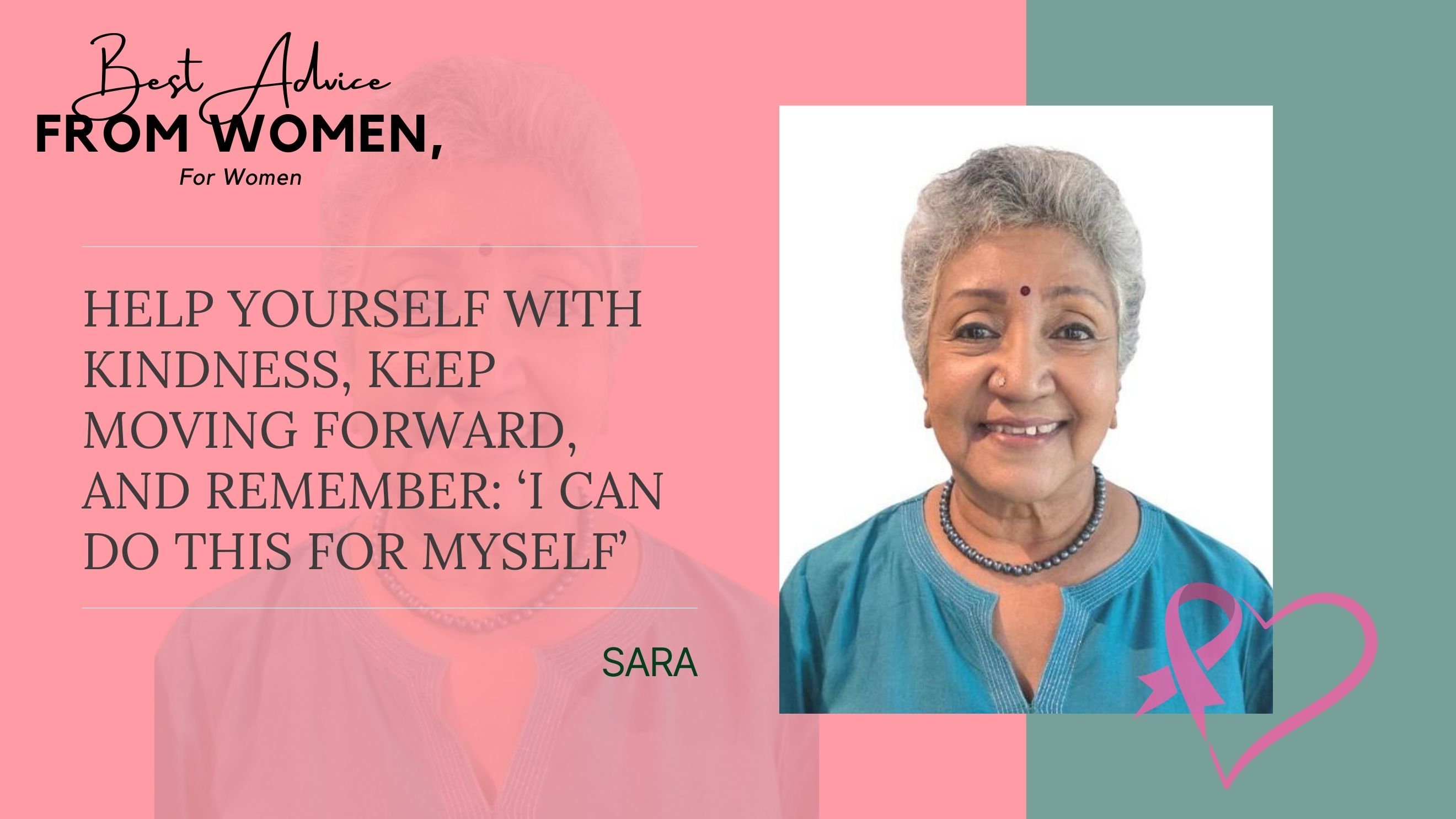
At 74, Sara embodies resilience, independence, and joy. A proud mother and grandmother, she has built a full and meaningful life surrounded by family and friends. But in 2017, her world shifted when she discovered a lump in her breast. What followed was a journey of courage and healing — one that taught her the power of self-motivation, strength, and hope.Please tell us a little bit about yourself My full name is Muthusamy Saraswathi, my Indian name — but I go by Sara. I turned 74 this June.I’m a very independent person who lives alone. I became a single mother at 39, after filing for divorce, and raised my two children — a son who is now 52 and a daughter who is 46. Both are married with their own families. My daughter lives in the US, while my son lives here in Singapore. I have four wonderful grandchildren — two boys and two girls.I’m happily single, living in a condo by myself, surrounded by many friends. I enjoy going out for breakfast, traveling, and spending time with people who bring me joy.Can you tell us about your journey with breast cancer — how you first discovered it, and what went through your mind? It was in 2017. I had delayed my routine check-up, telling myself I’d go “later.” Then, three days after Deepavali, I woke up at 3am and felt some something under my right breast. When I touched it, I found a lump.I panicked. At 3am, I drove to my son’s house and sat in their basement bathroom for an hour, not knowing what to do, before driving back home, still in shock. The next day, I told two close friends — one of them a nurse — and they encouraged me to get checked immediately.My daughter-in-law also helped by contacting her brother, who worked in healthcare. Things moved very quickly: I went for a mammogram that very evening, and it was confirmed to be cancer. Through her brother, I was referred to my breast surgeon.My doctor performed a lumpectomy. From the start, she was more than a doctor to me. Whenever I was feeling down, she would sit with me, hold my hand, and take the time to talk. I felt blessed to be in such caring hands. For the past eight years, I’ve continued to see both my breast surgeon and oncologist, and I am deeply grateful for their care and compassion.What was your biggest concern or worry at that time, and how did you go about finding information or support? My biggest worry was: what will happen to me?At first, I didn’t even tell my children — I didn’t want to burden them. But I was also fortunate to have strong support from my family, for instance my daughter-in-law and her family, who helped me get immediate access to doctors. That gave me great comfort — knowing I wasn’t alone and that I had trusted professionals guiding me through.What helped you find strength during your treatment and recovery? A few things gave me strength. First of all, I learned to motivate myself. I didn’t want to depend on others for everything. I would go out, meet my friends, treat myself to a nice meal, or simply enjoy Singapore — a beautiful country where we are blessed with excellent healthcare.Faith also played a role. Turning to my faith gave me peace, and writing in a journal helped me process my feelings. These became my secret mantras for strength.And of course, my family supported me — especially my twin granddaughters, who always lifted my spirits. My daughter-in-law’s mother also cooked nourishing soups for me, which I deeply appreciated.What does “survivorship” mean to you, and how do you define “living well” after cancer? To me, survivorship means self-motivation. You must be your own source of strength. Don’t stay at home and wallow in self-pity. Go out, meet friends, move your body, eat well, and find joy in small things.Living well after cancer means being at peace with yourself. If you’re religious, turn to your faith. If you’re struggling, write your thoughts in a journal — it helps to unburden yourself. And if you need help, don’t be afraid to ask, but don’t cling to others. Learn to support yourself emotionally first.What is one piece of advice you would give to other women going through a similar journey? One piece of advice I would give is to learn how to motivate yourself and not rely on others for everything. It’s natural to feel down at times, but try not to fall into self-pity. Instead, remind yourself that you are stronger than you think. Always treat yourself kindly and do something that brings you joy — step out, take a walk, or enjoy a meal. These small acts of self-care remind you that you are capable, and they give you the courage to keep moving forward.What is a mantra, philosophy, or lesson you carry with you today? “Help yourself first, unburden your heart, and remind yourself: I can do this. Motivate yourself with kindness, know that not all is lost, and keep moving forward — always remembering, I can do this for myself.”Sara’s story reminds us that while cancer can be life-changing, it does not define who you are. Her journey reflects the strength of choosing self-motivation over self-pity, faith over fear, and joy over despair. Today, she lives fully — travelling, sharing meals with friends, and cherishing her family — while holding on to her mantra.If you notice any lumps, bumps, or other abnormal changes in your breasts, don’t let fear deter you — consult a breast surgeon. Early detection saves lives, and survivors like Sara show that life after cancer can still be vibrant and fulfilling.
Read more

Early Menopause After Breast Cancer: Navigating Sudden Changes with Care

For many women, menopause is a natural life stage that usually happens in their 40s or 50s [1]. But for women with breast cancer, menopause can come much earlier, sometimes suddenly, and bring a unique set of challengesWhen Menopause Comes EarlyMenopause occurs when your periods stop permanently [1]. Some breast cancer treatments, such as chemotherapy or hormone therapy, can trigger it sooner than expected [2]. Early menopause is more than a hormonal change, it’s a deeply personal transition that can reshape how you feel about your body, your relationships and your future [3] [4]. While some women may feel relief at no longer having periods, others may grieve the body they had before cancer. Common menopausal symptoms include [5]:Unlike natural menopause, which often happens gradually, early menopause can come abruptly and feel more intense [6] [7]. The suddenness can come as a shock, and the emotional and physical changes overwhelming. Living with Emotional and Physical ShiftsMenopausal symptoms affect more than just your body—they ripple into your daily life. They can affect intimacy, self-image, work performance and overall well-being, sometimes leading to depression or anxiety [8] [9]. For instance, vaginal dryness or reduced sex drive may make intimacy uncomfortable, straining relationships and self-perception [4] [10]. Hot flushes and difficulty concentrating can affect work, creating frustration or embarrassment [11]. For younger women, early menopause adds another emotional layer [10]. Fertility concerns and disruptions to sexual life during peak reproductive years can intensify feelings of loss. [7] [11]. Experiencing menopause when most peers have not yet entered this stage can feel isolating and impact self-identity [11]. Finding Ways to Cope and ReconnectManaging menopausal changes is an important part of follow-up care for breast cancer survivors [12]. Treatment decisions and coping strategies depend on symptom severity and potential side effects [13]. Certain lifestyle changes can help make things more manageable. Discuss your options with your doctor to find what’s most suitable for you. Practical tips for managing hot flushes and vaginal dryness [13] [14]:Seeking support, from your doctor, a therapist or fellow breast cancer survivors, can help you process the changes and remind you that you are not alone. Reconnecting with Your BodyMenopause management isn’t only about easing symptoms. It’s about rebuilding a connection with your body. Research shows that body image concerns often persist after cancer, and survivors may feel disconnected or perceive their bodies as changed or damaged [15]. Surgical scars, early menopause and other physical changes can make self-acceptance difficult. Yet acknowledging  these feelings, practicing patience, and slowly cultivating a kinder relationship with your body are vital steps in recovery. Your body has endured treatment, adapted, and continues to carry you through life. It deserves care, respect and compassion.With the right support, you can adjust, rediscover balance and move forward with strength.  Survivorship isn’t only about overcoming cancer, it’s about embracing a new chapter with confidence and resilience.Learn MoreEarly menopause after breast cancer can feel overwhelming, but you don’t have to navigate it alone.The Breast Years of Your Life: Living Well After Breast Cancer offers practical guidance and heartfelt support to help you manage symptoms, reconnect with your body, and embrace this new chapter with confidence.Explore this compassionate guide and take steps toward living well after breast cancer.References[1] Mayo Clinic, Menopause [2] Cancer Research UK, Menopausal symptoms and cancer treatment[3] Current Opinion in Supportive and Palliative Care, Sexual identity after breast cancer sexuality, body image, and relationship repercussions[4] Women & Therapy, Chemically-Induced Menopause and the Sexual Functioning of Breast Cancer Survivors[5]  Cleveland Clinic, Premature and Early Menopause [6] Annals of Oncology, Menopausal symptoms in women undergoing chemotherapy-induced and natural menopause: a prospective controlled study[7] The Cancer Journal, Concerns About Sexuality After Breast Cancer[8] Journal of Transcultural Nursing, Effects of Menopausal Symptoms and Depression on the Quality of Life of Premenopausal Women With Breast Cancer in Korea[9] Cancer Research, Statistics and Treatment, Body image disturbances among breast cancer survivors A narrative review of prevalence and correlates[10] Journal of Thoracic Disease, Premature menopause in young breast cancer: effects on quality of life and treatment interventions[11] European Journal of Cancer Care, Younger and older women's concerns about menopause after breast cancer[12] The American Journal of Medicine, "Breast cancer, menopause, and long-term survivorship: critical issues for the 21st century"[13] Breast Cancer Now, Menopausal Symptoms and Breast Cancer[14] Cleveland Clinic, Vaginal Dryness [15] The Breast, Body image in breast cancer survivors: Age-moderated effects of treatment-induced menopause and fertility concerns
Read more

Dancing Through Adversity: How One Survivor Reclaimed Life After Breast Cancer

As a teacher, Parames is more than just an educator – she is a pillar of strength and a role model to the many students she inspires. But her resilience was truly put to the test when she was diagnosed with breast cancer. From being the one others leaned on, she suddenly had to rely on her own support system. Today, she shares her journey of strength, vulnerability, and recovery. Can you share a bit more about your journey with breast cancer? How did you first discover it?I went for my second mammogram in 2016, during which I was diagnosed with Stage 2 ER+ breast cancer. Just two weeks later, I began my first round of chemotherapy – four cycles to start, followed by a mastectomy, and then another four cycles of chemo to complete my treatment. How has having breast cancer changed your outlook on life?It was truly life-changing. The experience forced me to reassess my priorities and appreciate the little things more deeply. It brought a renewed focus on health, relationships, self-care and the things that truly matter.  What is the one mantra, quote, or philosophy that you live by?“The oak fought the wind and was broken, the willow bent when it must and survived.” – Robert Jordan. This quote speaks to the importance of adaptability and inner strength. My will to survive was deeply rooted in love—for life, for my family, and for the strength to rise above the challenges I faced.Who are some of the role models and why? My greatest role model is my late mother. She passed away in 2021 after a 13-year battle with corticobasal ganglionic degeneration (CBDG), a rare form of Parkinsonism. Despite many difficult years, she fought with immense courage and grace. Her resilience taught me invaluable life lessons, which I leaned on during my own cancer journey.Tell us something about yourself that most people might not knowI am very passionate about dancing. It’s a powerful form of expression that connects me deeply to my emotions and allows me to communicate in ways words cannot. I began learning Bharatanatyam at the age of six, thanks to my mother. Although I took a ten-year break after having my first child, I resumed lessons just before my diagnosis. After recovery, dance became a vital part of my healing – both physically and emotionally. It helped me gently rebuild strength, improve flexibility and balance, and most importantly, regain confidence in my body. It made me feel more in control, more grounded, and capable.What are some of the biggest lessons you’ve learnt on this journey?Resilience became my anchor. Cancer pushed me to discover a depth of strength I didn’t know I had. It also taught me the value of the present moment – to cherish time with loved ones, to embrace joy, and to find meaning in the little things. What advice would you give to other women going through the same journey? Lean on your support system: You don’t have to face this alone. Let people in. Take it one day at a time: Focus on the present, and celebrate small victories—whether it’s feeling better after a treatment or just getting through a difficult day. Find your comfort: Whether it’s music, nature, or hobbies – do what lifts you. These moments of joy are important. Stay informed: Knowledge empowers, but it’s okay to take things in slowly. Ask questions. Trust your instincts.What message would you give to young women about breast cancer screening? Your health is your responsibility. Regular screenings and early detection can save lives. Be proactive. Get informed. You are your best advocate – be bold, be informed, and never hesitate to take charge of your well-being.What are your hopes for the future of breast cancer research?There is so much hope on the horizon. Advances in personalised medicine are promising more targeted, effective treatments with fewer side effects. I believe we are moving toward a future where a breast cancer diagnosis won’t be as frightening – and maybe one day, won’t be frightening at all. You participated in the “Catwalk for Courage” event earlier this year. Can you share your thoughts about it?Participating in Catwalk for Courage was powerful. It was more than just an event – it was a statement of solidarity, empowerment and hope. We walked for awareness, for research, and to honour every person affected by breast cancer. It reminded me that our collective strength can make a real difference. Every step taken was a step toward visibility, support and healing. What were some of the biggest challenges you’ve had to overcome? I faced extreme fatigue, total hair loss, sensitive skin, and discoloured nails. “Chemo brain” – with its memory lapses and focus issues – was especially tough since I was always an effective multitasker. I coped by: Keeping a routine – Using my phone’s calendar and notes app to stay organised.  Staying Healthy – Eating well, staying hydrated, and working out three times a week to boost brain function. Emotionally, it was overwhelming. With no family history of cancer, I was in shock. I worried how it would affect my loved ones. I was anxious about my treatment, the side effects, and the future. But I drew strength from my mother’s example, and my husband was my unwavering rock – his quiet support and optimism gave me clarity and helped carry me through. What do you consider your biggest achievement so far? Surviving breast cancer and reclaiming my life is my greatest achievement and a monumental victory. It gave me a new sense of purpose – to advocate for awareness, support others, and be a voice fo early detection. Every day, I live with passion, and the drive to make a difference. How did your breast cancer journey affect your family? It brought us closer than ever. My children, who were just 6 and 9 at the time, initially struggled with fear and uncertainty. So, I involved them in the journey – they witnessed my treatments, my strength, and my healing. It gave them resilience and empathy. My husband, always by my side, provided emotional strength and practical help. We got through it as a team, one day at a time.How did breast cancer change your professional life?It made me re-evaluate everything. Health and well-being became my top priorities, prompting me to transition to part-time work so that I could focus more on life outside the classroom. The experience gave me a new lens on what truly matters and taught me to approach both my career and life with greater clarity, purpose, and balance. It also strengthened my ability to navigate challenges with confidence.Whether you are going through a similar journey, or supporting someone who is – know that you’re not alone. At Solis, Club Solis, a support group specially for breast cancer patients and survivors, offers a safe space for sharing and support. If you are unsure about any abnormal breast symptoms, don’t be afraid to seek help. Our surgeons are here to support you, every step of the way. 
Read more