





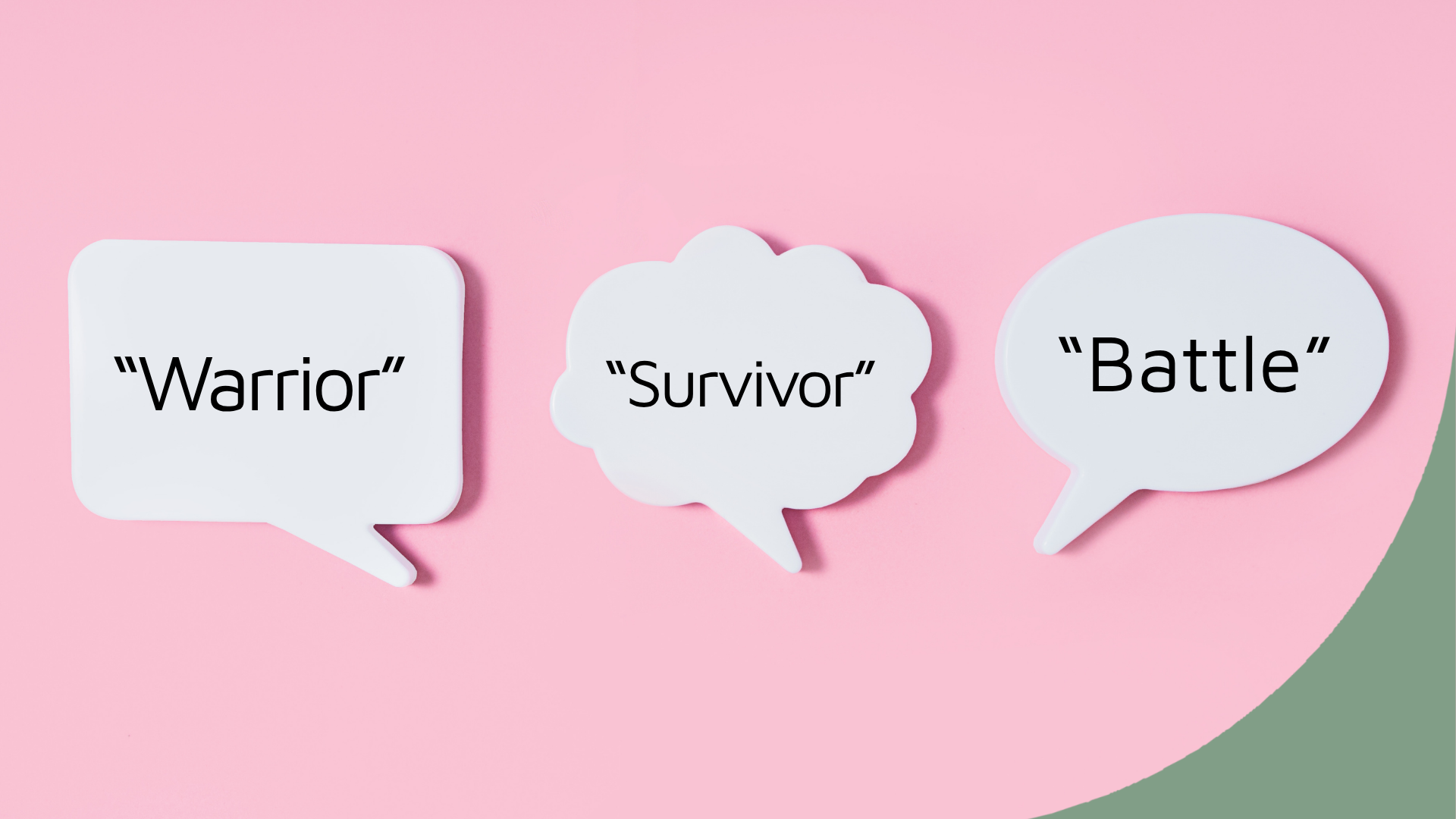
“Keep fighting.”
“You’re so strong.”
“She lost her battle with breast cancer.”
These are phrases many women hear the moment cancer enters their lives.
They are usually said with care – words meant to comfort, encourage and give hope. Yet over time, these words do more than describe cancer. They shape how cancer is understood, how people are expected to respond and even how patients see themselves within the experience.
The language used to describe cancer – words like “fight”, “battle”, “survivor” and “journey” – can influence how patients experience illness, recovery and identity. While these phrases are often intended to empower, research suggests they may also create emotional pressure, especially for women living with breast cancer or metastatic disease.
How ”Battle” Language Shapes the Cancer Experience
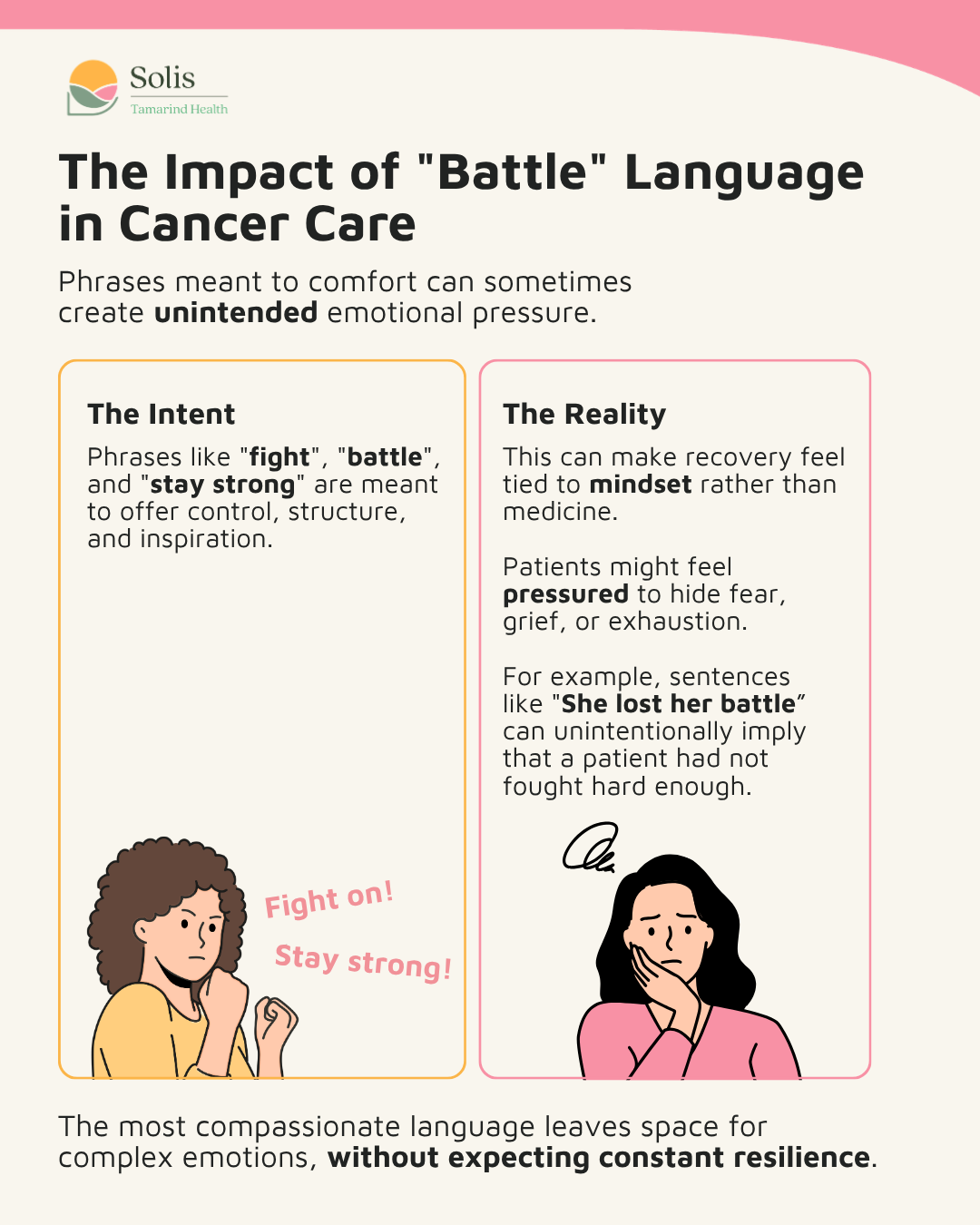
War and violence metaphors are among the most commonly used ways of describing cancer [1]. Patients are often said to “fight”, “battle” or “defeat” the disease, while cancer is framed as an enemy that must be overcome.
At first glance, this language offers clarity. It gives structure to something deeply uncertain. In some cases, it has been shown to help patients feel a sense of agency and control during treatment [1]. For some patients, it offers a way to make sense of an experience that feels otherwise overwhelming.
However, research shows that this framing also carries unintended weight. When cancer is framed as a fight, it may unintentionally suggest that recovery is linked not only to medicine, but also to mindset, positivity or personal strength [2] [3].
This can leave some women feeling pressured to stay hopeful all the time, even during moments of fear, grief or exhaustion [3]. Over time, this may make it more difficult to express more complex or fluctuating emotions.
One study involving women with metastatic breast cancer found that some participants disliked phrases such as “lost the battle”, because it implied that people who had passed had somehow not fought hard enough [2] [3]. In reality, cancer progression is shaped by complex biological factors, not personal failure.
The Emotional Complexity of Cancer Survivorship

The language used to frame the cancer experience is often rooted in positive intent. Yet it can sometimes oversimplify the realities of what each person goes through.
The word “survivor” is widely used in cancer care and advocacy, often as a symbol of strength and endurance. Public narratives around cancer survivorship frequently position it as a conclusion – a final stage where one crosses the finish line, where the story is expected to end. For some women, this is meaningful and affirming, like reaching light at the end of a long tunnel.
Others may feel differently.
Some women embrace the “survivor” label immediately after treatment but feel less connected to it over time [4]. Others may not relate to it at all, because it continually reminds them of what they have been through.
For many women, life after breast cancer is not a clear “after”, but an ongoing process of adjusting – to a changed body, lingering side effects, uncertainty and to a new sense of normal [5].
For those living with metastatic breast cancer, the language of “survivorship” can feel even more distant [2]. Rather than a finish line, cancer remains part of ongoing life. In this context, words that imply closure or completion may not fully reflect lived reality and can make empowering words like “survivor” feel alien.
Why Cancer Patients Experience Language Differently
Beyond “fighter” or “survivor”, gentler language such as “journey” may also not be universally experienced in the same way.
Journey metaphors are used to soften the intensity of cancer language. They suggest movement, progress and continuity rather than a battle to be won. In some cases, this can help patients make sense of a long and uncertain process by encouraging them to take things one step at a time [6].
However, research shows that the idea of a “journey” can sometimes feel too linear, or even overly positive, especially when a patient’s experience involves ongoing treatment, setbacks or disruption to daily life [7].
Others may feel they did not choose the journey they are on, making the metaphor feel distant from reality.
What feels empowering to one person may feel exhausting, alienating or inaccurate to another, and that difference matters.
Patient-Centred Communication in Cancer Care

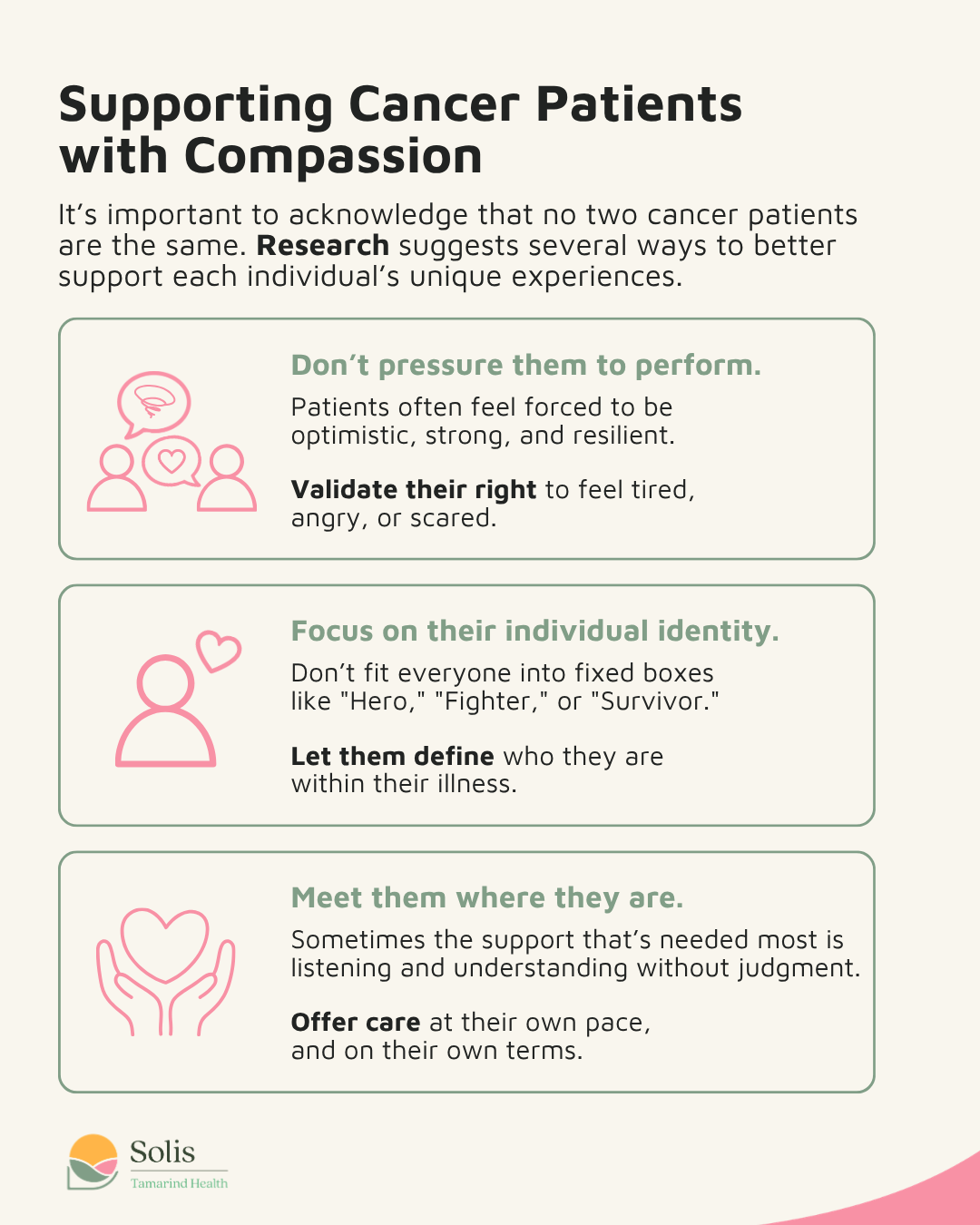
Cancer language becomes most meaningful when it allows room for individual interpretation, rather than assigning a fixed identity or expectation.
What many women consistently express is not a rejection of hope or strength, but a need for language that does not add pressure to an already complex experience.
For some, what matters more is simply being understood without needing to perform strength, optimism or resilience all the time.
Because for many people, living with cancer is not about fitting neatly into a narrative of victory or endurance. It is about gently navigating an experience that is deeply personal, often unpredictable and still unfolding in different ways over time.
And sometimes, the most compassionate language is the kind that leaves space for that complexity to exist.
Finding Support in Your Own Way
Sometimes, reassurance begins with a conversation.
Whether you are navigating a new diagnosis, seeking a second opinion or trying to make sense of your breast cancer experience, having the right support can make a difference.
At Solis Breast Care & Surgery Centre, our breast specialists provide compassionate and personalised breast care in Singapore – at your own pace, and on your own terms.
References
[1] Liu, Y., Semino, E., Rietjens, J. & Payne, S. (2024). Cancer experience in metaphors: patients, carers, professionals, students – a scoping review. BMJ supportive & palliative care, 14(e3), e2366–e2376. https://doi.org/10.1136/spcare-2024-004927
[2] Hulse, S. B., Balogun, Z., Rosenzweig, M. Q., Marsland, A. L., & Palmer, V. M. (2024). I’m still me, I’m still a person: war metaphor use and meaning making in women with metastatic breast cancer. Supportive care in cancer : official journal of the Multinational Association of Supportive Care in Cancer, 32(2), 108. https://doi.org/10.1007/s00520-024-08309-5
[3] Prado, G. F., & Gonçalves, T. A. (2025). Why we should rethink military metaphors in cancer. Jornal brasileiro de pneumologia : publicacao oficial da Sociedade Brasileira de Pneumologia e Tisilogia, 51(2), e20250109. https://doi.org/10.36416/1806-3756/e20250109
[4] Tsiakiri, A., Tzanas, K., Chrisostomidou, D., Plakias, S., Christidi, F., Frantzidis, C., Aggelousis, N., Lavdaniti, M., & Bista, E. (2026). Person-First or Disease-First? Language Choices in Cancer Communication. Nursing Reports, 16(4), 143. https://doi.org/10.3390/nursrep16040143
[5] Guité-Verret, A., & Vachon, M. (2024). The Traces of Cancer: A Metaphorical Understanding of the Experiences of Women Living Beyond Breast Cancer. Qualitative Health Research. https://doi.org/10.1177/10497323241242054
[6] Semino, E., Demjén, Z., Demmen, J., Koller, V., Payne, S., Hardie, A., & Rayson, P. (2015). The online use of Violence and Journey metaphors by patients with cancer, as compared with health professionals: a mixed methods study. BMJ Supportive & Palliative Care, 7(1), 60–66. https://doi.org/10.1136/bmjspcare-2014-000785
[7] Appleton, L., & Flynn, M. (2014). Searching for the new normal: Exploring the role of language and metaphors in becoming a cancer survivor. European Journal of Oncology Nursing, 18(4), 378–384. https://doi.org/10.1016/j.ejon.2014.03.012