

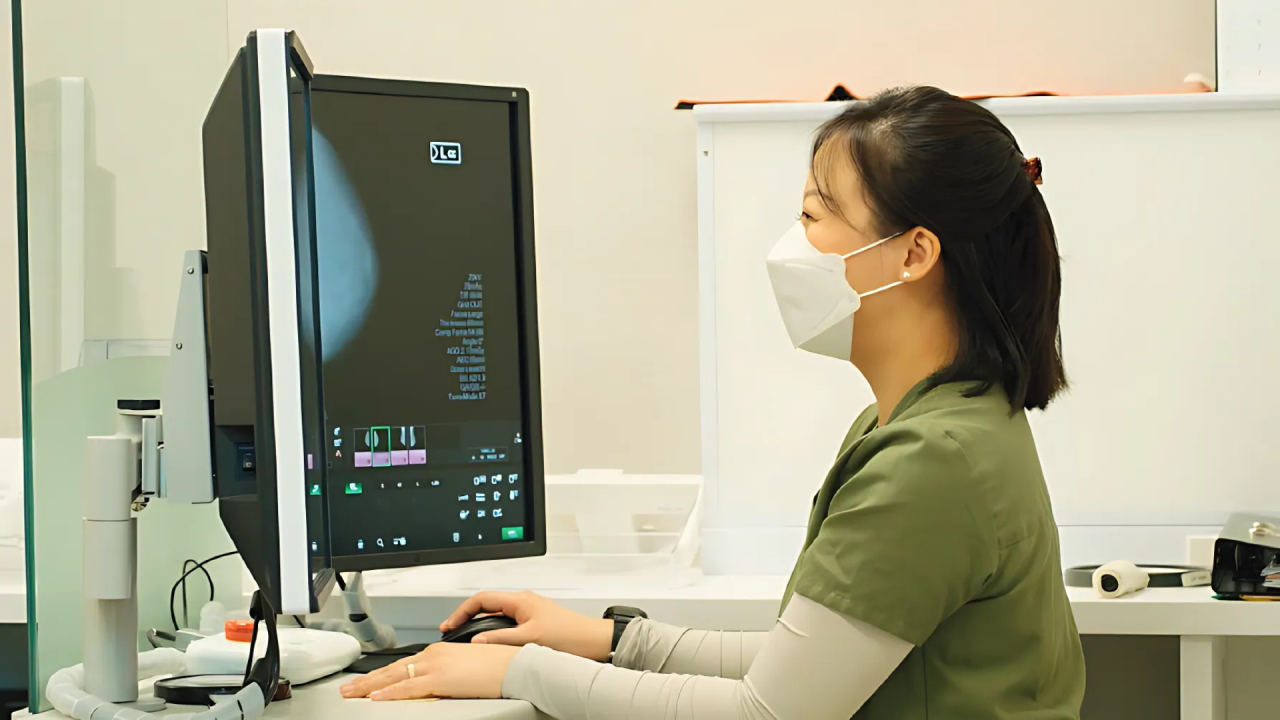
Breast Cancer Screening Guidelines: A Guide for General Practitioners in Singapore

Breast cancer is the most common cancer among women in Singapore, with one in 13 women expected to be diagnosed in their lifetime. As general practitioners (GPs) play a vital role in early detection, it is crucial to understand the national screening guidelines and the rationale behind them.Our consultant radiologist, Dr Eugene Ong, provides an overview of breast cancer screening recommendations, including why screening starts at 40, the role of ultrasound, the differing screening intervals for various age groups, and key imaging concepts such as BI-RADS and indeterminate lesions.Screening and DiagnosisEarly Detection through regular screening can significantly increase the chances of successful treatment and survival. By detecting breast cancer at an early stage, treatment options are usually less invasive, and the prognosis is generally more favourable.Note: Age recommendations are only guidelines and may differ for those with a family history of breast cancer or those who have other risk factors. Supplementary ultrasound may be ordered to increase the accuracy of screening.1. Why Screen at 40 Years Old vs. 50 Years Old? Early Detection: Screening from age 40 allows earlier detection of breast cancer, which is crucial as breast cancer can develop before 50. Studies have shown that Asian women, including Singaporean women, tend to develop breast cancer at a younger age compared to Western populations. Higher Incidence in Younger Women: In Singapore, a not-insignificant proportion of breast cancer cases occur in women in their 40s. Screening from 40 helps detect cancers earlier when they are more treatable. Survival Benefit: Early detection through screening in women aged 40–49 has been associated with improved survival rates and reduced mortality. Government Guidelines: The Ministry of Health (MOH) and the Singapore Cancer Society recommend mammogram screening starting at 40, with different screening intervals depending on age (see point 3).2.  Why Screen with Ultrasound – Why Isn’t Ultrasound in the MOH Guidelines, Only Mammograms? Mammograms are the Gold Standard: Mammography is the only breast screening method with proven mortality reduction in large-scale population screening. It effectively detects microcalcifications, which can be an early sign of breast cancer. Ultrasound as a Supplemental Tool: Ultrasound is useful in women with dense breasts (common in younger women and Asian populations) as mammograms may miss some cancers in dense breast tissue. However, ultrasound alone is not a primary screening tool because it is operator-dependent and can lead to higher false positives. MOH Guidelines Prioritize Evidence-Based Screening: Since large-scale randomized trials have not proven ultrasound as an effective stand-alone screening tool, it is not included in national guidelines. However, in clinical practice, ultrasound is often recommended as an adjunct to mammography, especially for women with dense breasts.3. Why Do We Do Increasing Intervals for Mammogram Screening (Annually for 40-49 Years, Every 2 Years for 50+)? Changes in Breast Tissue Composition: Glandular tissue appears white on mammograms, while fatty tissue appears black. As women age, glandular tissue involutes and is replaced by fatty tissue. Challenges in Detecting Cancer in Younger Women: Since breast cancers also appear white on mammograms, they can be more easily obscured by dense glandular tissue in younger women. More frequent mammograms (annually from 40-49 years) help improve detection. Improved Visibility in Older Women: As women age, their breasts contain more fatty tissue, providing better contrast for detecting white cancerous lesions against the black fatty tissue background. Hence, mammograms can be performed less frequently (every two years from 50 onwards).4. What is an Indeterminate Lesion? Definition: An indeterminate lesion is a breast abnormality detected on imaging that cannot be definitively classified as benign or malignant. It requires further evaluation, which may include additional imaging (e.g., ultrasound, MRI) or biopsy. Examples: Small solid masses, complex cysts, or lesions with ambiguous features on mammography or ultrasound. Follow-up: Some indeterminate lesions will require further evaluation by breast specialists, while others may need biopsy to confirm the diagnosis.5. What is BI-RADS?When you undergo a mammogram, ultrasound or MRI, our radiologists categorise the findings to communicate the recommended follow up actions.Your report will likely include a BI-RADS score, which is a standardised system used to classify findings and guide recommendations. BI-RADS (Breast Imaging- Reporting and Data System) is a standardised system developed by the American College of Radiology (ACR) to categorise breast imaging findings and their level of suspicion for malignancy ranging from 0 to 6.At times, it may be difficult to classify findings into BI-RADS 0-6, so some centres use descriptive terms instead- such as benign, probably benign, indeterminate, or suspicious. This helps guide the breast surgeon on the next steps. [Ref: American College of Radiology]3D Mammogram vs 2D MammogramMammograms are X-ray images of the breast used to detect tumours or abnormalities, and are the most common screening tool for breast cancer. During a mammogram, your breasts are compressed between two plates to capture clear images. While this may be uncomfortable, mammograms are quick and generally painless.This article has been reviewed by Dr Eugene Ong, Consultant Radiologist at Luma Women’s Imaging Centre

Read more

Staying Aware, Staying Strong: Why Early Breast Cancer Detection Matters for Women

Awareness of your body is vital, as it empowers you to notice any changes or abnormalities early on. We spoke with Joanna Dong, singer and actress, about her breast cancer journey. Her vigilance in observing changes and taking quick action to address her concerns led to a less invasive treatment path.What kind of breast health issue did you face? I was diagnosed with stage 1 hormone sensitive breast cancer.How did you discover it? I went to see my breast specialist because I noticed some discharge from my right breast. MRI revealed blood pooling in breast ducts on both breasts, and my surgeon suspected DCIS (stage 0 breast cancer) at first, but the biopsy revealed that whilst I did not have cancer in my ducts, there was an incidental finding of a 7mm cancer tumour in the excised tissue adjacent to my right breast ducts.What was your biggest revelation after you were diagnosed?I realised that medical science has come a long way in breast cancer surgery, reconstruction, and treatments in the last two decades. I have a few friends who’ve lost their mothers to breast cancer when they were little, but today the survival rate is so much higher, especially when you discover it early like I did.What is one thing you wish you knew before you started treatment?The internet is a double-edged sword. It helped me learn more about my condition, but sometimes too much information without proper context and expertise can also be overwhelming. There were definitely moments when I had read something online and went on an unnecessary anxiety spiral, before meeting with my doctors who calmly and patiently addressed my concerns.What has the journey of dealing with or managing this issue been like for you? I was very fortunate that my surgery was minimally invasive, and that I did not have to undergo chemotherapy (only 8 sessions of radiation therapy). It was very manageable, and I honestly experienced relatively little physical discomfort throughout the whole process. Most of the challenge was in dealing with the psychological and emotional stress, and that’s where I am proud of the efforts I had made over the years in strengthening my mental health, and building strong relationships with my husband, family, and friends who have been amazing in supporting me.Before this happened, what was your attitude toward breast health? I do believe the public health campaigns have paid off, and I was already pretty well-informed about the importance of mammograms and self-checks. I am really grateful, because thanks to this awareness, I was observant of changes to my breasts, and caught the cancer early.Did this journey change that attitude? If anything, I think my personal experience with breast cancer has prompted me to be more vocal about breast health issues, in the hopes that more women will benefit from early detection like I did.What do you think women in general feel about breast health? It really depends on which generation of women you are speaking with. I think younger generations are much more comfortable discussing breast health, but for older generations, breasts are still somewhat taboo to talk about, and that’s totally understandable because the cultural norms were different for them. As an entertainer, I have a lot of older fans, so I felt compelled to speak more openly, in the hopes of de-stigmatising the topic for them.What are your thoughts when it comes to general awareness/education in this area? I think in general we understand much more about breast health now than before, but there are still many misconceptions regarding the specific treatments and procedures. For example, I didn’t realise that not every patient with cancer needs to go through chemotherapy, or that breast reconstruction techniques are so varied now. However, I am not sure it is necessary for the general public to know too many details either, because the treatments are constantly evolving and improving as well, and by the time the public learns about it, the information might already be irrelevant. What is essential and urgent for everyone to know, is that early detection saves lives.What advice would you give women about breast health?It is not our breasts but our resilience that truly define us as strong and beautiful women. Let’s take charge of our own health!Staying breast aware and keeping up with regular screenings can provide peace of mind.Remember, not all abnormalities indicate cancer. Let Solis & Luma provide the reassurance you need. Schedule your mammogram today.
Read more

A Mammogram for Mothers: The Gift of Breast Cancer Screening

Even princesses can get cancer. Last month, the world was shaken by Princess of Wales Kate Middleton’s cancer diagnosis. And just before that, actress Olivia Munn’s candid revelation of her battle with breast cancer made headlines. Their stories are a reminder that cancer does not need permission to disrupt lives.Both young mothers in their early 40s, their high-profile diagnoses have sparked conversations about early detection, as well as the effects a cancer diagnosis can have on motherhood.Know Your BreastsWhile cancer survival rates have improved over the years, cancer remains the highest cause of death in Singapore, accounting for 28.2% of all deaths from 2017-2021 [1]. Breast cancer constitutes 24.6% of all diagnoses, making it the most common cancer among women in Singapore, contributing to 1 in 6 cancer deaths among females in the country [1].Breast cancer treatments are more effective and less invasive when the cancer is found early. One key to early detection is monthly breast self-examinations. If you are aged 20 years or older, it is important to be familiar with the way your breasts normally look and feel, to stay abreast of any worrying changes.Regular breast screenings are another key to detecting breast cancer at an early stage, when it is most treatable. According to the National Population Health Survey 2022, despite 9 in 10 women in Singapore aged 50 to 69 being aware of mammograms, only 37.6% of this demographic had undergone one in the last two years. The primary reason cited for this low mammography uptake is the perception that screening is unnecessary when you are healthy [2].Munn’s cancer would have been detected later had it not been for proactive health measures, which included an annual mammogram. If there had been any further delay, her treatment options would be limited [3]. Some breast cancer symptoms may not be noticeable to the naked eye, therefore regular screenings are essential regardless of symptoms. Waiting until symptoms develop to have a mammogram may result in the cancer being detected at an advanced stage.Source: Ministry of Health Singapore [4] How Early Detection Makes a DifferenceIt is important to act early than react late.Breast self-examinations complement, but do not replace screenings like mammograms. Mammograms are instrumental in helping to detect lumps before they can be felt by touch and become worse.Another reason women in Singapore cited for not doing their mammograms is the fear of the outcome [2]. Information about your body through screening tests is key. While anxiety surrounding testing results is understandable, the benefit of early detection for improving one’s chances of survival cannot be stressed enough. Annual mammograms can reduce mortality by approximately 40% [5].The BB (Boob Bead) keychain and infographic below illustrate the differences between the size of lumps detected through breast self-examination vs regular screening. Each bead on the keychain represents different lump sizes based on the detection method. With regular mammograms and ultrasound, it is possible to detect lumps that are 2-3 mm in size, a vivid reminder of why regular screenings matter.The boob bead keychains at Solis (left) are made by survivors and volunteers, as part of efforts to educate and encourage women to be breast aware.Being a Mother and Cancer PatientBeing a cancer patient is mentally draining, as one copes with the shock of the diagnosis and is wrapped up in a whirlwind of testing, treatments and decisions to make. For mothers with young children, this mental load is exacerbated, as they also need to worry about how their children will emotionally cope.“You realise cancer doesn’t care who you are; it doesn’t care if you have a baby. It comes at you and you have no choice but to face it head-on,” says Munn [6]. The young mother of one notes that one of the hardest things when recovering post-mastectomy was not being able to carry her son (who was only one-year old then) despite his pleas [7].Studies have highlighted the emotional burden experienced by mothers with cancer. Not only do they need to grapple with the physical, mental and emotional toll of the disease, but they may also struggle with guilt from a perceived failure to meet parenting expectations [8]. Amidst additional stress from other aspects of their lives such as relationships and employment, these mothers demonstrate remarkable resilience in balancing dual roles as parents and patients.Let us make this Mother’s Day count by honouring the mothers whose strength and love light up the world. Give your mother the gift of clarity by reaching out to us to schedule a mammogram, and help spare her from the anguish of a late diagnosis.1 Health Promotion Board, “Singapore Cancer Registry Annual Report 2021” 2 Ministry of Health Singapore, National Population Health Survey 20223 People, “Olivia Munn, 43, Reveals She Was Diagnosed with Breast Cancer and Had Double Mastectomy”4 Ministry of Health Singapore, Health Screening Guidelines5 “Benefits and Risks of Mammography Screening in Women Ages 40 to 49 Years”6 People, “Olivia Munn’s ‘Terrifying’ Breast Cancer Diagnosis After Baby Joy: 4 Surgeries in 10 Months, and Medically Induced Menopause (Exclusive)”7 People, “Olivia Munn Says Not Being Able to Pick Up Son After Mastectomy Was ‘One of the Hardest Things’ (Exclusive)”8 “Mothers with Cancer: An Intersectional Mixed-Methods Study Investigating Role Demands and Perceived Coping Abilities” 
Read more