



Benign lumps – how common are they and should I worry?

Not all lumps that are discovered during routine breast self-examination or screenings are cancerous. Often, many lumps are not.Dr Lim Siew Kuan, Senior Breast Consultant & Surgeon at Solis answers some questions on benign breast lumps, including the types, diagnoses and treatments.Q.What are breast lumps, and how common are they?Breast lumps refer to an area of swelling or firmness in the breast that feels different from the rest of the breast. They are the second most common breast symptom that patients present to GP clinics with breast pain being the first. Most lumps are benign (80%) and benign breast conditions affect around 8% of women.Q.What are some common types of benign breast lumps among Singapore women? Fibrocystic change: this is the most common type of benign breast lump. Many women feel that their breasts are generally lumpy and rubbery. This is due to a benign condition consisting of fibrous and cystic changes in the breasts. Breast cysts: Breast cysts are fluid-filled sacs and are not harmful. They tend to change in size, position and numbers according to a woman’s monthly hormonal cycles. However, attention should be paid whenever there is a solid component observed within the cysts. Histological correlation may be required as these solid-cystic lesions have a 10% risk of cancer. Fibroadenomas: A fibroadenoma is a mobile and smooth lump with a rubbery feel. It is termed a ‘breast mouse’ as it slips away easily from the fingers during palpation. Fibroadenoma breast lumps are formed by fibrous and glandular tissue and do not give any cancer risk. Q.Why do some women get benign breast lumps?As the breasts go through monthly hormonal cycles, the tissues change in response. Some women may be prone to ‘overgrowth’ of benign tissue, giving rise to the above-mentioned conditions.Q.Which groups of women tend to be more prone to getting such benign breast lumps? Why?In premenopausal women, their breasts go through cyclical hormonal changes. Breast lumps also tend to be familial and you may be more prone if your sister or mother has (had) the same condition.Q.How are breast lumps diagnosed?The diagnosis of breast lumps are done during clinical examination and imaging (ultrasound, with mammogram if > 40 years of age). If both clinical examination and imaging show any indeterminate features, a biopsy will be required for histological correlation.Q.What are the treatment options for breast lumps? Can they be treated non-surgically or is surgery always needed?Most benign breast lumps do not require any treatment. Treatment is required when the breast lumps cause pain or if the nature of the lump is uncertain (e.g. lump increasing in size or if it has concerning features on imaging).Q.Can breast lumps recur after treatment? When might they recur?Yes, as long as the cyclical hormonal changes are still happening, benign breast lumps can recur, either in same or different sites.Q.Some questions on breast self-examination: Is it advisable to do breast self-examinations, and why?  Yes, conducting self-examination encourages awareness of one’s own breasts, so that any new findings can be flagged up earlier by the woman.How frequently should this be done? Once a month When is it a good time to do a self-examination? Breast self-examination should be conducted on day 7-10 of your menstrual cycle, when the breasts are least lumpy and sensitive What to look out for during the self-examination? Keep a look out for new lumps/firm areas, breast asymmetry, skin changes, nipple dischargeArticle contributed and reviewed by Dr Lim Siew Kuan, Senior Consultant and Breast Surgeon at Solis Breast Care & Surgery
Read more

All You Need to Know about Breast Cancer Screening: Breast Mammogram and Ultrasound

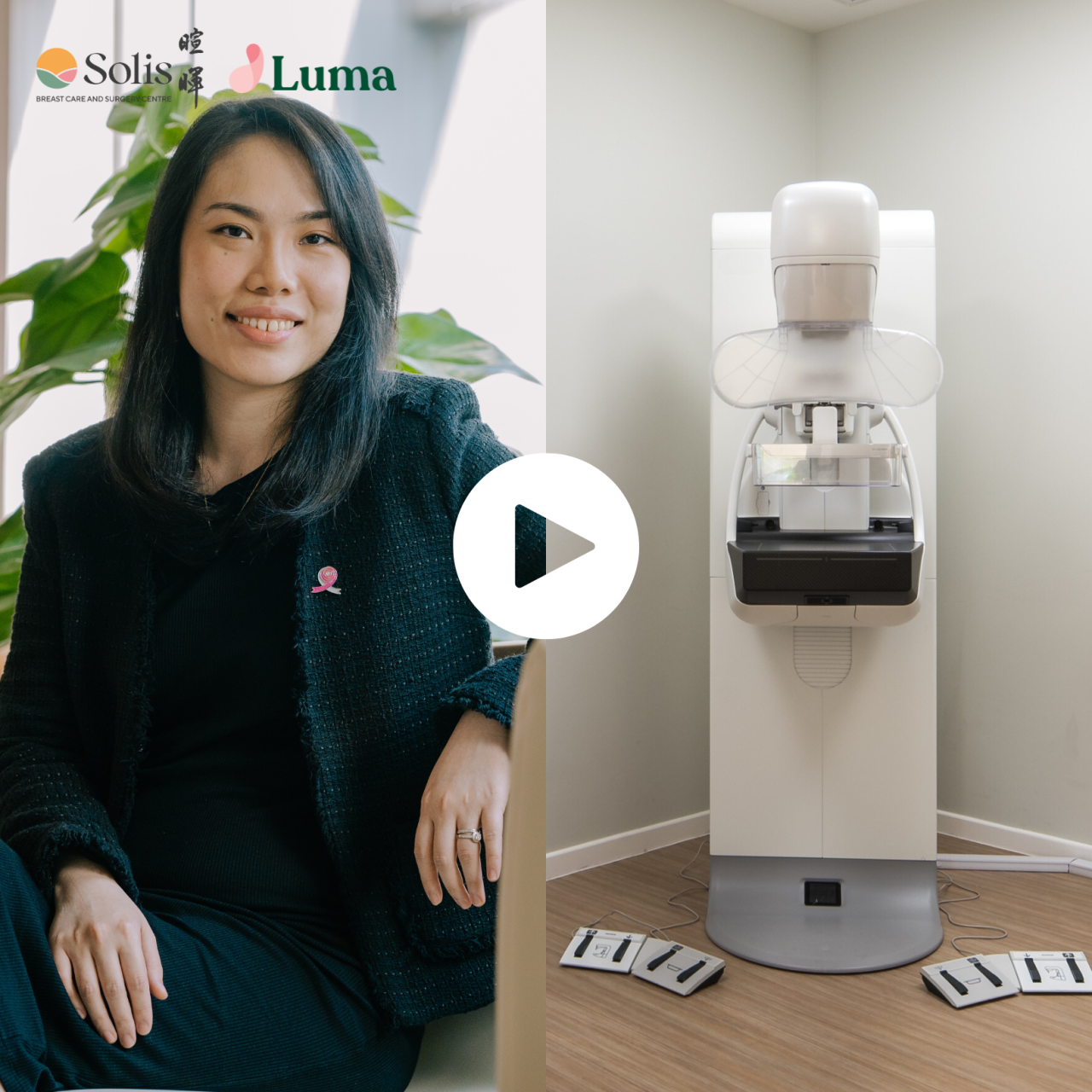
Mammograms are the globally recommended standard in breast cancer screening for women aged 40 and above. However, many women avoid talking about, or going for regular breast screening because of several concerns: I’ve heard from family/friends that mammograms are painful and uncomfortable There is no radiation exposure for mammograms, which is dangerous and can cause cancer My previous mammograms have resulted in false positive results, so I do not want to deal with the hassle and anxiety I feel healthy so I do not need any screening – I already do my own breast self-examination regularlyIn this educational video, Dr Sonia Lee, Consultant Radiologist from Luma Women’s Imaging Centre addresses these concerns, and more. By walking you through the process of what to expect during a mammogram, Dr Lee will address your concerns, alleviate fear and provide reassurance and information on breast screening and assessment. Please be mindful that while some breast conditions may be asymptomatic, most abnormal breast conditions are not cancerous.The team at Solis Breast Care & Surgery Centre and Luma Women’s Imaging Centre believe in the importance of breast health education. By equipping you with the knowledge, we want to encourage women to make breast screening a priority.Share this video with your loved ones too – sharing is caring! The content is intended for general information only and does not replace the need for personal advice from a qualified health professional.Video reviewed by Dr Sonia Lee, Consultant Radiologist from Luma Women’s Imaging Centre
Read more

The Types of Breast Cancer Surgery: Lumpectomy, Mastectomy and More

Breast cancer is a significant health concern in Singapore, as it is the most commonly diagnosed cancer among women. According to the Singapore Cancer Registry Annual Report 2020, breast cancer accounted for about 30% of all newly diagnosed cancer cases in women between 2016 to 2020.The rise in breast cancer cases emphasises the importance of early detection and effective management strategies to fight the disease. Breast surgery plays a crucial role in breast cancer management as it aims to remove the tumour and prevent its spread to other parts of the body. While combining two or more types of treatments – such as surgery, radiotherapy and chemotherapy – may be more effective than a single therapy alone, breast surgery remains the first treatment step in most early-stage breast cancer.There are different types of surgery for breast cancer. Your doctor will discuss the most suitable option for your treatment based on the size of the tumour and its location, your breast size, and your personal wishes and feelings.What is a Lumpectomy?Lumpectomy is a breast-conserving surgery that is typically recommended for small, localised and early-stage cancer (stage 0, 1 and 2)[1]. This approach allows for breast preservation while effectively treating the cancer.During a lumpectomy, the breast surgeon will remove the breast tumour and a margin of healthy breast tissue surrounding it. In addition, a sentinel lymph node biopsy is often performed, involving the removal of a few lymph nodes from the underarm area. If cancer cells are detected in the sentinel nodes, further lymph nodes may be removed through a procedure called axillary node dissection1.After a lumpectomy, your doctor may recommend radiation therapy to remove any cancer cells that might remain and reduce cancer recurrence in the preserved breast. What is a simple (or total) mastectomy?During a simple (or total) mastectomy, your surgeon removes the entire breast, including the nipple and areola. In the case of a modified radical mastectomy, lymph nodes in the underarm region are also removed1.Mastectomy is typically recommended when1:the cancer is present in more than one area of the breast, the tumour is relatively large in relation to the size of the breast, the patient is not suitable for radiotherapy due to other medical conditions, or she does not want to undergo radiation therapy after surgeryMastectomy serves as an effective treatment option in cases where breast conservation is not feasible. This surgery technique ensures the comprehensive removal of the cancerous tissue.Breast reconstruction surgery after mastectomySome women may worry about how their breasts will look after a mastectomy. In most cases, breast reconstruction surgery can be done to resolve this. The surgery rebuilds the breast so it is similar in size and shape to your other breast2. Many women have breast reconstruction done at the same time as a mastectomy. Some wait and have it done as a second surgery later.You can talk to a breast cancer specialist about reconstructive surgery options. Other options after a mastectomy include wearing a breast form (breast prosthesis) or a special mastectomy bra.What is oncoplastic breast surgery?Oncoplastic breast surgery is an emerging discipline that combines plastic surgical techniques with breast-conserving surgery. In oncoplastic surgery, the cancer and a rim of surrounding normal breast tissue are removed, and the remaining breast is then reshaped3. The patient then receives radiation therapy to the remaining part of the breast.Oncoplastic breast surgery has several advantages over mastectomy, as it enables women to preserve their natural breasts. Women can then retain a breast that is warm, soft and sensate. The breast will also fit comfortably into her bra, allowing her to move naturally in her daily life. Oncoplastic surgery also helps to reduce surgical trauma and minimise associated complications. This approach prioritises the preservation of the breast and the patient’s overall well-being and quality of life.However, oncoplastic breast surgery may not be suitable for certain types of breast cancer, such as inflammatory breast cancer or cancers that have extensively spread5. The procedure may not be possible in cases where there are multiple tumours throughout the breast unless the breast is quite huge5.Importance of discussing surgery options with healthcare providersEssentially, the specific surgical procedure recommended for patients depends on factors such as the size and location of the breast cancer and what is most suitable for the patient. Our experienced doctors at Solis will guide women through available options and recommend the most appropriate approach tailored to the patient’s needs.Our team of dedicated breast surgeons collaborates closely with Luma Women’s Imaging Centre and Luma Medical Centre. This collaborative approach involves a multi-disciplinary approach, where our team of breast radiologists and in-house pathologists work together to provide comprehensive breast care. As Singapore’s first private integrated breast care centre, we are committed to combining expertise and advanced technology to provide holistic breast care for our patients.1 HealthXchange, “Breast Cancer Treatment: An Overview”2 John Hopkins Medicine, “Mastectomy”3 HealthXchange, “Breast Surgery: Fresh Hope in Oncoplastic Surgery”5 BreastCancer.org, “What is Oncoplastic Lumpectomy Surgery?”
Read more