



Coming Back Like a Phoenix: One Woman’s Breast Cancer Journey

Breast cancer is the most commonly diagnosed cancer in women in Singapore. While there are certain risk factors/symptoms that may cause one to be more aware, no one can tell if, or when, breast cancer (or cancer in general) may occur.When something life impacting like breast cancer is confirmed, most people are left feeling despondent and may take some time to overcome and accept the condition.We speak with Nahoko Kodama on her breast cancer diagnosis and what has helped her greatly in her journey to “come back like a phoenix”.What kind of breast health issue did you face?I was diagnosed with triple positive stage 2 plus breast cancer.How did you discover it?I felt a lump in the right upper chest and I was feeling a little pain for a few months as well.What was your biggest revelation after you were diagnosed?There were no major surprises, as the doctors told me very calmly. It was like I knew it.What is one thing you wish you knew before you started treatment?I [wished I knew] more about the type of cancer I had, its progression, treatment options, duration of treatment and side effects.What has the journey of dealing with or managing this issue been like for you?It was a tough journey, of course, but I accepted the fact that it was important to keep the energy to carry out the chemotherapy until the end of treatment. To achieve this, I decided to continue exercising (yoga) to maintain my fitness and also to continue with ballroom dance lessons, which I had been taking for a long time. After my treatment, I was determined that I would definitely take part in a dance competition, and my dance teacher in Russia supported me with messages every two weeks. I feel that his encouragement, combined with my enthusiasm for dance, was a major factor in my overcoming the chemotherapy.Before this cropped up, what was your attitude toward breast health?There was recognition that breast cancer can be self-checked and that early detection is very important.Did this journey change that attitude?This idea has not changed. I have a check-up with a specialist every six months, as I am currently on medication. And I have become more careful with my food than before. Vegetables are basically organic; I take more protein and I regularly take Chinese herbal supplements to keep my blood healthy.What do you think women in general feel about breast health?In general, I think that almost half of women feel that breast cancer screening is necessary, but they are too busy or something and don’t get regular check-ups. Basically, I think it is also common to think that you don’t get cancer.What are your thoughts when it comes to general awareness/education in this area?Unless you or someone around you has cancer, you will not understand the difficulty and the seriousness of cancer treatment. At times, it may be avoided as a topic you don’t want to see or hear about. It is necessary to make sure that people are aware of the fact that early detection means a shorter treatment period and a smaller burden.What advice would you give women about breast health?First, make it a daily routine to check your breasts for any abnormalities by self-checking every day. Although there is an overlap, regular breast cancer screening should always be carried out. If you are found to have breast cancer, accept the facts unhesitatingly and submit yourself to treatment by trusted doctors. Decide what you want to do first when your treatment is over and your health is restored, so that you can be motivated to complete your treatment. Encourage yourself to say, “I will come back like a phoenix.” The breast is a woman’s most beautiful organ. Tell yourself that you must cherish that treasure for the rest of your life.It is never too late to start taking care of your #breasthealth.Find out how you can reduce your risk of developing breast cancer here.
Read more

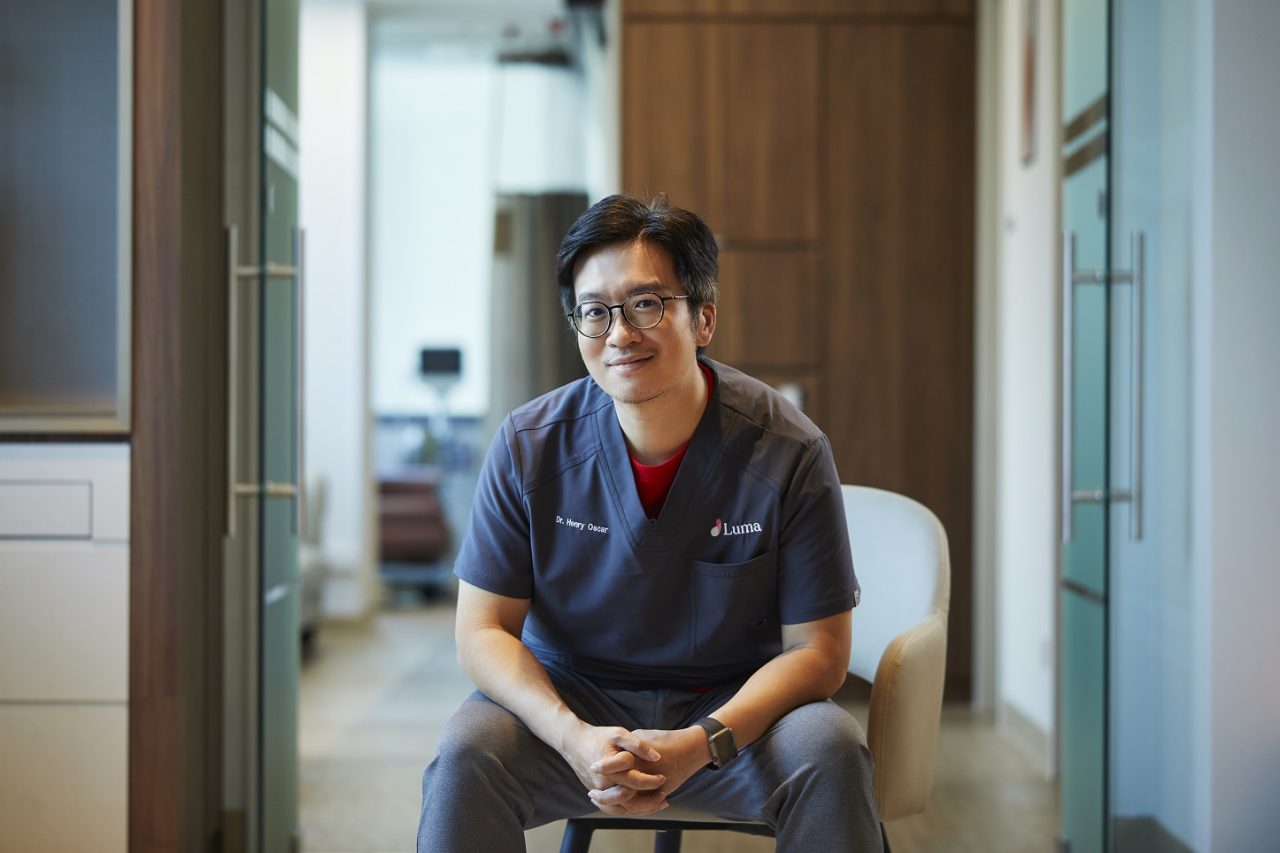
Getting to Know Dr Henry Oscar

Image reference: Dr Henry OscarIn this edition, we get up-close and personal with Dr Henry Oscar, Consultant Radiologist and Co-founder of Luma Women’s Imaging.Dr Henry specialises in breast imaging and breast cancer intervention. He performs diagnostic procedures, including breast ultrasound, biopsies, and wire/seed localisation.As an experienced interventionist, he interprets all breast imaging studies including mammography and tomosynthesis, breast ultrasound, and breast MRI. He also routinely performs stereotactic and ultrasound-guided breast biopsy.Why did you choose to become a radiologist and why a subspeciality in breast?Radiologists are specialised medical doctors who use imaging techniques, such as X-rays, ultrasounds, CT scans, and MRI scans, to diagnose and treat medical conditions. We play a critical role in helping other healthcare professionals make accurate diagnoses and develop effective treatment plans. I chose to specialise in breast imaging because breast cancer is a prevalent disease that affects many women worldwide.Breast imaging is also a rapidly evolving field with new techniques and technologies constantly being developed, which can provide opportunities for research and innovation. Additionally, breast radiologists work closely with breast surgeons, oncologists, and other healthcare professionals to provide comprehensive care for patients with breast cancer.By specialising in breast imaging, radiologists can develop expertise in interpreting breast imaging studies and identify abnormalities and improve women’s health.What do you think is the most underrated aspect of radiology?One aspect of radiology that is often underrated is the significant impact that radiologists can have on patient outcomes through their work in diagnostic accuracy and guiding patient care. Radiologists have a unique perspective on the patient’s overall condition through the images they receive and can provide vital information to clinicians that can lead to improved patient outcomes. We are also critical members of multidisciplinary care teams, and our input can help guide treatment decisions, monitor treatment response, and provide ongoing surveillance for breast disease recurrence.Radiologists can also play an essential role in improving patient safety by providing guidance on the appropriate use of imaging studies. We play a crucial role in driving progress in healthcare and contributing to increased positive results for patients.Could you share with us any interesting findings that you have come across in the course of your work?One recent study published in the JAMA (Journal of American Medical Association) reported that a deep learning model trained on mammography images was able to accurately identify breast cancer in women with no prior mammogram. The study found that ‘it’ was able to achieve a level of diagnostic accuracy comparable to that of experienced radiologists.In addition, researchers have been investigating the potential use of algorithms to improve the interpretation of breast imaging studies. For example, some studies have explored the use of AI algorithms to assist in the detection of breast lesions and the differentiation of benign from malignant lesions.While technological advancement is good, the key question remains as to whether machines can completely replace years of human experience and expertise.What is ONE myth or message that you would like women to know about breast cancer screening?One myth – that mammograms are always painful and uncomfortable. While mammograms can be uncomfortable for some women, they typically do not cause significant pain. Additionally, advances in mammography technology have led to improvements in patient comfort, with newer machines designed to reduce discomfort and improve image quality especially tomosynthesis where gentle compression is sufficient.How do you stay up-to-date with new developments in breast radiology?Staying up-to-date with new developments in breast radiology is essential. Radiology conferences and seminars provide an excellent opportunity to learn about the latest research and advancements in breast imaging.I also read journals and publications and participate in online learning. People have become more receptive of webinars post covid.What do you do in your free time?I have three little girls, and they keep me busy and occupied.What do you think you will be doing if you did not become a radiologist?I would have become a video game designer as I loved to play video games when I was younger.
Read more

4 Easy Ways to Support A Loved One with Breast Cancer

Being diagnosed with breast cancer can be a life-changing experience for many women as the diagnosis can have a significant impact on the patient’s physical, emotional and mental well-being. While medical treatment is essential for recovery, receiving strong support from family, friends and through a cancer support network can play an equally important role in the healing process. In a large study “Postdiagnosis social networks and breast cancer mortality in the After Breast Cancer Pooling Project” published in the journal Cancer, women diagnosed with breast cancer who had the most social ties, such as spouses, community relationships, friendships, and family members, were less likely to have a breast cancer recurrence and less likely to die from breast cancer than women who were socially isolated. In this article, we will explore some ways on how family members and close friends can provide support to their loved ones who are battling breast cancer. Listen & Offer Emotional SupportDiscovering that she has breast cancer can be a shocking experience for a woman and that can elicit a range of emotions such as anger, fear, sadness and depression[4]. These feelings can fluctuate and may change throughout the day. One of the best ways to support someone with breast cancer is to simply be present with them and allow them to express their emotions. Try not to be afraid when they shed tears as this may be a helpful way for the patient to express her feelings[1]. Holding hands or giving a hug can also be a meaningful gesture of support. It is also common for women diagnosed with breast cancer to feel angry about their diagnosis, and they may direct their frustrations towards their loved ones[1]. It’s essential to remember that this is often due to the distress of the cancer diagnosis and is not a personal attack. At times, women diagnosed with breast cancer might not want to be reminded about their cancer constantly.  Having a normal conversation about everyday things and sharing a joke can sometimes be very welcoming. Do not take it personally if they do not want to talk about their cancer and respect their need for privacy or to have some quiet time.Provide Practical HelpApart from providing emotional support, it can be useful to offer some practical support too. Check in and ask if there is anything specific that they need help with.Here are some suggestions[2] on how to offer practical help to someone with breast cancer:Prepare meals that can be stored in the freezer for them to eat later Ferry them to and/or from the hospital for blood tests, scans and medical appointments Assist with cleaning or laundry tasks Take their pets for a walk or to the vet, if needed Offer to do grocery shopping on their behalf Volunteer to take their children to and/or from school Bring lunch over and stay for a chat Check in with them before visiting in case they are not feeling well Research Treatment Options for Breast CancerOnce a diagnosis of breast cancer has been confirmed through imaging tests and a biopsy, the breast cancer specialist will work with the patient to develop a treatment plan. The treatment options recommended will depend on the specific diagnosis, but may include a combination of the following: SurgerySurgery is often the first step in the treatment of breast cancer and this may involve either a lumpectomy (removal of the tumour and some surrounding tissue) or a mastectomy (removal of all breast tissue). The type of surgery will depend on the extent and location of the breast cancer. Breast reconstruction options can also be discussed with a plastic surgeon. Radiation therapyRadiation therapy uses high energy X-rays to destroy cancer cells and shrink tumours. Surgery is usually conducted first and radiation therapy may be recommended afterwards to eradicate any remaining cancer cells and lower the risk of recurrence.ChemotherapyThis involves the use of drugs to kill cancer cells at the original cancer site and any other parts of the body where the cancer may have spread. Depending on the diagnosis, chemotherapy may be given after surgery to lower the risk of cancer recurrence, or before surgery to shrink the tumour. It can also be used to treat metastatic breast cancer that has spread to other parts of the body. Hormonal therapyThis is recommended for hormone receptor-positive breast cancer as estrogen can make these types of cancers grow. Hormonal therapy medicines lower the risk of estrogen in the body and block its action on breast cancer cells, thus reducing the risk of recurrence after surgery. Learn More About Post Mastectomy/Surgery Care Changes In Breast AppearanceWhether a mastectomy or lumpectomy is performed, both types of breast surgery will result in noticeable changes to the appearance of the breast and chest area. With a mastectomy, all breast tissue will be removed, and if reconstructive surgery is not performed, the chest will appear flat, often with a horizontal scar where the breast used to be. The Can-Care Post-Op Kit which consists of a Post-Op Bra and Post-Op Moulded Breast Form are specially designed for immediate use after surgery to provide a temporary shape replacement without compromising the healing of the wound. A small squeeze ball for hand exercises to reduce stiffness in the patient’s arm and shoulder is also included in the Can-Care Post-Op Kit. While breast surgery may not impact how some women feel about their bodies, others may struggle to accept the changes. Apart from reconstructive surgery to restore the natural appearance of their breasts, breast prosthesis, which provides an artificial breast form that can be placed in a bra cup is another option. Can-Care offers a variety of breast prostheses in different shapes and sizes as an alternative to reconstructive surgery. Lifestyle changesAfter breast surgery, a woman may have difficulty lying comfortably in bed due to restricted movement. Many women find sleeping on multiple pillows placed on their upper back helpful. Keeping the torso elevated also helps to relieve pressure on the surgery area, and helps to reduce swelling and pain. The breast cancer specialist may also advise the patient to do some light arm exercises after breast surgery to maintain the mobility in the arm and lower the risk of lymphoedema (swelling of the arm due to fluid retention).  Can-Care has specially-engineered compression arm sleeves which exert a consistent pressure on the blood vessels and lymph network. These sleeves will make it easier for the patient to remove the extra lymph fluid which causes the swelling. After surgery, avoid strenuous activity, heavy lifting and vigorous exercise which may aggravate the arm and impair the healing process. The road to recovery for breast cancer patients can be a long and challenging journey. But with the love and support of family and friends, patients can embark on the healing journey with more ease. Getting professional support and advice from a breast cancer specialist or professional support network is also important. Can-Care offers a comprehensive range of breast care products, professional counselling services and support programs to strengthen the recovery journey for breast cancer patients after surgery. Reach out to Can-Care, to help support a woman’s non-medical needs during her post-treatment journey.  [1] Can-Care,”What To Expect After Surgery” [2] Breastcancer.org, “Women With More Social Connections Have Better Survival”[3] Cancer Research UK, “How To Support Someone With Cancer”[4] Breastcancer.org, “Caring For Someone” Other References:[1] Breast Cancer Now, “How To Support Someone With Breast Cancer”
Read more