Good Nutrition for Living with and Beyond Breast Cancer

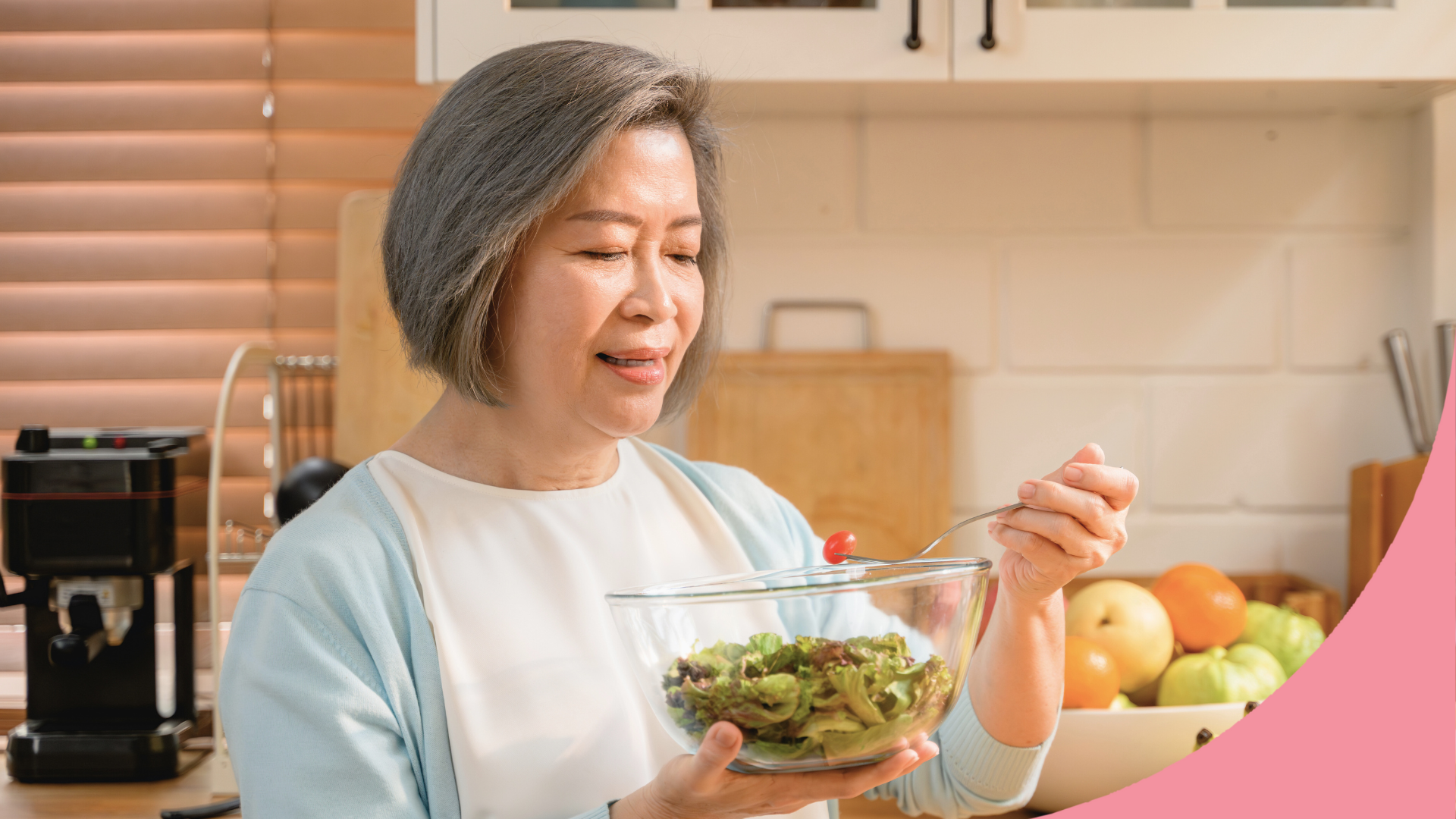
Breast cancer treatments have become more and more successful, with a huge number of women studied beyond breast cancer, discovering what lifestyle factors may reduce the risk of recurrence.   The current recommendations supported by research are:  Maintain a normal body weight, but if you are overweight, losing just 5%-10% of your weight is beneficial.  Do not drink alcohol. Alcohol is one of the greatest risk factors for breast cancer and there is no safe limit as far as breast cancer is concerned. If you do choose to drink alcohol, limit your intake to no more than 7 units a week. Of note, 1 unit is not the same as 1 drink.   175ml wine 13% ABV is 2.3 units  125ml champagne 12% AVB is 1.5 units  330ml beer 5% ABV is 1.7 units  25ml spirit 40% ABV is 1 unit  Limit saturated fat by avoiding or rarely eating fast food and highly processed convenience foods.   Do eat foods that contain healthy unsaturated fat, and this includes nuts, seeds, nut butter, olives, avocado, oily fish such as salmon, sardines and mackerel and use extra virgin olive oil.   Limit red meat (beef, lamb, pork) to no more than 500g per week, which in practice is about 3  times a week, and avoid or rarely eat processed meat such as bacon, ham and salami. These  foods do not directly increase breast cancer risk but do tend to be high in saturated fat and are linked with increased colon cancer risk.  Eat a high fibre diet. Foods high in fibre include beans and lentils, nuts and seeds, fruit and vegetables, wholemeal bread and flour, brown, red and wild rice, barley, spelt, quinoa, freekeh, kamut and other wholegrains. If you are not used to a high fibre diet, you may notice some bloating and more wind than usual, this is nothing to worry about and is a normal process that shows that your gut microbes are active and keeping your gut healthy, but if it’s uncomfortable, gradually increase your fibre intake over a period of a few weeks. Beans and lentils are especially high in fibre, so try to eat meals containing them at least 4 times a week. Eat dairy and high calcium foods. Dairy foods are often a cause of controversy, and many people mistakenly believe they are linked with increased breast cancer risk, however, research  shows the opposite to be true and that women who include dairy and high calcium foods in their diet have a reduced breast cancer risk. If you dislike dairy foods or are intolerant to them, ensure  your diet is rich in high calcium non-dairy foods.  Include soy in your diet. As with dairy, this group of foods can be controversial, but research does show that women who eat soy have a reduced breast cancer risk and reduced risk of recurrence compared to women who do not eat soy. This is the same for both hormone receptor negative and positive breast cancer. You may have heard that soy contains a group of  compounds called phyto-oestrogens, and this is where much of the fear arises, however, phyto oestrogens are not the same as the oestrogen that your body makes, they have a different chemical structure and attach to different receptors in the body.   You may choose not to eat soy, maybe because you dislike it, are intolerant or don’t feel comfortable eating it, and that is fine, it is still possible to eat a healthy diet that reduces breast cancer risk by following some of the other guidelines included in this article.  Be physically active. Whilst this is not in the realm of healthy eating, being physically active has clearly been shown to reduce breast cancer risk. Aim to be moderately active for a minimum of 150 minutes a week, so approximately 30 minutes a day, or vigorously active for at least 75 minutes a week. Moderate and vigorous will be different for everyone, so be your own guide as far as effort goes.   The final and very important piece of advice is do not fear food. Eating should be enjoyable and free from stress. A healthy diet can look different from one person to the next. Your friend, relative or fellow breast cancer friend may feel great eating one way and eating certain foods, but that doesn’t mean you have to do the same. Make adaptations to your diet gradually and enjoy the process, this is much more likely to lead to sustainable change.  *Article contributed by Jackie Green, Dietitian & Nutritionist at The Family Dietitian   Jackie is also a contributing author of The Breast Years of Your Life: Living Well After Cancer. To  learn more about this empowering book for breast cancer survivors, or to get your copy, visit https://www.solis.sg/the-breast-years-of-your-life/ Recipes https://www.wcrf-uk.org/healthy-eating/recipes/  References and further reading WCRF: Continuous Update Project 2018: Survivors of breast and other cancers  Messina M et al Neither soy foods nor isoflavones warrant classification as endocrine disruptors:  a technical review of the observational and clinical data. Crit Rev Food Sci Nutr. 2022;62(21):5824-5885. doi: 10.1080/10408398.2021.1895054. Epub 2021 Mar 27. PMID:  33775173.  Arafat HM et al The association between breast cancer and consumption of dairy products: a  systematic review. Ann Med. 2023 Dec;55(1):2198256. doi: 10.1080/07853890.2023.2198256. PMID: 37078247; PMCID: PMC10120447  Bodai B et al Breast Cancer: Lifestyle, the Human Gut Microbiota/Microbiome, and Survivorship. Perm J. 2020; 24:19.129. doi: 10.7812/TPP/19.129. PMID: 32589577; PMCID: PMC7319098. 
Read more

Not an End, But a New Beginning: Empowering Yourself as a Breast Cancer Survivor

For many women, the last day of breast cancer treatment is one filled with relief and hope. Yet it can also feel unexpectedly unsettling. Survivorship isn’t the end of a story, but the beginning of a new chapter—balancing ongoing medical care with healthy habits, emotional honesty, and resilience [1]. Survivorship is not about going back to who you were before. It’s about reclaiming the control that cancer disrupted and moving forward into the person you are becoming [2].  Taking Steps Towards Health and Healing “I want to take charge of my health.” After treatment, your healthcare team may recommend follow-up visits to monitor for recurrence or secondary cancers [2] [3]. These appointments can stir up anxiety, but they are also  opportunities to ask questions, share symptoms, and feel more in control. [1] [4] [5]. Tip: Write down three questions before each follow-up visit. This can help you focus on what matters most and ease uncertainty. Beyond check-ups, daily habits play a powerful role in recovery. Physical activity has been shown to  lower anxiety and depression, boost well-being and help reduce the recurrence risk [5] [6] [7]. Nourishing your body with a fibre-rich foods,  fruits, vegetables and whole grains supports long-term health [5]. Empowerment isn’t about forcing positivity. It’s about acknowledging when you’re struggling, giving yourself compassion, and still choosing steps that nurture your healing [8]. Adjusting to Your New Normal “Life feels different now, and that’s okay.” Many survivors long to “get back to normal,” but life after cancer rarely looks the same [9]. Physical changes like surgical scars, early menopause or fatigue may leave you feeling disconnected from your body [9]. Emotionally, the fear of recurrence or grief for pre-cancer self can weigh heavily [1] [9].  These shifts can ripple into relationships too. Loved ones may expect you to bounce back quickly, which can feel isolating [1] [2].  The first step in navigating these changes is permission—permission to acknowledge these challenges honestly. Healing isn’t linear; it’s more like the tide, flowing in and out. With time, small steps toward your own “new normal” can help you feel more grounded [10]. Redefining Yourself and Finding Confidence “I’m not who I was before.” For many, survivorship becomes a chance to rewrite their story. Cancer may reshape body image, sexuality, routines and even career paths, but it also sparks new perspectives [11] [12].  This period is often described as  rediscovery—finding strength you didn’t know you had, deepening  relationships, and noticing meaning in everyday moments [1] [2] [4].  Not everyone feels comfortable with the label “survivor”, and that’s okay[1] [2]. Identity after cancer isn’t about erasing what happened. It’s about weaving those experiences into your new narrative—one that reflects both the scars you carry and the confidence you are building.  Finding Strength Through Community and Support “I can’t do this alone, and I don’t have to.” Healing is strongest when shared. Social support, whether from family, friends, survivor groups or your care team, can ease stress, strengthen emotional adjustment and improve well-being [2] [6] [13].  Many women find comfort in survivor groups where others truly understand their journey. These conversations can bring hope, practical coping strategies, and a sense of belonging [2]. At the same time, leaning on close relationships can help rebuild trust and connection, even if cancer has shaken old support systems [13]. Empowerment doesn’t mean facing everything alone. It also means knowing  when to lean on others. Survivorship is both individual and collective, and walking this path together can make each step feel lighter. Moving Forward with Intention Every small step—whether speaking up about side effects, starting a new health habit, or reaching out for support—is part of reclaiming your strength. While it’s natural to grieve the life you had before, remember this: you are more than the scars cancer has left behind.  At Solis and Luma, we believe the end of treatment is not the end of the cancer journey. Survivors deserve continued care, compassion, and tools to live fully and earnestly after cancer. The Breast Years of Your Life: Living Well After Cancer offers practical guidance and heartfelt support - from rebuilding trust with your body to embracing new beginnings -so you can continue to live meaningfully beyond cancer.  References [1] Cancer Council, Living Well After Cancer  [2] European Society for Medical Oncology, The Guide for Patients on Survivorship  [3] Cleveland Clinic, Cancer Survivorship  [4] Mayo Clinic, Cancer survivors: Managing your emotions after cancer treatment  [5] Solis Breast Care & Surgery Centre, The Breast Years of Your Life: Living Well After Cancer  [6] BMC Women's Health, "Resilience and renewal: the personal impact of physical activity in breast cancer survivors"  [7] American Cancer Society, Physical Activity and the Person with Cancer  [8] American Cancer Society, Life After Cancer  [9] Journal of Cancer Survivorship, "Psychosocial experiences of breast cancer survivors: a meta-review"  [10] Asia-Pacific Journal of Oncology Nursing, "Perceived New Normal and Inner Strength on Quality of Life in Breast Cancer Patients Receiving Adjuvant Endocrine Therapy"  [11] National Cancer Institute, Life After Cancer Treatment  [12] Latin American Journal of Palliative Care, "The (re)construction of female identity among women cancer survivors"  [13] Asia Pacific Journal of Cancer Prevention, "Importance of Social Support in Cancer Patients" 
Read more

Finding Strength Within and Rising Above: Empower Yourself in the Breast Cancer Journey

At 74, Sara embodies resilience, independence, and joy. A proud mother and grandmother, she has built a full and meaningful life surrounded by family and friends. But in 2017, her world shifted when she discovered a lump in her breast. What followed was a journey of courage and healing — one that taught her the power of self-motivation, strength, and hope. Please tell us a little bit about yourself My full name is Muthusamy Saraswathi, my Indian name — but I go by Sara. I turned 74 this June. I’m a very independent person who lives alone. I became a single mother at 39, after filing for divorce, and raised my two children — a son who is now 52 and a daughter who is 46. Both are married with their own families. My daughter lives in the US, while my son lives here in Singapore. I have four wonderful grandchildren — two boys and two girls. I’m happily single, living in a condo by myself, surrounded by many friends. I enjoy going out for breakfast, traveling, and spending time with people who bring me joy. Can you tell us about your journey with breast cancer — how you first discovered it, and what went through your mind? It was in 2017. I had delayed my routine check-up, telling myself I’d go “later.” Then, three days after Deepavali, I woke up at 3am and felt some something under my right breast. When I touched it, I found a lump. I panicked. At 3am, I drove to my son’s house and sat in their basement bathroom for an hour, not knowing what to do, before driving back home, still in shock. The next day, I told two close friends — one of them a nurse — and they encouraged me to get checked immediately. My daughter-in-law also helped by contacting her brother, who worked in healthcare. Things moved very quickly: I went for a mammogram that very evening, and it was confirmed to be cancer. Through her brother, I was referred to my breast surgeon. My doctor performed a lumpectomy. From the start, she was more than a doctor to me. Whenever I was feeling down, she would sit with me, hold my hand, and take the time to talk. I felt blessed to be in such caring hands. For the past eight years, I’ve continued to see both my breast surgeon and oncologist, and I am deeply grateful for their care and compassion. What was your biggest concern or worry at that time, and how did you go about finding information or support? My biggest worry was: what will happen to me? At first, I didn’t even tell my children — I didn’t want to burden them.  But I was also fortunate to have strong support from my family, for instance my daughter-in-law and her family, who helped me get immediate access to doctors. That gave me great comfort — knowing I wasn’t alone and that I had trusted professionals guiding me through. What helped you find strength during your treatment and recovery? A few things gave me strength.  First of all, I learned to motivate myself. I didn’t want to depend on others for everything. I would go out, meet my friends, treat myself to a nice meal, or simply enjoy Singapore — a beautiful country where we are blessed with excellent healthcare. Faith also played a role. Turning to my faith gave me peace, and writing in a journal helped me process my feelings. These became my secret mantras for strength. And of course, my family supported me — especially my twin granddaughters, who always lifted my spirits. My daughter-in-law’s mother also cooked nourishing soups for me, which I deeply appreciated. What does “survivorship” mean to you, and how do you define “living well” after cancer? To me, survivorship means self-motivation. You must be your own source of strength. Don’t stay at home and wallow in self-pity. Go out, meet friends, move your body, eat well, and find joy in small things. Living well after cancer means being at peace with yourself. If you’re religious, turn to your faith. If you’re struggling, write your thoughts in a journal — it helps to unburden yourself. And if you need help, don’t be afraid to ask, but don’t cling to others. Learn to support yourself emotionally first. What is one piece of advice you would give to other women going through a similar journey? One piece of advice I would give is to learn how to motivate yourself and not rely on others for everything. It’s natural to feel down at times, but try not to fall into self-pity. Instead, remind yourself that you are stronger than you think.  Always treat yourself kindly and do something that brings you joy — step out, take a walk, or enjoy a meal. These small acts of self-care remind you that you are capable, and they give you the courage to keep moving forward. What is a mantra, philosophy, or lesson you carry with you today? “Help yourself first, unburden your heart, and remind yourself: I can do this. Motivate yourself with kindness, know that not all is lost, and keep moving forward — always remembering, I can do this for myself.” Sara’s story reminds us that while cancer can be life-changing, it does not define who you are. Her journey reflects the strength of choosing self-motivation over self-pity, faith over fear, and joy over despair. Today, she lives fully — travelling, sharing meals with friends, and cherishing her family — while holding on to her mantra. If you notice any lumps, bumps, or other abnormal changes in your breasts, don’t let fear deter you — consult a breast surgeon. Early detection saves lives, and survivors like Sara show that life after cancer can still be vibrant and fulfilling.
Read more