Staying Aware, Staying Strong: Why Early Breast Cancer Detection Matters for Women

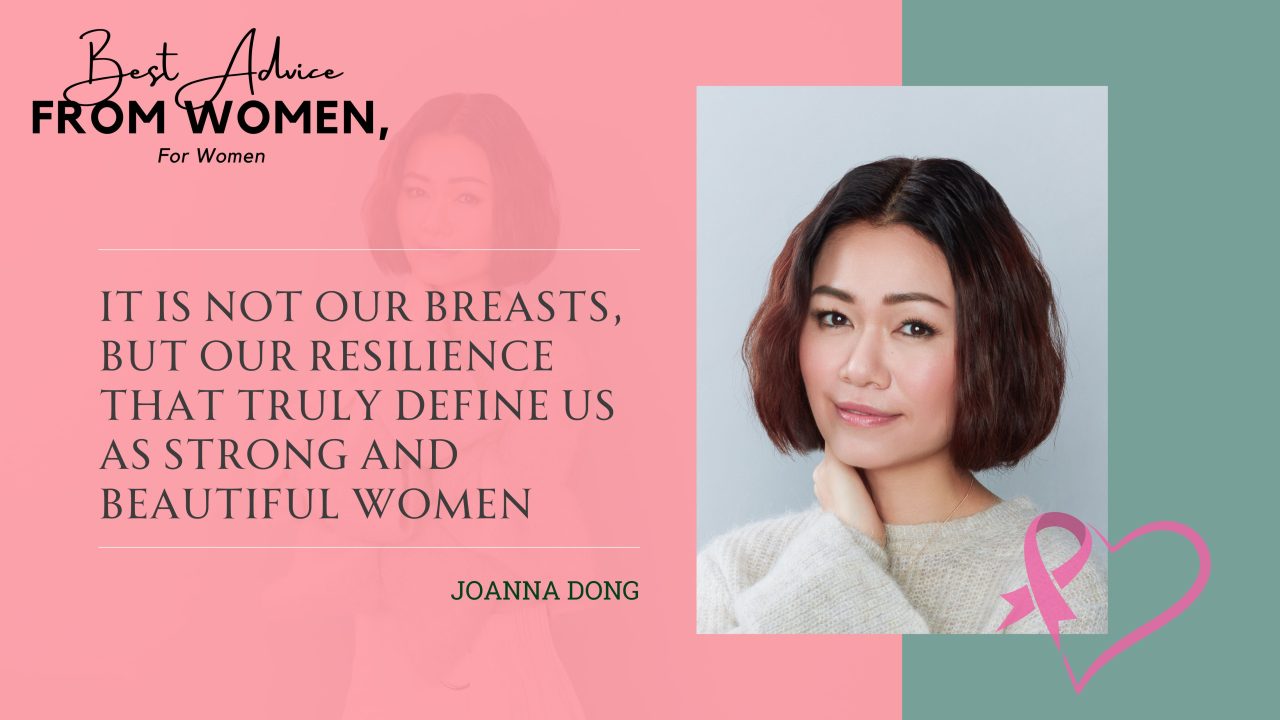
Awareness of your body is vital, as it empowers you to notice any changes or abnormalities early on. We spoke with Joanna Dong, singer and actress, about her breast cancer journey. Her vigilance in observing changes and taking quick action to address her concerns led to a less invasive treatment path.What kind of breast health issue did you face? I was diagnosed with stage 1 hormone sensitive breast cancer.How did you discover it? I went to see my breast specialist because I noticed some discharge from my right breast. MRI revealed blood pooling in breast ducts on both breasts, and my surgeon suspected DCIS (stage 0 breast cancer) at first, but the biopsy revealed that whilst I did not have cancer in my ducts, there was an incidental finding of a 7mm cancer tumour in the excised tissue adjacent to my right breast ducts.What was your biggest revelation after you were diagnosed?I realised that medical science has come a long way in breast cancer surgery, reconstruction, and treatments in the last two decades. I have a few friends who’ve lost their mothers to breast cancer when they were little, but today the survival rate is so much higher, especially when you discover it early like I did.What is one thing you wish you knew before you started treatment?The internet is a double-edged sword. It helped me learn more about my condition, but sometimes too much information without proper context and expertise can also be overwhelming. There were definitely moments when I had read something online and went on an unnecessary anxiety spiral, before meeting with my doctors who calmly and patiently addressed my concerns.What has the journey of dealing with or managing this issue been like for you? I was very fortunate that my surgery was minimally invasive, and that I did not have to undergo chemotherapy (only 8 sessions of radiation therapy). It was very manageable, and I honestly experienced relatively little physical discomfort throughout the whole process. Most of the challenge was in dealing with the psychological and emotional stress, and that’s where I am proud of the efforts I had made over the years in strengthening my mental health, and building strong relationships with my husband, family, and friends who have been amazing in supporting me.Before this happened, what was your attitude toward breast health? I do believe the public health campaigns have paid off, and I was already pretty well-informed about the importance of mammograms and self-checks. I am really grateful, because thanks to this awareness, I was observant of changes to my breasts, and caught the cancer early.Did this journey change that attitude? If anything, I think my personal experience with breast cancer has prompted me to be more vocal about breast health issues, in the hopes that more women will benefit from early detection like I did.What do you think women in general feel about breast health? It really depends on which generation of women you are speaking with. I think younger generations are much more comfortable discussing breast health, but for older generations, breasts are still somewhat taboo to talk about, and that’s totally understandable because the cultural norms were different for them. As an entertainer, I have a lot of older fans, so I felt compelled to speak more openly, in the hopes of de-stigmatising the topic for them.What are your thoughts when it comes to general awareness/education in this area? I think in general we understand much more about breast health now than before, but there are still many misconceptions regarding the specific treatments and procedures. For example, I didn’t realise that not every patient with cancer needs to go through chemotherapy, or that breast reconstruction techniques are so varied now. However, I am not sure it is necessary for the general public to know too many details either, because the treatments are constantly evolving and improving as well, and by the time the public learns about it, the information might already be irrelevant. What is essential and urgent for everyone to know, is that early detection saves lives.What advice would you give women about breast health?It is not our breasts but our resilience that truly define us as strong and beautiful women. Let’s take charge of our own health!Staying breast aware and keeping up with regular screenings can provide peace of mind.Remember, not all abnormalities indicate cancer. Let Solis & Luma provide the reassurance you need. Schedule your mammogram today.
Read more

From Preparedness to Reality: A Survivor’s Perspective on Breast Cancer

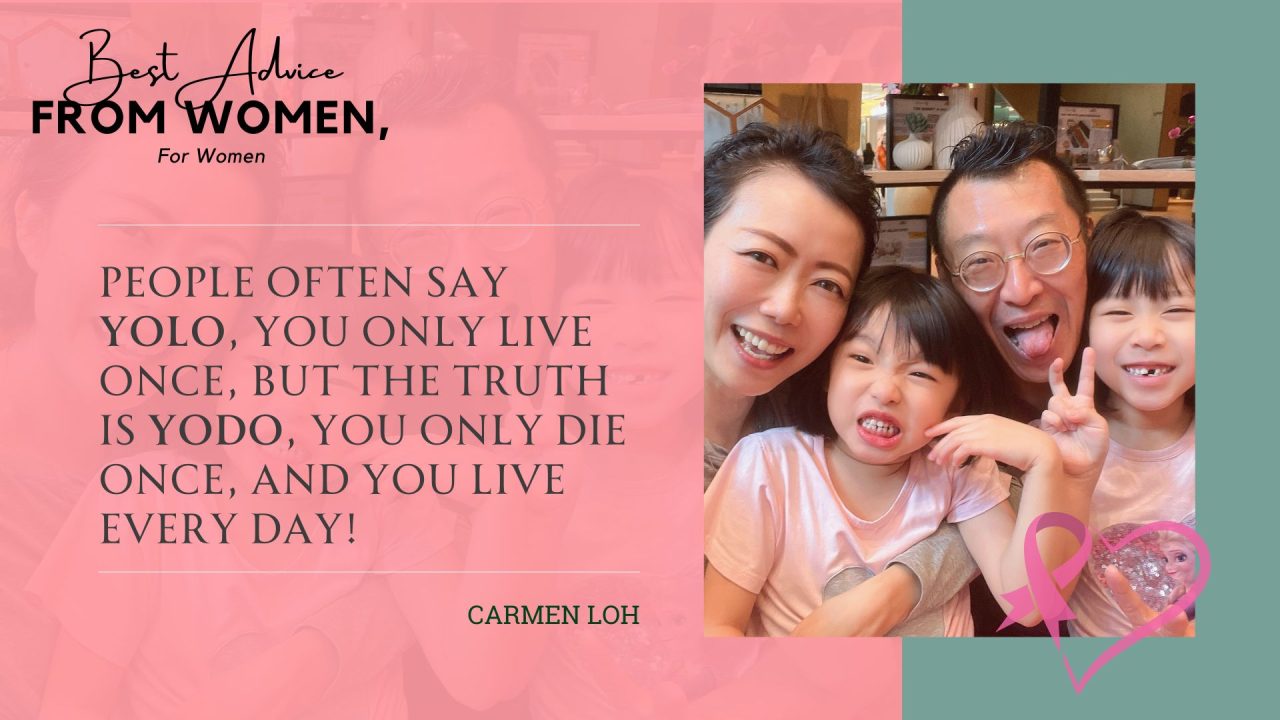
There are two types of people: (a) those who meticulously plan every detail of their lives, and (b) those who plan only what is necessary and handle the rest as it comes.As someone who understands the importance of breast health, Carmen Loh conscientiously practices breast self-examination (BSE) and maintains her yearly scans. The nature of her job also meant she was financially prepared for any future eventualities.However, nothing could prepare her for the moment she received her breast cancer diagnosis. In this issue of Best Advice from women, for women, Carmen shares with us the importance of planning for contingencies, especially when you are healthy and symptom-free.What kind of breast health issue did you face? I was diagnosed with Stage 3 Inflammatory Breast Cancer in October 2022.How did you discover it? I started noticing some rashes on my left breast in September 2022, which I initially thought would disappear with some rash cream. However, the rash persisted and within the next 2-3 weeks, my left breast began to harden, reminding me of the time when I last breastfed my two daughters. Feeling uneasiness about these symptoms, I decided to schedule an appointment with a breast surgeon to clarify my doubts.What was your biggest revelation after you were diagnosed? The biggest revelation was realising that, despite yearly checks, having no family history of cancer, breastfeeding my two daughters and maintaining a healthy lifestyle with BMI 18, I actually knew nothing about breast cancer. Breast cancer was the last thing I ever thought would happen to me.What is one thing you wish you knew before you started treatment? I wished that I had been exposed to more real-life stories and journeys of cancer survivors, similar to mine, as it would have equipped me with more mental preparedness. Nevertheless, I’m grateful for the unwavering support from my doctors and team, who demonstrated remarkable patience, expertise and kindness throughout my journey.What has the journey of dealing with or managing this issue been like for you? Prior to receiving the results on 14 October 2022, I thought I was mentally prepared. However, when my doctor announced the results straight to my face, I was totally taken aback and overwhelmed with mixed emotions. The first thought that crossed my mind was “am I going to die soon, or how much more time do I have?” as my two girls were then 3 and 5 years old. I was absolutely clueless on what was coming next due to the fear of uncertainties that lay ahead of me. The journey has been a roller coaster due to the side effects of chemotherapy. However, I am managing well mentally and emotionally with the support from my loved ones, family and friends.Before this happened, what was your attitude toward breast health? I understood the importance of not taking breast health or overall health for granted.Did this journey change that attitude? No, it did not. This journey has reaffirmed what is still important e.g. to have regular breast checks, and also to have both medical and critical illness insurances so you can be well covered for medical bills in times of need. My financial burden was eased because I had such plans.What do you think women in general feel about breast health? I think there are a lot of myths and perceptions about breast health that women in general have. They do not really know enough to have themselves well-equipped with the knowledge of pre- and post-cancer situations e.g. family history risks, eating too much red meat, alcohol & smoking etc.What are your thoughts when it comes to general awareness/education in this area? I think we can do a lot more to educate and to help support more women so that they are more empowered if cancer happens to them, or to someone close to them. A lot more should be done in helping women emotionally and financially before cancer strikes, as there is very little that can be done after.What advice would you give women about breast health? All women should go for yearly checks, especially mammogram (choose 3D as less painful vs 2D) and constantly monitor themselves. Do not delay treatment if you have any symptoms and be mentally prepared, in case cancer happens, whether at an early or late stage. Always ensure you and your loved ones are well-covered financially by planning with a trusted financial consultant while you are still healthy and without any pre-existing conditions.Coincidentally, I am both an insurance agent and a breast cancer survivor. When diagnosed, reality can hit so badly that you wished you could live differently if given a second chance in life. People often say YOLO, You Only Live Once, but the truth is YODO, You Only Die Once, and you live every day! This applies to cancer as well; since it is a critical illness, you can only claim from insurance once upon diagnosis. As I am no longer eligible to buy such plans, I am on a mission to share my journey and help others while they still have the chance.Life is full of surprises and while there are many things beyond our control, we can still take the effort to equip ourselves with the knowledge and understanding of our own body and its changes. Consult a breast surgeon if you are unsure about any breast lumps, bumps or pain, or feel anything abnormal.
Read more

How Self Love can Change Your Life – Say No to Breast Cancer

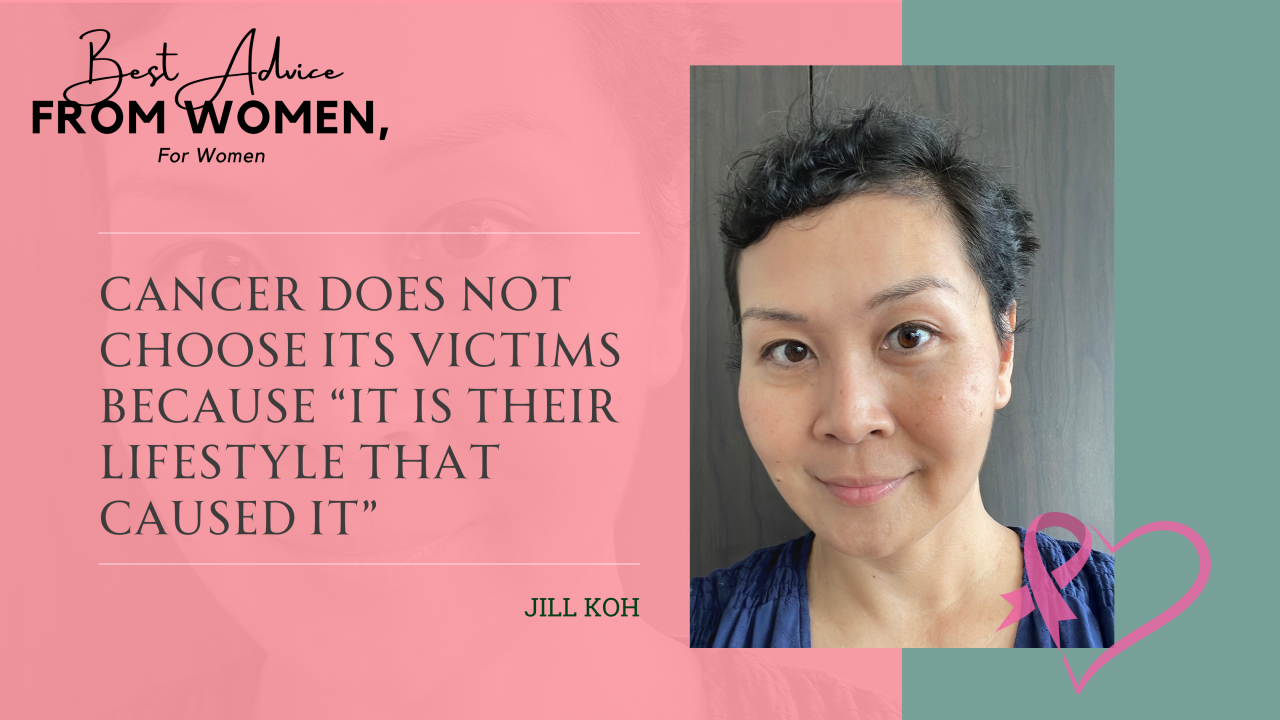
It is important to conscientiously practice breast self-examinations so that we are aware of any changes/abnormalities and seek medical attention early. Early medical intervention increases one’s chance of recovery.In this edition of Best Advice from Women, for Women, we speak with breast cancer survivor Jill Koh, who helps us quell some of the misconceptions that many women have about breast cancer.QuestionsWhat kind of breast health issue did you face?I was diagnosed with invasive lobular carcinoma (stage 3 as it had spread to the lymph nodes in my right arm) in January 2021.How did you discover it?I was in Bangkok on personal business and as I was lying sideways in bed, I found a lump in my right breast as I did my own routine check-up. I went to a local hospital the next day. The doctor did an ultrasound and mammogram for me and told me it was highly likely breast cancer but as my flight home was in three days, she said to continue with the treatment in Singapore. After I served my two-week quarantine, I went to see a breast specialist where we did a biopsy and the cancer was confirmed.What was your biggest revelation after you were diagnosed?Two years prior in 2019, I had a lump removed in the same breast after the initial sample biopsy showed presence of cells that could turn cancerous. However, the lump and its surrounding tissues were benign and no traces of the earlier cells were found in the final biopsy. My doctor and I agreed to check regularly to be safe but I think that had already prepared me mentally that I could be at risk. So when I was really diagnosed with cancer in 2021 , I was quite prepared to accept it and move on immediately to treatment. Not much emotional upheaval involved.What is one thing you wish you knew before you started treatment?Breast cancer is not just “one type of breast cancer” but there are many variations and most of them can be controlled as long as we receive treatment soonest. I was undergoing treatment at the same time as a friend and while my cancer was hormone receptive, hers wasn’t and our treatment was thus different. Our experiences with chemotherapy and radiation were somewhat the same in general (baldness and occasional fatigue), yet it was also vastly different as it depended on the type of chemotherapy treatment administered, our own physical limits, resilience and outlook  as well as family/friends’ support.Hence, we can’t just believe what we watch on TV that hair drops once you start chemo (takes about a fortnight actually) and you would get sickly and weak – this is true for some but not all! It really depends a lot on various factors starting with what type of breast cancer we have, what stage we are at and treatment options. My skin was absolutely glowing during treatment as I drank so much fluid to flush the chemotherapy medication out after each treatment!What has the journey of dealing with or managing this issue been like for you?I am generally an optimist and fairly active person. Not sporty, just a fidgety type of active. I can’t really sit still, and I am always on a project or another. So I tried not to worry too much about the entire process from start to end and I definitely did not try to google and self-diagnose every side effect etc. It is good to be informed but it is unnecessary to be a cyberchondria.I placed full trust in my doctors to provide me with the best medical options and care. My family and friends who knew of my condition were also supportive and nobody treated me “differently”. My husband would insist I get out there almost daily for short walks, fresh air and we would continue to gallivant after dropping my daughter off school in search of good food. I continued with housework and cooking (although I had to delegate the taste test to the kids as the treatment affected my sense of taste somewhat) and we worked to maintain as normal a routine as possible.I felt blessed that I found my lump (which was supposedly fairly buried under the areola) by chance and managed to get treatment quickly, that I had good doctors and I responded quite positively throughout the treatment with mild side effects. So I cannot be upset about or blame anything really. Just be positive and look towards the end of treatment.Before this cropped up, what was your attitude toward breast health?My step grandmother had a mastectomy and I remembered as a kid how she had a sponge pad for her bra. My aunt had stage zero breast cancer and my mom has had a few scares. I had a lump removed in 2019 too. So I have been exposed to the topic of breast cancer for a long time. And I used to head up the Pinktober project in my child’s school (when we were based overseas) to fundraise and provide the school’s contract staff with regular medical, breast and PAP smear check-ups. We would also have nurses come into the school annually to educate all local staff on the importance of breast check ups. So breast health has always been important to me even before my diagnosis.Did this journey change that attitude?I think it further reinforced the message that women have to take responsibility for their breasts and health. In fact, 5 months before my diagnosis I had a full check-up as part of my insurance package (for ladies). It was a manual check by the doctor and she did not notice any anomaly then. When I was diagnosed and I shared the news with my family and friends, it triggered a wave of check-ups among them as many were indeed procrastinating and until it happened to someone close, I guess it felt like “oh, it won’t happen to me” to many. And that push factor was a positive as since then 2 more friends had been diagnosed early during their check-ups.What do you think women in general feel about breast health?I can’t comment on the general attitude in Singapore, but among family and friends, I know they are educated and aware of breast health. However, many have prioritised themselves last, putting the needs of their children, families and work ahead, and procrastinating on the check-ups or not scheduling them at all.Based on my experience with the lower income local staff in my child’s previous school overseas, their concerns were different. They would rather be ignorant so that they can continue to work, have an income to support the family and not worry/think about medical costs for treatment as many did not have proper insurance coverage.What are your thoughts when it comes to general awareness/education in this area?Perhaps because I am a breast cancer survivor, I am more aware of all the advertisements, events and activities that are organised by Breast Cancer Foundation, and various medical bodies and support groups to promote breast health. They pop up on my Facebook feeds, in support group Whatsapp chats and the intensity ups in October during Breast Cancer Awareness Month.However, for others who have not had the opportunity or time to think about it, they may not consciously sight or notice these efforts to educate. And what they learn through watching dramatic soap operas about breast cancer might just give them the wrong impression – that everyone MUST have chemotherapy, radiation, then go bald, sit and look withered in a wheelchair, or that breast cancer makes one less of a “woman” if she had to undergo mastectomy. It could be refreshing for a TV soap series to for once portray a positive case!What advice would you give women about breast health?I don’t drink, smoke and I keep an active lifestyle. I try to eat healthy and breast-fed both kids for 18 months each from birth. Even when I was diagnosed, I had no obvious textbook symptoms like orange peel skin, pus, pain, fatigue, loss of appetite etc. Cancer does not choose its victims because “it is their lifestyle that caused it”.  It happens, so always dedicate some time to care for yourself, do your annual check-up head to toe. Don’t hesitate to seek treatment. Also, if you can afford it, invest in a good insurance package. Since diagnosis my treatment has probably cost $200,000 plus minus and most of it has been covered by my insurers thankfully, so that really helps as it is one less thing to worry about – finances.Practice good breast health habits, and stay positive!If you have any questions on breast health but were too afraid to ask your doctor, let our Solis doctors help you.
Read more