
Dancing Through Adversity: How One Survivor Reclaimed Life After Breast Cancer

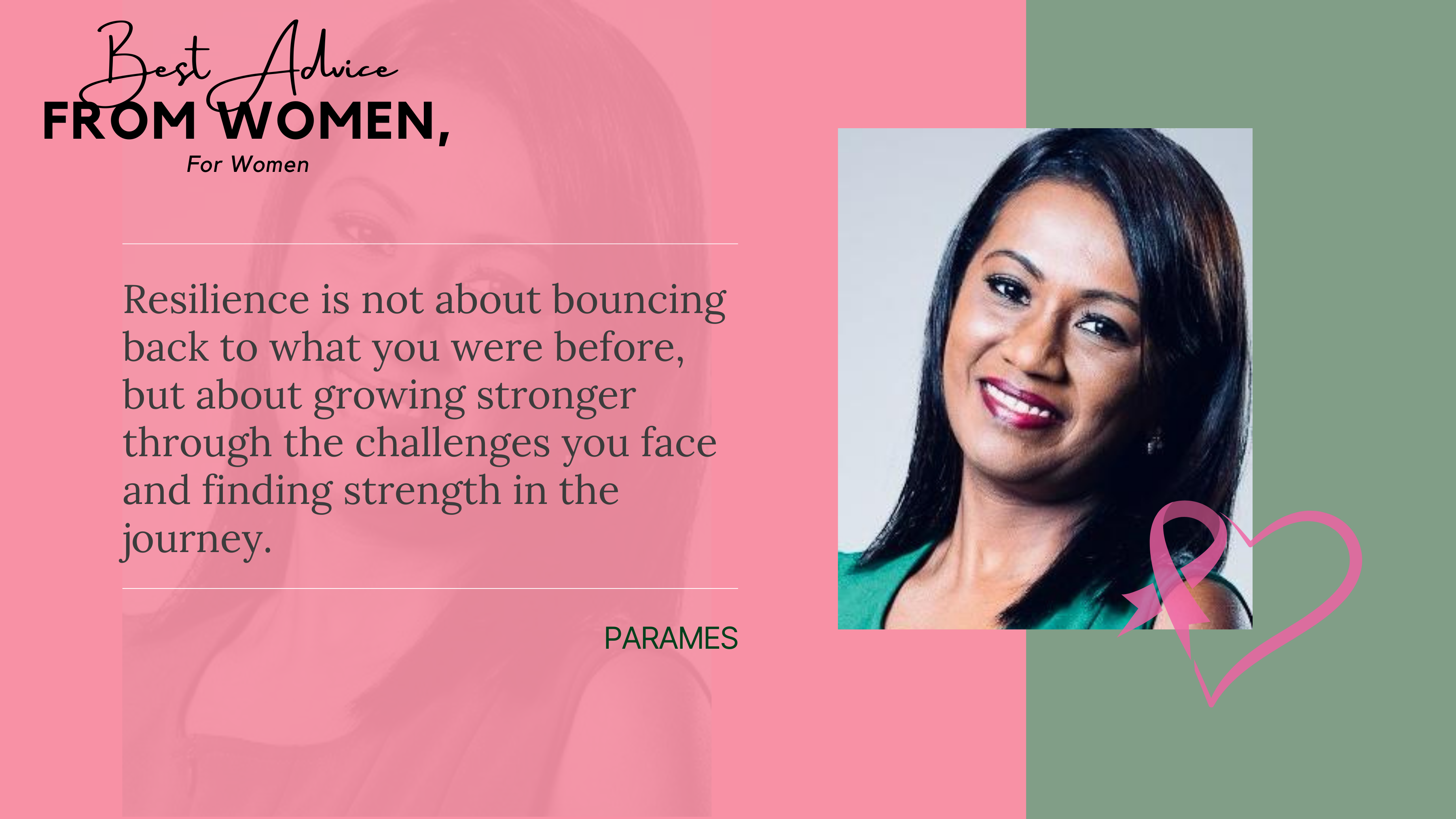
As a teacher, Parames is more than just an educator – she is a pillar of strength and a role model to the many students she inspires. But her resilience was truly put to the test when she was diagnosed with breast cancer. From being the one others leaned on, she suddenly had to rely on her own support system. Today, she shares her journey of strength, vulnerability, and recovery. Can you share a bit more about your journey with breast cancer? How did you first discover it?I went for my second mammogram in 2016, during which I was diagnosed with Stage 2 ER+ breast cancer. Just two weeks later, I began my first round of chemotherapy – four cycles to start, followed by a mastectomy, and then another four cycles of chemo to complete my treatment. How has having breast cancer changed your outlook on life?It was truly life-changing. The experience forced me to reassess my priorities and appreciate the little things more deeply. It brought a renewed focus on health, relationships, self-care and the things that truly matter.  What is the one mantra, quote, or philosophy that you live by?“The oak fought the wind and was broken, the willow bent when it must and survived.” – Robert Jordan. This quote speaks to the importance of adaptability and inner strength. My will to survive was deeply rooted in love—for life, for my family, and for the strength to rise above the challenges I faced.Who are some of the role models and why? My greatest role model is my late mother. She passed away in 2021 after a 13-year battle with corticobasal ganglionic degeneration (CBDG), a rare form of Parkinsonism. Despite many difficult years, she fought with immense courage and grace. Her resilience taught me invaluable life lessons, which I leaned on during my own cancer journey.Tell us something about yourself that most people might not knowI am very passionate about dancing. It’s a powerful form of expression that connects me deeply to my emotions and allows me to communicate in ways words cannot. I began learning Bharatanatyam at the age of six, thanks to my mother. Although I took a ten-year break after having my first child, I resumed lessons just before my diagnosis. After recovery, dance became a vital part of my healing – both physically and emotionally. It helped me gently rebuild strength, improve flexibility and balance, and most importantly, regain confidence in my body. It made me feel more in control, more grounded, and capable.What are some of the biggest lessons you’ve learnt on this journey?Resilience became my anchor. Cancer pushed me to discover a depth of strength I didn’t know I had. It also taught me the value of the present moment – to cherish time with loved ones, to embrace joy, and to find meaning in the little things. What advice would you give to other women going through the same journey? Lean on your support system: You don’t have to face this alone. Let people in. Take it one day at a time: Focus on the present, and celebrate small victories—whether it’s feeling better after a treatment or just getting through a difficult day. Find your comfort: Whether it’s music, nature, or hobbies – do what lifts you. These moments of joy are important. Stay informed: Knowledge empowers, but it’s okay to take things in slowly. Ask questions. Trust your instincts.What message would you give to young women about breast cancer screening? Your health is your responsibility. Regular screenings and early detection can save lives. Be proactive. Get informed. You are your best advocate – be bold, be informed, and never hesitate to take charge of your well-being.What are your hopes for the future of breast cancer research?There is so much hope on the horizon. Advances in personalised medicine are promising more targeted, effective treatments with fewer side effects. I believe we are moving toward a future where a breast cancer diagnosis won’t be as frightening – and maybe one day, won’t be frightening at all. You participated in the “Catwalk for Courage” event earlier this year. Can you share your thoughts about it?Participating in Catwalk for Courage was powerful. It was more than just an event – it was a statement of solidarity, empowerment and hope. We walked for awareness, for research, and to honour every person affected by breast cancer. It reminded me that our collective strength can make a real difference. Every step taken was a step toward visibility, support and healing. What were some of the biggest challenges you’ve had to overcome? I faced extreme fatigue, total hair loss, sensitive skin, and discoloured nails. “Chemo brain” – with its memory lapses and focus issues – was especially tough since I was always an effective multitasker. I coped by: Keeping a routine – Using my phone’s calendar and notes app to stay organised.  Staying Healthy – Eating well, staying hydrated, and working out three times a week to boost brain function. Emotionally, it was overwhelming. With no family history of cancer, I was in shock. I worried how it would affect my loved ones. I was anxious about my treatment, the side effects, and the future. But I drew strength from my mother’s example, and my husband was my unwavering rock – his quiet support and optimism gave me clarity and helped carry me through. What do you consider your biggest achievement so far? Surviving breast cancer and reclaiming my life is my greatest achievement and a monumental victory. It gave me a new sense of purpose – to advocate for awareness, support others, and be a voice fo early detection. Every day, I live with passion, and the drive to make a difference. How did your breast cancer journey affect your family? It brought us closer than ever. My children, who were just 6 and 9 at the time, initially struggled with fear and uncertainty. So, I involved them in the journey – they witnessed my treatments, my strength, and my healing. It gave them resilience and empathy. My husband, always by my side, provided emotional strength and practical help. We got through it as a team, one day at a time.How did breast cancer change your professional life?It made me re-evaluate everything. Health and well-being became my top priorities, prompting me to transition to part-time work so that I could focus more on life outside the classroom. The experience gave me a new lens on what truly matters and taught me to approach both my career and life with greater clarity, purpose, and balance. It also strengthened my ability to navigate challenges with confidence.Whether you are going through a similar journey, or supporting someone who is – know that you’re not alone. At Solis, Club Solis, a support group specially for breast cancer patients and survivors, offers a safe space for sharing and support. If you are unsure about any abnormal breast symptoms, don’t be afraid to seek help. Our surgeons are here to support you, every step of the way. 

Read more

Supporting Your Partner Through Breast Cancer: Navigating Fertility & Sexual Health

A breast cancer diagnosis can shake a young woman’s world. Suddenly there’s an overwhelming flood of information to process, decisions to make, and treatments to face. For younger women with breast cancer, fertility is often a major concern [1]. Some may worry about how their concerns could upset their partner, while others fear being rejected when forming new relationships [2]. In contrast, older breast cancer patients may be less concerned about fertility if they’ve already had children or decided not to have any before their diagnosis [3]. Emotional Support Makes All the DifferenceWatching someone you love go through a cancer diagnosis is tough, and it’s normal to feel uncertain about how to be there for them.An important way to support them is to be present, listen without judgement, and create a safe space where they can freely express emotions and voice out concerns [4]. Support from loved ones and health providers can help reduce the stress of a cancer diagnosis [5]. Your loved one might feel frustration or anger at their diagnosis, and may sometimes direct these feelings at you. This can hurt, but it’s important to remember that your partner is upset at their condition, not with you [4]. Your presence and patience matter, even when you feel lost. Navigating Fertility Concerns TogetherIn addition to emotional support, addressing practical concerns about fertility can help your partner feel supported. If having children is important to both you and your partner, it’s crucial to speak to the doctor before starting treatment.Here are some common questions you might have as a partner:Will breast cancer treatment affect my partner’s ability to become pregnant in the future?Every patient’s cancer is different, so treatment plans are personalised based on individual needs and preferences. While procedures like surgery may not affect fertility, treatments like chemotherapy may affect ovarian function and hence fertility [6].Can fertility be preserved during treatment?Fertility preservation may be possible. This process saves or protects your loved one’s embryos, eggs or ovarian tissue so they can be used to have children in the future [7]. Options may include [8]:Embryo freezing and In vitro fertilisation: Eggs are removed and fertilised with sperm in a lab, creating an embryo that is frozen and stored for later use.Egg freezing: Eggs are collected and frozen. This method may be used if a woman does not have a male partner and is not keen on using donor sperm. Ovarian tissue freezing: Ovarian tissue is surgically removed and frozen in a process called cryopreservation. The tissue is reimplanted after treatment. If the tissue begins working normally again, the ovaries may produce eggs, allowing you and your partner to naturally try for a baby. As a couple, it’s important to remember that while these options offer opportunities to try for children post-treatment, they may not always result in pregnancy.Should we be on birth control during her treatment?Women are advised to avoid getting pregnant during breast cancer treatment, as it can complicate treatment and risks abnormalities to the unborn baby. Discuss with your loved one’s doctor about suitable birth control options and explore what’s best for your situation. In principle, since breast cancer is often related to hormonal activity in the body, hormone-based contraception such as birth control pills will not be advisable. Instead, barrier contraception such as a condom or cap is preferred. [9] [10].After her treatment, how soon can we try for pregnancy?In general, doctors may advise waiting at least two years after completing treatment to get pregnant, due to worries about cancer recurrence [11] [12]. The wait time can vary depending on the type of cancer and stage, the treatment received and age [13].Some hormones that increase during pregnancy can potentially cause breast cancer cells to grow, and undergoing cancer treatment during pregnancy can be complex [13]. Are there risks to the baby if my partner becomes pregnant post-treatment?A history of breast cancer has been linked to complications such as low birth-weight, early birth and the need for a caesarean section. However, research has not found that a woman’s past breast cancer has direct effects on the baby, such as birth defects or long-term health concerns [14] [15]. However, medications such as Tamoxifen (which has to be taken for several years), can cause harm to the developing foetus. Hence, precautions to avoid pregnancy should be taken when receiving Tamoxifen treatment. Will a future pregnancy put my partner at risk of breast cancer recurrence?Since breast cancer is a hormone-driven disease, and pregnancy increases hormone levels, it’s understandable to worry about cancer coming back, particularly those with hormone-positive breast cancer [16].However, studies have not shown that pregnancy increases the risk of cancer returning. In most cases, pregnancies are generally considered safe for the mother [15] [16].  A recent large study suggested interrupting hormone therapy for pregnancy did not worsen the outcome of breast cancer [17]. However, as individual cancer risk varies, this will have to be discussed with the oncologist.  Open conversations and gathering as much information as possible can offer you and your partner clarity and reassurance. With something as life-altering as breast cancer, making informed decisions will help you move forward together with confidence. Sexual Health and Intimacy: Braving New ChallengesWhile addressing your partner’s fertility concerns is important, it’s also vital to consider the emotional and physical changes that can affect intimacy and sexual well-being. Sexual health concerns are also common and distressing for women after a breast cancer diagnosis [18].Physical changes, particularly after surgeries like a mastectomy, can affect how some women feel about their bodies. Treatments that affect hormone levels like chemotherapy and hormone therapy may impact your partner’s sexual interest [19]. Mental strain and fatigue from treatment can also make intimacy challenging. As their partner, you can help by being sensitive to these changes and communicating openly to avoid misunderstanding. If you’re worried about causing hurt or discomfort, let them know. Ask how your partner feels and respect their boundaries. Intimacy does not always have to be sexual, it can be small gestures like hugging or simply being close to each other [4]. While navigating these changes can be challenging, it can also present new ways to stay connected and grow as a couple. Navigating breast cancer and its impact on fertility and sexual health can be challenging for any couple. It’s normal to feel overwhelmed by the uncertainty, but speaking with health professionals and leaning on loved ones can make the journey less daunting. Remember, you and your partner are not alone, and with patience and understanding, you can both face it and emerge stronger together. Article reviewed by Dr Tan Yah Yuen, Senior Consultant and Breast Surgeon at Solis Breast Care & Surgery.References[1] Prevalence and impact of fertility concerns in young women with breast cancer. [2] Talking but not always understanding: couple communication about infertility concerns after cancer [3] Prospective Study of Fertility Concerns and Preservation Strategies in Young Women With Breast Cancer [4] Breast Cancer Now, My partner has breast cancer [5] Breast Cancer: Exploring the Facts and Holistic Needs during and beyond Treatment [6] National Breast Cancer Foundation Inc., Does Breast Cancer Treatment Affect Fertility? [7] American Cancer Society, Preserving Your Fertility When You Have Cancer (Women) [8] Cancer Research UK, Preserving Fertility and Breast Cancer [9] Cancer Council Australia, Cancer Fertility Preservation [10] NHS, Contraception and pregnancy during cancer treatment: Information for patients [11] Breastcancer.org, Fertility and Pregnancy After Breast Cancer [12] Breast Cancer Now, Planning pregnancy after breast cancer treatment[13] American Cancer Society, Having a Baby After Cancer: Pregnancy [14] American Cancer Society, Pregnancy After Breast Cancer [15] Breastcancer.org, Pregnancy Is Safe After a Breast Cancer Diagnosis, Study Shows[16] Safety of pregnancy after breast cancer in young women with hormone receptor-positive disease: a systematic review and meta-analysis [17] Interrupting Endocrine Therapy to Attempt Pregnancy after Breast Cancer [18]  Women's insights on sexual health after breast cancer (WISH-BREAST)[19] American Cancer Society, Body Image and Sexuality After Breast Cancer
Read more

Staying Aware, Staying Strong: Why Early Breast Cancer Detection Matters for Women

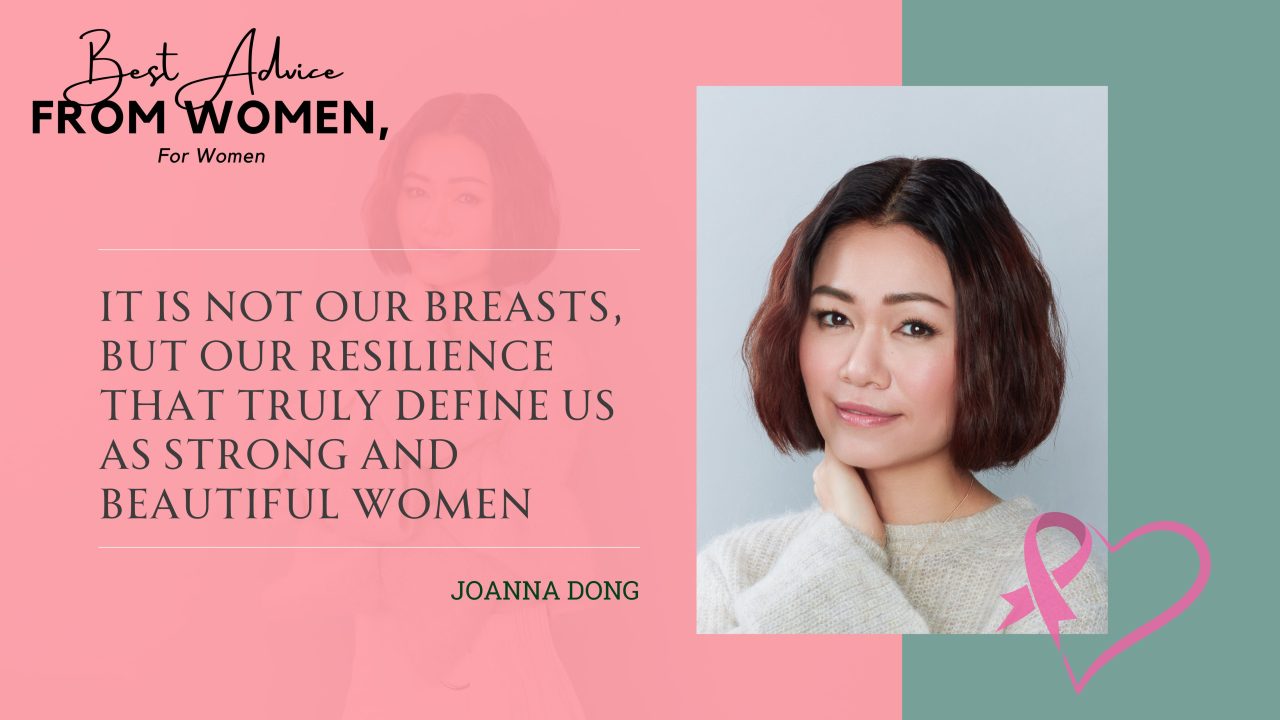
Awareness of your body is vital, as it empowers you to notice any changes or abnormalities early on. We spoke with Joanna Dong, singer and actress, about her breast cancer journey. Her vigilance in observing changes and taking quick action to address her concerns led to a less invasive treatment path.What kind of breast health issue did you face? I was diagnosed with stage 1 hormone sensitive breast cancer.How did you discover it? I went to see my breast specialist because I noticed some discharge from my right breast. MRI revealed blood pooling in breast ducts on both breasts, and my surgeon suspected DCIS (stage 0 breast cancer) at first, but the biopsy revealed that whilst I did not have cancer in my ducts, there was an incidental finding of a 7mm cancer tumour in the excised tissue adjacent to my right breast ducts.What was your biggest revelation after you were diagnosed?I realised that medical science has come a long way in breast cancer surgery, reconstruction, and treatments in the last two decades. I have a few friends who’ve lost their mothers to breast cancer when they were little, but today the survival rate is so much higher, especially when you discover it early like I did.What is one thing you wish you knew before you started treatment?The internet is a double-edged sword. It helped me learn more about my condition, but sometimes too much information without proper context and expertise can also be overwhelming. There were definitely moments when I had read something online and went on an unnecessary anxiety spiral, before meeting with my doctors who calmly and patiently addressed my concerns.What has the journey of dealing with or managing this issue been like for you? I was very fortunate that my surgery was minimally invasive, and that I did not have to undergo chemotherapy (only 8 sessions of radiation therapy). It was very manageable, and I honestly experienced relatively little physical discomfort throughout the whole process. Most of the challenge was in dealing with the psychological and emotional stress, and that’s where I am proud of the efforts I had made over the years in strengthening my mental health, and building strong relationships with my husband, family, and friends who have been amazing in supporting me.Before this happened, what was your attitude toward breast health? I do believe the public health campaigns have paid off, and I was already pretty well-informed about the importance of mammograms and self-checks. I am really grateful, because thanks to this awareness, I was observant of changes to my breasts, and caught the cancer early.Did this journey change that attitude? If anything, I think my personal experience with breast cancer has prompted me to be more vocal about breast health issues, in the hopes that more women will benefit from early detection like I did.What do you think women in general feel about breast health? It really depends on which generation of women you are speaking with. I think younger generations are much more comfortable discussing breast health, but for older generations, breasts are still somewhat taboo to talk about, and that’s totally understandable because the cultural norms were different for them. As an entertainer, I have a lot of older fans, so I felt compelled to speak more openly, in the hopes of de-stigmatising the topic for them.What are your thoughts when it comes to general awareness/education in this area? I think in general we understand much more about breast health now than before, but there are still many misconceptions regarding the specific treatments and procedures. For example, I didn’t realise that not every patient with cancer needs to go through chemotherapy, or that breast reconstruction techniques are so varied now. However, I am not sure it is necessary for the general public to know too many details either, because the treatments are constantly evolving and improving as well, and by the time the public learns about it, the information might already be irrelevant. What is essential and urgent for everyone to know, is that early detection saves lives.What advice would you give women about breast health?It is not our breasts but our resilience that truly define us as strong and beautiful women. Let’s take charge of our own health!Staying breast aware and keeping up with regular screenings can provide peace of mind.Remember, not all abnormalities indicate cancer. Let Solis & Luma provide the reassurance you need. Schedule your mammogram today.
Read more