




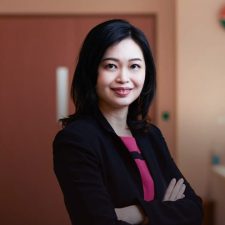

Featuring Dr Lim Siew Kuan, Senior Consultant & Breast Surgeon, MBBS (Singapore), M Med (Surgery), FRCS (Edin), FAMS
- Aired 16 October 2026 on 96.3 HAO FM
- Last reviewed: October 21, 2026
In conjunction with Breast Cancer Awareness Month, Dr Lim Siew Kuan, Senior Consultant & Breast Surgeon joined host Deng Xinying (Aurora) on 96.3 HAO FM’s 《啊!原来是这样》 to discuss breast cancer screening, common misconceptions, male breast cancer and treatment options in Singapore. The episode aired on 16 October 2026 and is in Mandarin.
How common is breast cancer in Singapore?
Dr Lim shared that breast cancer cases in Singapore have risen about fourfold since 1970, with around 2,700 to 2,800 new diagnoses each year.
She also highlighted the importance of regular breast screening, which can help detect breast cancer at an earlier stage, when treatment is generally more effective. In Singapore, mammogram screening is recommended from age 40, with screening intervals varying according to age and individual risk factors
Why do so few women in Singapore go for screening?
Only about one-third of women in Singapore undergo regular breast screening, compared with rates of 70% to 80% in Western countries, as cited in the episode. Dr Lim highlighted two main reasons: fear of a cancer diagnosis and the treatment that may follow, and the assumption that screening is unnecessary when there are no symptoms. She emphasised that detecting breast cancer earlier can often mean simpler treatment.
Does breast size affect breast cancer risk?
No. Dr Lim explained that there is no medical basis for the belief that having larger breasts increases the risk of breast cancer. Risk is influenced by a combination of factors. Some cannot be changed, such as being female and getting older, while others may be related to lifestyle and reproductive factors, including physical inactivity, diet, having children later in life, breastfeeding history and long-term use of certain hormone medications. Having one first-degree relative with breast cancer is associated with about twice the risk, while having two first-degree relatives is associated with about three times the risk
What are the main types of breast cancer?
Breast cancers can be classified into different subtypes based on characteristics of the cancer cells. Dr Lim discussed three broad groups: hormone receptor-positive, HER2-positive and triple-negative breast cancer.
Triple-negative breast cancer is generally more aggressive and can be more challenging to treat, and is seen more often in younger patients. For some HER2-positive and triple-negative breast cancers, chemotherapy may be given before surgery to shrink the tumour and potentially increase the likelihoodof breast-conserving surgery. In some triple-negative breast cancers, immunotherapy may also be used alongside chemotherapy.
Can men get breast cancer?
Yes. Men have breast tissue and can develop breast cancer, , although it is much less common than in women, accounting for about 1% to 2% of breast cancer cases. Dr Lim noted that some men may delay seeking medical attention because breast cancer is not something they expect to develop, particularly when a lump is painless. Any new, persistent or asymmetrical lump should be assessed by a doctor.
How should I do a breast self-examination?
Dr Lim recommends a monthly breast self-examination to become familiar with how your breasts normally look and feel, making it easier to notice any changes. For women who are still menstruating, she suggests checking between days 7 and 10 of their menstrual cycle, when the breasts may be less affected by hormonal changes. After menopause, choosing the same day each month can be a helpful reminder. Look for changes such as asymmetry, skin redness or dimpling, unusual nipple discharge, and feel for any new, persistent lumps. Breast cancer risk does not decrease after menopause, so it remains important to continue regular self-checks.
What happens if I find a breast lump?
About 80% of breast lumps are benign, but a new or persistent lump should still be properly assessed. (You can learn more in Dr Lim’s article, Benign lumps: how common are they and should I worry?). Depending on your symptoms and clinical findings, diagnosis may involve a a consultation and physical examination, breast imaging such as a mammogram and ultrasound, and where necessary, a biopsy to examine a tissue sample.
Do all breast cancer patients need a mastectomy?
No. A mastectomy is not necessary for every person diagnosed with breast cancer. Depending on the size and location of the cancer, the characteristics of the brfeast and other clinical factors, breast-conserving surgery may be an option.
Oncoplastic surgery combines tumour removal with plastic surgery techniques to help preserve the appearance and shape of the breast. Where a mastectomy is necessary, breast reconstruction may also be considered.
What can I expect after breast cancer treatment?
Returning to everyday life after breast cancer treatment is often a gradual process. As recovery progresses, many patients are able to return to work, family acitivites, travel and exercise. Dr Lim suggests starting with lower-intensity activities such as walking, yoga or tai chi. Family and friends can play an important role too, not only by offering practical and emotional support, but by helping the person regain a sense of normalcy, and where appropriate, embracing healthier habits together. Find out more about our post-care support.
Life after treatment
Most patients gradually return to work, family life, travel and exercise. Dr Lim suggests starting with low-intensity activities such as walking, yoga and tai chi. Family and friends can help by supporting a return to normal routines rather than treating the person as fragile, and by adopting healthier eating and exercise habits together. Find out more about post-care support.
About Dr Lim Siew Kuan
Dr Lim is a Senior Consultant & Breast Surgeon at Solis, and manages both benign and malignant breast conditions. She completed subspecialty training at the Center for Breast Cancer, National Cancer Center, Korea, including breast oncoplastic and reconstructive surgery. Her research includes a 2015 survey on Singaporean women’s knowledge, perception and practices of mammogram screening.
林秀娟医生做客96.3好FM:男人也会得乳癌?
林秀娟医生,乳腺外科资深顾问医生,MBBS (Singapore), M Med (Surgery), FRCS (Edin), FAMS
2026年10月16日于96.3好FM播出
配合世界乳癌宣导月,暄晖乳房护理及手术中心乳腺外科资深顾问医生林秀娟医生做客96.3好FM《啊!原来是这样》,与主持人邓薪萤(Aurora)讲解乳癌筛查、常见误区、男性乳癌及治疗方式。
新加坡乳癌病例有多普遍?
林医生指出,从1970年至今,本地乳癌病例已上升约四倍,每年新确诊病例约2700至2800例。本地数据显示,筛查能降低乳癌死亡率并提高治愈率,因此建议40岁以上女性定期筛查。
为什么本地筛查率偏低?
目前只有约三分之一的本地女性定期做乳房检查,节目中提到西方国家的筛查率可达70%至80%。主要原因是害怕确诊及后续治疗,以及认为没有症状就不需要检查。越早发现,治疗越简单。
乳房大小会影响患癌风险吗?
不会。林医生表示这种说法没有医学根据。不可改变的风险因素包括女性身份和年龄增长;可改变的因素包括作息不规律、缺乏运动、饮食不良、晚育、少哺乳及长期服用荷尔蒙药物。一位直系亲属患乳癌,风险高出一倍;两位则增至三倍。
乳癌有哪些类型?
主要分为荷尔蒙受体阳性、HER2受体阳性及三阴性乳癌。三阴性乳癌侵袭性最强、最难治疗,且较常见于年轻患者。第二期以上的HER2阳性及三阴性乳癌,通常先化疗再手术,以缩小肿瘤、提高保乳几率。三阴性乳癌可采用化疗联合免疫治疗,帮助达到病理完全缓解(pCR)。
男性也会得乳癌吗?
会。男性乳癌约占所有乳癌病例的1%至2%。男性求医通常较迟,因早期乳癌没有疼痛感,很多人误以为是脂肪瘤。发现新的、持续或不对称的肿块,应及时检查。
如何进行乳房自检?
建议每月自检一次。有月经的女性在经期第7至第10天进行,停经后女性每月固定一天即可。观察是否不对称、皮肤红斑、凹陷或乳头溢液,并触摸是否有肿块。停经后风险不会降低,仍需坚持自检。
摸到肿块怎么办?
约80%的乳房肿块是良性的。诊断包括三个步骤:临床问诊与触诊、乳房X光及超声波检查,以及通过3至5毫米小伤口进行穿刺活检。
患乳癌一定要切除整个乳房吗?
不一定。大部分早期患者无需全切。肿瘤整形手术结合肿瘤切除与整形外科技术,帮助保留乳房外观。如需全切,也可选择乳房重建。
康复后的生活
大多数患者可逐步回归工作、家庭、旅游及运动。建议从散步、瑜伽、太极等低强度运动开始。家人应支持他们回归正常生活,一同建立健康的饮食和运动习惯。了解更多后期护理。
关于林秀娟医生
林医生是暄晖乳腺外科资深顾问医生,处理良性及恶性乳腺疾病。她曾在韩国国家癌症中心乳腺癌中心完成专科培训,包括乳腺肿瘤整形及重建手术。她的研究包括2015年一项关于新加坡女性对乳房X光筛查的认知与行为调查。