






1. Overview of Treatment Principles
Management of breast cancer requires a multidisciplinary approach, incorporating breast and plastic surgeons, medical oncologists, radiation oncologists, radiologists and pathologists, including genetic counsellors, physiotherapists, psychological counsellors and advanced practice breast nurses if available.
Invasive breast cancers can be staged as:
- Early breast cancer (stage I and II): confined to the breast with no or limited axillary lymph nodes involved
- Locally advanced breast cancer (stage III): larger breast tumours, more extensive regional (axillary, supraclavicular/infraclavicular, internal mammary) lymph node involvement, skin changes (erythema, thickening, peau d’orange, inflammatory changes) and chest wall involvement
- Metastatic/advanced breast cancer (stage IV): cancer that has spread to sites distant from the breast, most frequently bones, lung, liver and brain
Stages I-III are treated with curative intent while the aim of treating metastatic disease is for tumour shrinkage and prolongation of survival
Breast cancer is broadly subdivided based on the ER (estrogen receptor), PR (progesterone receptor) and HER2/neu status; (1) hormone receptor-positive HER2-negative (ER and/or PR positive, HER2-negative) >70% of breast cancers (2) triple-negative (ER/PR/HER-negative), about 10-15% of cases and (3) HER2-positive hormone receptor-positive or negative, about 15-20% of cases. The most common histological type is invasive carcinoma (no special type [NST]; invasive ductal carcinoma) followed by invasive lobular carcinoma or a mixed ductal-lobular type. Others are the more aggressive subtypes such as metaplastic or micropapillary carcinomas, medullary carcinoma, and more favorable prognoses subtypes such as mucinous, tubular, or papillary carcinomas.
Ductal carcinoma in-situ [DCIS] (stage 0) is treated primarily with surgery; either breast conservation or mastectomy. Adjuvant radiotherapy can be given post-breast conservation surgery, and also endocrine chemoprevention with either tamoxifen in pre- /post-menopausal, or aromatase inhibitors (AIs) in postmenopausal women, for decreasing invasive and non-invasive recurrences and reducing the risk of a second primary (contralateral) breast cancer [1]. Notably, endocrine therapy reduces the risk of only hormone receptor-positive breast tumours.
1.1 Systemic Therapy for Early Breast Cancers
Systemic therapy recommendations depend on biological subtype and risk, the final decision incorporating treatment toxicities, patient’s comorbidities and preferences. The systemic therapy options used in resectable breast cancer include the following:
- Chemotherapy: anthracyclines (doxorubicin, epirubicin), taxanes (paclitaxel, docetaxel), platinums (carboplatin), alkylating agents (cyclophosphamide), antimetabolites (capecitabine)
- Endocrine therapy (for hormone receptor-positive cancers): tamoxifen, AIs (letrozole, anastrozole, exemestane), ovarian function suppression [OFS] (GnRH analogues like leuprolide, goserelin). Oophorectomy is an alternative albeit irreversible method of ovarian ablation
- Targeted therapy: anti-HER2 therapy (trastuzumab, pertuzumab, trastuzumab emtansine [T-DM1], neratinib), CDK4/6 inhibitors (abemaciclib, ribociclib), PARP inhibitors (olaparib)
- Immune checkpoint inhibitors: pembrolizumab
Adjuvant therapy post-surgery is usually given within 4-8 weeks, with a decrease in efficacy in delays by >12 weeks [2]. Neoadjuvant therapy pre-surgery is given in selected cases (in particular the HER2-positive and triple-negative subtypes) to downstage the tumour facilitating breast conservation, to gain prognostic information and optimise therapy post-surgery. If no residual tumour is found during surgery (pathological complete response [pCR]), this is a strong prognostic factor for recurrence risk, especially for the triple-negative and HER2-positive subtypes which also have higher pCR rates generally.
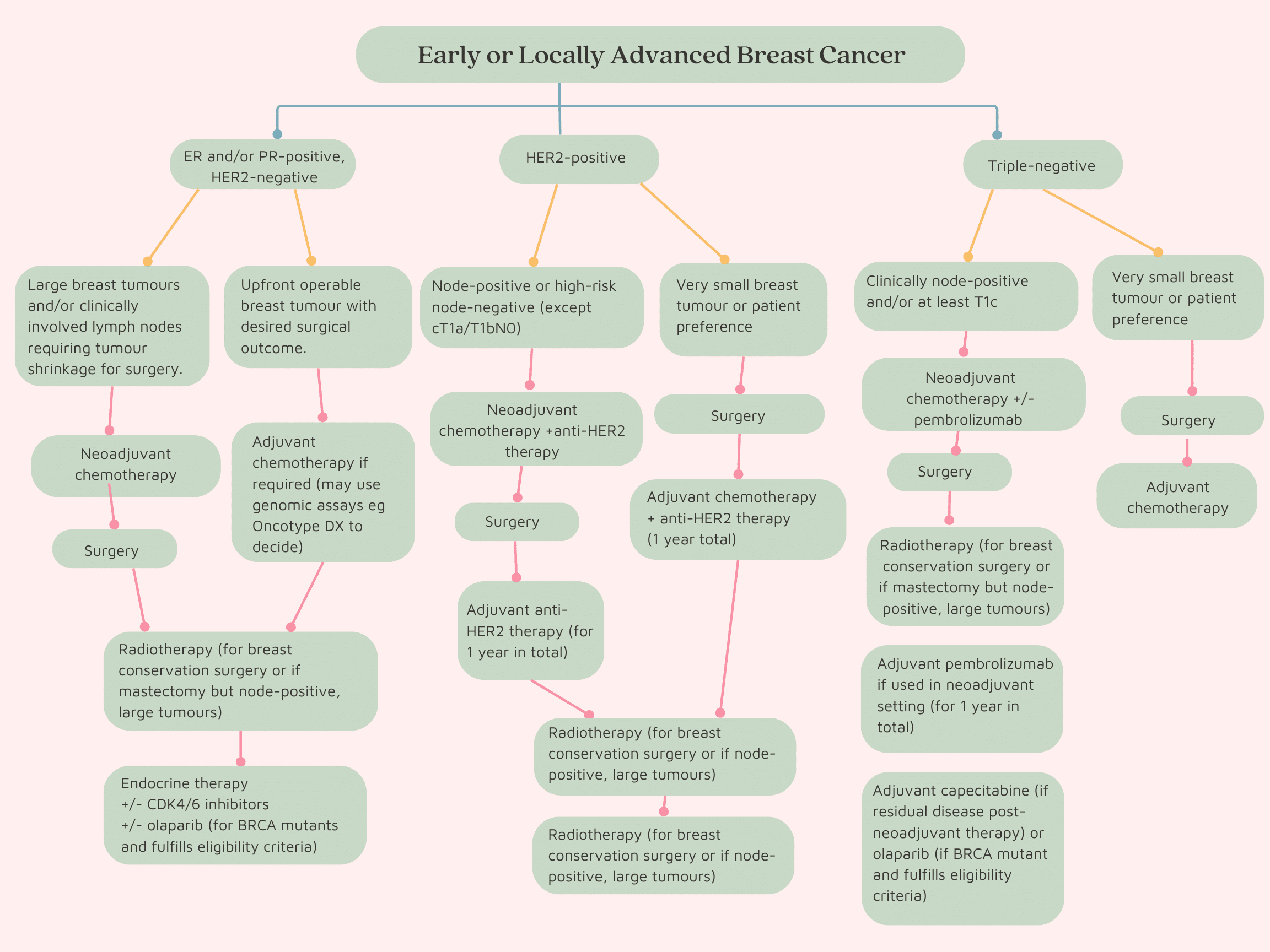
1.2 Overview of Systemic Therapy According to Breast Cancer Subtypes (see treatment algorithm)
(A) Hormone receptor-positive HER2-negative breast cancers
- Endocrine therapy
- Adjuvant endocrine therapy reduces risk of locoregional and distant recurrences, and improves overall survival
- Duration of treatment minimum 5 years with extended duration to 7 or 10 years depending on tumour biological risk
- Adjuvant anti-hormonal agents used in (a) premenopausal women: tamoxifen +/- OFS or AIs+ OFS depending on biological risk. Some women may opt for bilateral salpingo-oophorectomy (especially if they are BRCA mutation carriers) for ovarian ablation (b) postmenopausal women: AIs or sequential AIs and tamoxifen (less common)
- Neoadjuvant endocrine therapy for 4-6 months with an AI in postmenopausal breast cancer can be considered albeit less commonly in older patients with significant comorbidities and whose tumours are strongly hormone receptor-positive
- Chemotherapy
- Chemotherapy reduces the relative recurrence risk and improves survival
- Chemotherapy should be considered in tumours with high clinical risk (such as multiple axillary lymph node-positive, premenopausal node-positive, locally advanced) and those with 0-3 axillary lymph nodes involved and gene expression assay (eg Oncotype DX) showing high-risk features [3]
- although surgery is commonly the initial modality, women with larger tumours or clinical lymph node involvement may benefit from neoadjuvant chemotherapy. However, the chance of a pCR is uncommon
- Chemotherapy regimens: anthracycline/ taxane-based or taxane-based alone
- CDK4/6 Inhibitors
- These are oral agents targeting specific proteins known as the cyclin-dependent kinases 4 and 6, thus blocking the cell cycle and inhibiting cell proliferation
- Abemaciclib for 2 years in combination with endocrine therapy can be considered in stage III or high-risk stage II disease as it has been shown in the monarchE study to significantly improve invasive disease-free survival (iDFS) and overall survival [4]
- Ribocicib for 3 years in combination with an AI+/-OFS can be considered in stage II and III early breast cancer at high risk of recurrence as it has shown iDFS benefit in the NATALEE study [5][6]
- PARP inhibitors
- Bone-modifying Agents
- Bone-modifying agents reduce treatment-related bone loss and fracture rates with the use of AIs and ovarian function suppression
- Bone-modifying agents: (a) RANK ligand-inhibitors: denosumab (b) Bisphosphonates: Intravenous eg. zoledronic acid; Oral eg alendronate, risedronate
- Bisphophonates such as zoledronic acid can also reduce bony recurrence and improve breast cancer mortality in postmenopausal breast cancer although benefit is modest and hence can be considered for use in postmenopausal (natural or therapy-induced) females at moderate to high recurrence risk [9]
1.2.1 Genomic Risk Stratification Tools
Genomic assays such as Oncotype DX assess gene activity in tumour tissue and reports a Recurrence Score ranging from 0-100 providing information on disease aggressiveness and potential chemotherapy benefit. It is used to risk stratify and decide on chemotherapy utility in node-negative or 1-3 axillary lymph node-positive hormone receptor-positive HER2-negative disease. In postmenopausal women with node-negative disease or 1-3 axillary lymph node involvement, adjuvant chemotherapy did not show a benefit if the Oncotype DX recurrence Score was low-risk [10].
(B) HER2-positive and hormone receptor-positive or negative breast cancer
- HER2-targeted therapy and Chemotherapy
- Neoadjuvant therapy is the preferred approach for HER2-positive breast cancers unless for very small tumours
- Neoadjuvant therapy comprises anti-HER targeted drugs (trastuzumab, pertuzumab) and chemotherapy for node-positive or high-risk node-negative HER2-positive disease to achieve treatment response, reduce extent of surgery and optimise adjuvant treatment options.
- Neoadjuvant regimens include: (a) Trastuzumab/pertuzumab concurrent with docetaxel and carboplatin (TCHP regimen); pCR rates about 50% (b) anthracyclines/taxane-based chemotherapy regimen in combination with the anti-HER2 agents (less commonly used)
- Adjuvant anti-HER2 therapy options post-neoadjuvant therapy depend on the pCR status. In event of a pCR trastuzumab+/- pertuzumab is continued for a year in total. In event of a non-pCR, a switch to adjuvant T-DM1 is preferred as it has shown a reduced recurrence rate and mortality [11].
- For patients who have had upfront surgery, adjuvant chemotherapy combined with 1-year of anti-HER therapy should be given
- Adjuvant neratinib, an oral tyrosine kinase inhibitor targeting HER1, HER2 and HER4 signaling pathways, is occasionally given for 1-year post-trastuzumab-based therapy in high-risk HR-positive breast tumours to improve the disease-free survival (but not overall survival) as shown in the ExteNET trial [12][13].
- Endocrine therapy
- Adjuvant anti-hormonal agents used are tamoxifen +/-OFS or AIs+ OFS in premenopausal women or AIs in postmenopausal women
(C) Triple-negative (ER/PR/HER2-negative) breast cancers
- Chemotherapy and Immunotherapy
- Triple-negative breast cancers (TNBCs) are usually treated with neoadjuvant chemotherapy except for very small (<1cm) node-negative tumours
- Chemotherapy regimen consists of carboplatin/taxane-based followed by anthracycline-based chemotherapy sequentially. Adding carboplatin improves pCR rates and event-free survival in TNBC.
- Pembrolizumab 3-weekly (immunotherapy) is added to the chemotherapy backbone in the neoadjuvant phase and then continued post-surgery for a year of treatment in total. Adding pembrolizumab obtains pCR rates of about 65% and improves overall survival [14][15].
- Adjuvant capecitabine (oral chemotherapy) may be given if there is residual disease post-neoadjuvant therapy as it has been shown to improve overall survival for TNBC in the CREATE-X study [16].
- Tumours with ER and/or PR-low expression (1-9%) are biologically similar to TNBCs and can be treated as such with similar treatment strategies and drugs [17].
- PARP inhibitors
- Adjuvant olaparib for one year recommended if gBRCA1/2 mutant and (a) axillary lymph node positive or tumour >2cm after primary surgery or (b) residual breast tumour (no pCR) after neoadjuvant chemotherapy [7].
1.3 Germline Genetic Testing
Genetic testing criteria as per the NCCN guidelines v3.2026 [18] includes the following:
Personal history of breast cancer with features of:
- ≤50yo
- Any age
- Treatment indications:
- Aid in treatment decisions of PARP inhibitors in the advanced and adjuvant setting
- Pathology
- Triple-negative breast cancer (up to 20% of TNBCs harbour a BRCA mutation especially BRCA1, [19] but <6% of all breast cancers are associated with a BRCA mutation)
- Multiple primary breast cancers (synchronous or metachronous)
- Lobular breast cancer with personal or family history of diffuse gastric cancer
- Male breast cancer
- Family history
- ≥1 close blood relative with ANY:
- Breast cancer at ≤50yo
- Male breast cancer
- Ovarian cancer
- Pancreatic cancer
- Prostate cancer with metastatic or high/very-high-risk group
- ≥3 diagnoses of breast and/or prostate cancer (any grade) on the same side of the family including the patient with breast cancer
- ≥1 close blood relative with ANY:
These tests should be done by specialists trained in genetic counselling. Those with pathogenic variants of tumour suppressor genes like BRCA1/2 or PALB2 may opt for bilateral mastectomy to reduce the risk of a second breast cancer. If not done, MRI breasts should be included in the annual surveillance together with the mammogram. Risk-reducing bilateral salpingo-oophorectomy for BRCA or PALB2 mutant carriers should also be considered.
2. Common Systemic Treatment-related Side Effects
Co-managing healthcare providers frequently encounter long-term toxicities in breast cancer patients that emerge months or years after completion of primary cancer treatment. Recognising these can prevent misdiagnosis, improve treatment outcomes and quality of life. The primary oncologists should be informed of any significant adverse effects which should then be dealt with promptly.
2.1 Endocrine Therapy
Tamoxifen [20]
- Ocular complications. Corneal deposits, cataract, epithelial keratopathy, macular edema, maculopathy, optic neuritis, retinal thrombosis, retinopathy, and vision colour changes, requiring ophthalmologic assessment
- Thromboembolic disease, including deep vein thrombosis (<1%), pulmonary embolism [0.75 per 1,000 woman-years] and cerebrovascular accident (stroke) [1.43 per 1,000 woman-years]
- Endometrial carcinoma and uterine sarcoma (incidence rates 2.2 and 0.17 per 1,000 woman-years respectively) in postmenopausal women. If there is any postmenopausal vaginal bleeding, a gynaecology assessment is needed. At least annual gynaecology surveillance is recommended while on tamoxifen
- Hot flushes. Lifestyle and environmental modifications, and drugs like gabapentin, SNRIs e.g. venlafaxine, selective NK3 receptor antagonists e.g. fezolinetant can be administered. Avoid SSRIs (fluoxetine, paroxetine, duloxetine, bupropion) as they inhibit CYP2D6 required to convert tamoxifen to endoxifen, its active metabolite. Do not offer soy (isoflavone) to treat vasomotor symptoms in breast cancer [21]
- Vaginal discharge
- Decreased libido
- Mood changes, including depression
Aromatase Inhibitors (AIs) [20]
- Osteopenia/ osteoporosis, fracture risk. To improve bone health, weight-bearing exercises, calcium and vitamin D supplements, bisphosphonate (e.g. zoledronic acid) or RANK-ligand inhibitors (e.g. denosumab) can be recommended. Regular bone mineral density (BMD) scans every 1-2 years for patients on AIs and/or ovarian function suppression is advisable
- Musculoskeletal effects including arthralgia, joint stiffness, ostealgia and myalgia. Tendinopathy, tenosynovitis, trigger finger, rupture of tendon, and carpal tunnel syndrome may also occur. These side effects are a common cause of non-adherence. Management should include analgesics (acetaminophen, NSAIDs), encouraging exercise, possibly acupuncture
- Cardiovascular risks including ischemic heart disease (IHD), angina pectoris and acute myocardial infarction (AMI)
- Dyslipidemia. Lipid profile should be monitored regularly
- Hot flushes
Ovarian function suppression (using GnRH agonists like goserelin and leuprolide)
- Injection site reactions: hard, uncomfortable lump at the injection site e.g. abdomen
- Menopausal symptoms: hot flushes, night sweats, vaginal dryness, mood changes, insomnia, fatigue, decreased libido
- Musculoskeletal: osteopenia, osteoporosis, arthralgia, myalgia
2.2 Chemotherapy Toxicities [20]
The side effects described here are limited to chemotherapy agents used in the adjuvant or neoadjuvant setting. Majority of them are short-term but some can be longer lasting.
- Peripheral neuropathy. Usually secondary to taxanes, platinums. Management includes physiotherapy and occupational therapy for sensory neuropathy, gabapentin or duloxetine for neuropathic pain. Vitamin B supplements are commonly used although evidence is limited
- Cardiotoxicity AMI, angina pectoris, IHD, cardiac arrhythmias, cardiomyopathy and heart failure. Anthracyclines such as doxorubicin have a 1-20% incidence of cardiomyopathy for cumulative doses from 300 mg/m2 to 500 mg/m2 [20]
- Premature menopause and infertility
- Secondary cancers. Rarely secondary acute myelogenous leukaemia (AML) and myelodysplastic syndrome [MDS] (incidence ≤2% for both) occur in patients treated with doxorubicin. Taxanes can also similarly cause AML and MDS although uncommon
2.3 HER2-Targeted Therapy [20]
- Cardiotoxicity. Trastuzumab and pertuzumab can cause subclinical and clinical cardiac failure. The incidence of decreased left ventricular ejection fraction with trastuzumab is 4% to 22% and left ventricular dysfunction with pertuzumab is about 4%. Trastuzumab-induced cardiac dysfunctions are largely reversible because primary myocyte injury does not occur, as compared to anthracycline-induced cardiotoxicity for which cardiomyocytes show ultrastructural changes. There should be ongoing cardiac surveillance including 2D echo/ECG at intervals determined by the managing oncologist and symptoms such as new dyspnea or edema promptly addressed.
2.4 Immunotherapy Adverse Effects [20]
Immune checkpoint inhibitors can produce varied autoimmune toxicities majority of which occurs during the first few months of treatment but can also occur anytime during treatment and even many months after completion so a high index of suspicion is warranted
- Side effects include thyroiditis or thyroid dysfunction, pneumonitis, hepatitis, colitis, diabetes, pancreatitis, nephritis, adrenal insufficiency, skin toxicities, myositis, myasthenia gravis, hypophysitis, ocular disorders (uveitis, dry eye syndrome, optic neuritis, optic papillitis, retinal detachment), AMI, myocarditis, pericarditis, hematologic toxicities like autoimmune thrombocytopenia and haemolytic anaemia, aseptic meningitis, encephalitis
Notably, symptoms can be non-specific such as cough, abdominal pain, headache, muscle ache, diarrhoea, or fatigue
2.5 Bone-modifying Agents [20]
- Osteonecrosis of the jaw May rarely occur while on adjuvant bone modifying agents (bisphosphonates like zoledronic acid or RANK-ligand inhibitors like denosumab); incidence about <1%-2%. Baseline dental health check is important before initiating treatment
Selected Important Drug Interactions Between Medications Used in Primary Care Practice and Breast Cancer Therapies
With improving breast cancer survival, many contemporary breast cancer therapies carry clinically significant drug-drug interactions with medications used to treat comorbid conditions, intercurrent infections, menopausal symptoms, mental health disorders and cardiovascular risks. Some interactions may affect drug efficacy or toxicities. Interdisciplinary communication and medication adjustments will help to improve safety during shared care.
| Breast Cancer Treatment | Potentially Interacting Medications/Food | Remarks |
| Tamoxifen |
|
|
| Aromatase Inhibitors |
| |
| CDK4/6 Inhibitors (abemaciclib, ribociclib) |
|
|
| Chemotherapy |
|
|
3. Surveillance Guidelines
Surveillance after treatment aims to detect recurrence early, manage toxicities, promote adherence to therapy, detect second primary cancers and support healthy survivorship. Majority of recurrences occur within 5 years of diagnosis but some recurrences occur decades later, particularly for the hormone receptor-positive HER2-negative breast cancers. Locoregional recurrences may be curable, while distant metastases are generally not.
3.1 Clinical Visits
The surveillance schedule as per the ACS/ASCO Guidelines [22] is as follows:
- Every 3–6 months for the first 3 years
- Every 6–12 months during the next 2 years
- Annually thereafter
Symptoms, physical changes, and compliance to systemic therapy assessed at each visit.
| Type of Recurrence | Common Sites | Typical Signs & Symptoms |
| Local Recurrence | Remaining breast tissue (after BCS), chest wall (post-mastectomy) |
|
| Regional Recurrence | Axillary nodes, supraclavicular/ infraclavicular/internal mammary nodes |
|
| Distant Recurrence – Bone | Spine, pelvis, ribs, long bones |
|
| Distant Recurrence – Lung | Lungs, pleura |
|
| Distant Recurrence – Liver | Liver parenchyma |
|
| Distant Recurrence – Brain | Brain parenchyma, meninges |
|
| Contralateral Breast Recurrence / New Primary | Opposite breast |
|
| General Systemic Symptoms | — |
|
3.2 Imaging
Routine follow-up imaging includes:
- Annual mammography +/- US breasts for the preserved breasts or contralateral breast after mastectomy.
- MRI breasts if high-risk criteria met which includes patients with germline BRCA1/2 mutations and other high-risk pathogenic variants, previous chest radiation for lymphoma
- Bone scans, CT, PET-CT or MRI scans if clinically indicated
3.3 Laboratory Monitoring
- Blood tests are individualized based on prior and current treatment exposures to monitor for short and longer-term side effects. Certain indices like alkaline phosphatase and calcium levels may suggest recurrences in distant sites such as the liver for the former and bones for both. Of note, tumour markers lack sensitivity and specificity to detect recurrences.
3.4 Long-term Side Effects, Lifestyle Modifications and Preventive Care
The following issues may arise during surveillance and timely communication with the primary oncologist or breast surgeon will enhance outcomes.
- Arm Lymphoedema
- A lymphoedema therapist may be needed in selected cases
- Cancer-related fatigue
- Can be multifactorial and important to identify causative factors like anaemia, thyroid dysfunction, low cortisol levels, cardiac dysfunction, mood disorders, sleep disturbances and pain. Encourage patients to maintain routine physical activity if able
- Cognitive impairment
- Identify potentially reversible factors such as depression, fatigue and sleep disorders
- Suggest use of reminder notes, daily planners
- Sleep-related disorders
- Could be due to underlying causes like medications, pain, mood disorders. Emphasise good sleep hygiene (limit heavy meals and discontinue screen time before bed, keep regular sleep hours), decrease alcohol and caffeine, sleep aid medication if necessary but not long-term. Advise on regular physical activity during waking hours
- Mental health
- Anxiety, depression, fear of recurrence and body image issues are common
- Recommend breast cancer support groups, psychological counselling, psychiatry referral if severe
- Monitor for chronic conditions and comorbidities like hyperlipidaemia, hypertension, diabetes, ischemic heart disease, stroke
- To encourage screening for other cancers like colorectal cancer in those aged ≥50 years and cervical cancer in those 25-69 year old who have been sexually active
- Fertility issues
- Prior breast cancer diagnosis is not a contraindication to pregnancy but the timing in relation to treatments such as endocrine therapy needs to be discussed with the oncologist. In the POSITIVE study, temporary interruption of adjuvant endocrine therapy after 18-30 months, with a 3-month washout period, and then attempting pregnancy during a period of up to 2 years, followed by resumption of endocrine therapy, did not impact short-term breast cancer outcomes in lower-risk hormone receptor-positive HER2-negative breast cancers [23]
- Regular physical activity
- Aim for ≥150 minutes/week of moderate intensity aerobic activity or 75 minutes of vigorous aerobic exercise per week. Strength training exercises and daily stretching is also beneficial
- Smoking cessation and moderate alcohol intake
- Try to abstain from alcohol or limit alcohol intake to a glass or less per day
- Weight management and dietary optimisation
- Patient should be counselled to maintain a healthy weight and increase physical activity. Keep BMI in health range of 18.5 to 22.9 kg/m2. Maintain a diet high in vegetables, fruits, whole grains and legumes, and lower in saturated fats, processed foods and red meat
- Sexual health support
- Survivors may have issues like decreased libido, vagina dryness and dyspareunia. Non-hormonal, water-based lubricants and moisturisers may help but they may also need professional sexual health counselling. Hormone replacement therapy is contraindicated in breast cancer.
Conclusion
With modern treatments and longer survival, oftentimes multiple healthcare providers are responsible for the management of breast cancer patients. Key issues in this survivorship journey include recognising treatment-related toxicities, knowledge of possible drug interactions, and ensuring adherence to ongoing treatment and surveillance. Providing healthy lifestyle interventions and psychosocial support, and most importantly coordinating care with the primary medical oncologist and breast surgeon when new red-flag symptoms arise will enable the healthcare team to provide comprehensive patient care for the best possible outcome.
Disclaimer:
This article is intended for educational purposes and provides a general overview of current treatment principles and survivorship considerations in early breast cancer. It is not a substitute for specialist clinical judgment, multidisciplinary discussion, or institution-specific protocols. Treatment decisions should be individualised, and readers should refer to current guidelines where appropriate.
*Article contributed by Dr Tan Sing Huang, Senior Consultant Medical Oncologist at OncoCare Cancer Centre
References
[1] NCCN Clinical Practice Guidelines in Oncology: Breast Cancer; Version 2.2026-February 27, 2026
[2] Lohrisch et al. Impact on Survival of Time From Definitive Surgery to Initiation of Adjuvant Chemotherapy for Early-Stage Breast Cancer. J Clin Oncol 2006; 24:4888-4894
[3] Loibl et al. Early breast cancer: ESMO Clinical Practice Guideline for diagnosis, treatment and follow-up. Annals of Oncology 2024; 35:159-182
[4] Johnston et al. Overall survival with abemaciclib in early breast cancer, Annals of Oncol 2026; 37:155-165
[5] Slamon et al. Ribociclib plus Endocrine Therapy in Early Breast Cancer. N Engl J Med 2024; 390:1080-1091
[6] Crown et al. Adjuvant ribociclib plus nonsteroidal aromatase inhibitor therapy in patients with HR-positive/HER2-negative early breast cancer: 5-year follow-up of NATALEE efficacy outcomes and updated overall survival. ESMO Open, Volume 10, Issue 11, 105858
[7] Tutt et al. Adjuvant Olaparib for Patients with BRCA1– or BRCA2-Mutated Breast Cancer. N Engl J Med 2021;384:2394-2405
[8] Garber J: OlympiA—Phase 3, multicenter, randomized placebo-controlled trial of adjuvant olaparib after (neo)adjuvant chemotherapy in patients with germline BRCA1/BRCA2 pathogenic variants and high-risk HER2-negative primary breast cancer: Longer-term follow-up. Clin Cancer Res 2025, 31(12_Supplement):GS1-09
[9] Eisen et al. Use of Adjuvant Bisphosphonates and Other Bone-Modifying Agents in Breast Cancer: ASCO-OH (CCO) Guideline Update. JCO 2022; 40:787-800
[10] 21-Gene Assay to Inform Chemotherapy Benefit in Node-Positive Breast Cancer. N Engl J Med 2021;385:2336-2347
[11] Geyer et al. Survival with Trastuzumab Emtansine in Residual HER2-Positive Breast Cancer. N Engl J Med 2025;392:249-257
[12] Martinet al. Neratinib after trastuzumab-based adjuvant therapy in HER2-positive breast cancer (ExteNET): 5-year analysis of a randomised, double-blind, placebo-controlled, phase 3 trial. Lancert Oncol 2017; 18:1688-1700.
[13] Holmes et al. Overall survival with neratinib after trastuzumab-based adjuvant therapy in HER2-positive breast cancer (ExteNET): A randomised, double-blind, placebo-controlled, phase 3 trial. European Journal of Cancer 2023; 184:48-59
[14] Schmid et al. Pembrolizumab for Early Triple-Negative Breast Cancer. N Engl J Med 2020;382:810-821
[15] Schmid et al. Overall Survival with Pembrolizumab in Early-Stage Triple-Negative Breast Cancer. N Engl J Med 2024 Nov 28;391(21):1981-1991
[16] Masuda et al. Adjuvant Capecitabine for Breast Cancer After Preoperative Chemotherapy. N Engl J Med 2017;376:2147-2159
[17] Burstein et al. Tailoring treatment to cancer risk and patient preference: the 2025 St Gallen International Breast Cancer Consensus Statement on individualizing therapy for patients with early breast cancer. Annals of Oncology 2025; 36:1433-1446
[18] NCCN Clinical Practice Guidelines in Oncology: Genetic/Familial High-Risk Assessment: Breast, Ovarian, Pancreatic, and Prostate; Version 3.2026-February 19, 2026
[19] Gonzalex-Angulo et al. Incidence and outcome of BRCA mutations in unselected patients with triple receptor-negative breast cancer. Clin Cancer Res 2011; 17:1082-9
[20] UpToDate® Lexidrug™
[21] NICE guideline: Early and locally advanced breast cancer: diagnosis and management (Published: 18 July 2018. Last updated: 14 April 2025). www.nice.org.uk/guidance/ng101
[22] Runowicz et al. American Cancer Society/American Society of Clinical Oncology Breast Cancer Survivorship Care Guideline. CA Cancer J Clin 2016; 66:43-73
[23] Partridge et al. Interrupting Endocrine Therapy to Attempt Pregnancy after Breast Cancer. N Engl J Med 2023;388:1645-1656