

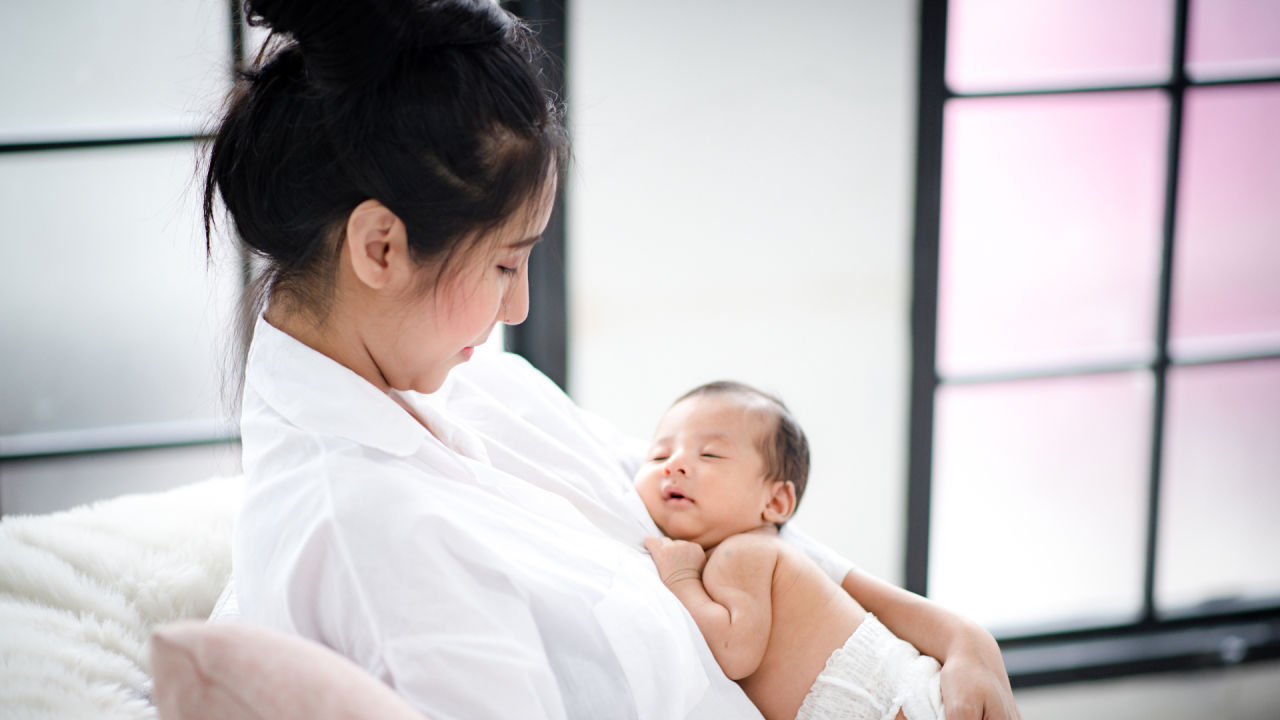
Breastfeeding, Breast Cancer, and Being Breast Aware

Most mothers would agree that breastfeeding is one of the most gratifying yet challenging and sacrificial parts of being a mum. On top of battling latch issues, juggling the delicate balance between oversupply and undersupply, and being chained to a breast pump several times a day, mothers often grapple with breastfeeding complications such as sore/damaged nipples, engorgement, clogged ducts and mastitis. Such complications present as nipple changes and/or discharge and breast lumps; which are identical to symptoms of breast cancer. How can you tell the difference? Let’s tackle the myths associated with breastfeeding and breast cancer. Does developing a lump during breastfeeding mean breast cancer? Developing breast lumps during lactation is very common and is often non-cancerous. Lumps typically develop due to clogged ducts or mastitis. Clogged ducts occur from blocked milk ducts, which if not cleared, can lead to mastitis (breast inflammation). Mastitis can also be caused by infection. Occasionally, mastitis can be complicated by breast abscess formation (pus collection). Benign lumps such as cysts (fluid sacs) and solid nodules which are not related to breastfeeding can also form during this time. Rarely, a breast lump which is discovered during breastfeeding is due to breast cancer. Can breastfeeding women develop breast cancer?  Breast cancer remains the leading cause of cancer among women in Singapore and one in every 13 women will develop breast cancer in their lifetime.  One in 6 women diagnosed with breast cancer are below 40 years of age.  Cancer may occur in a lady who is breastfeeding though the incidence is low.  While breastfeeding has been suggested to lower a woman’s risk of developing breast cancer, performing self-examination regularly after latching or pumping may allow you to recognise any early changes in your breasts. Can breastfeeding reduce cancer risk?  Yes, it does! Studies have indicated that for every 12 months of breastfeeding, the relative risk of developing cancer is lowered by 4.3%.  This is in addition to the 7.0% reduction in risk observed for every birth [1].  The proposed rationale is the hormonal changes that occur during pregnancy and breastfeeding.  With breastfeeding delaying the return of our menstrual cycle, our bodies are less exposed to oestrogen.  Oestrogen is an important hormone that is produced by our ovaries that assist in puberty, menstrual cycle, reproduction and bone strength.  They are present in our male counterparts in smaller amounts.  Prolonged excessive exposure has been linked to a possible higher risk of breast cancer development [2]. Mammograms are safe for breastfeeding mothers. Can breastfeeding mothers undergo mammograms? Yes, they can! Breast density increases during lactation due to the presence of milk within the breasts, which can obscure findings in mammograms. Lactating mothers are thus encouraged to empty their breasts via direct nursing or pumping prior to their mammograms to improve image clarity and diagnostic accuracy. Breastfeeding mothers of screening age (40 and above) are advised to continue mammographic screening at regular intervals. Lactating mothers experiencing symptoms which need further investigation may undergo mammograms and/or ultrasound studies based on your doctor’s evaluation. Consult with your doctor to determine the most appropriate option for you [3].  Conclusion It is normal for your breasts to change in shape and size after pregnancy and childbirth, whether you breastfeed or not. It is crucial for you to understand and pay attention to your body, as a cancer diagnosis and treatment can affect your life as a mother. If you have any concerns or notice anything unusual, please don’t hesitate to schedule an appointment with us for the sake of yourself and your little one. *Article contributed and reviewed by Dr Lee Wai Peng, Senior Consultant and Breast Surgeon at Solis Breast Care & Surgery Centre, and Dr Sonia Lee, Consultant Radiologist at Luma Women’s Imaging Centre. References: [1] Collaborative Group on Hormonal Factors in Breast Cancer. Breast cancer and breastfeeding: collaborative reanalysis of individual data from 47 epidemiological studies in 30 countries, including 50302 women with breast cancer and 96973 women without the disease. Lancet. 2002 Jul 20;360(9328):187-95. doi: 10.1016/S0140-6736(02)09454-0. PMID: 12133652. [2]  Chen Y, Jiang P, Geng Y. The role of breastfeeding in breast cancer prevention: a literature review. Front Oncol. 2023 Sep 7;13:1257804. doi: 10.3389/fonc.2023.1257804. PMID: 37746260; PMCID: PMC10512942. [3] Expert Panel on Breast Imaging:; diFlorio-Alexander RM, Slanetz PJ, Moy L, et al. ACR Appropriateness Criteria® Breast Imaging of Pregnant and Lactating Women. J Am Coll Radiol. 2018 Nov;15(11S):S263-S275.

Read more

A Mammogram for Mothers: The Gift of Breast Cancer Screening

Even princesses can get cancer. Last month, the world was shaken by Princess of Wales Kate Middleton’s cancer diagnosis. And just before that, actress Olivia Munn’s candid revelation of her battle with breast cancer made headlines. Their stories are a reminder that cancer does not need permission to disrupt lives. Both young mothers in their early 40s, their high-profile diagnoses have sparked conversations about early detection, as well as the effects a cancer diagnosis can have on motherhood. Know Your Breasts While cancer survival rates have improved over the years, cancer remains the highest cause of death in Singapore, accounting for 28.2% of all deaths from 2017-2021 [1]. Breast cancer constitutes 24.6% of all diagnoses, making it the most common cancer among women in Singapore, contributing to 1 in 6 cancer deaths among females in the country [1]. Breast cancer treatments are more effective and less invasive when the cancer is found early. One key to early detection is monthly breast self-examinations. If you are aged 20 years or older, it is important to be familiar with the way your breasts normally look and feel, to stay abreast of any worrying changes. Regular breast screenings are another key to detecting breast cancer at an early stage, when it is most treatable. According to the National Population Health Survey 2022, despite 9 in 10 women in Singapore aged 50 to 69 being aware of mammograms, only 37.6% of this demographic had undergone one in the last two years. The primary reason cited for this low mammography uptake is the perception that screening is unnecessary when you are healthy [2]. Munn’s cancer would have been detected later had it not been for proactive health measures, which included an annual mammogram. If there had been any further delay, her treatment options would be limited [3]. Some breast cancer symptoms may not be noticeable to the naked eye, therefore regular screenings are essential regardless of symptoms. Waiting until symptoms develop to have a mammogram may result in the cancer being detected at an advanced stage. Source: Ministry of Health Singapore [4] How Early Detection Makes a Difference It is important to act early than react late. Breast self-examinations complement, but do not replace screenings like mammograms. Mammograms are instrumental in helping to detect lumps before they can be felt by touch and become worse. Another reason women in Singapore cited for not doing their mammograms is the fear of the outcome [2]. Information about your body through screening tests is key. While anxiety surrounding testing results is understandable, the benefit of early detection for improving one’s chances of survival cannot be stressed enough. Annual mammograms can reduce mortality by approximately 40% [5]. The BB (Boob Bead) keychain and infographic below illustrate the differences between the size of lumps detected through breast self-examination vs regular screening. Each bead on the keychain represents different lump sizes based on the detection method. With regular mammograms and ultrasound, it is possible to detect lumps that are 2-3 mm in size, a vivid reminder of why regular screenings matter. The boob bead keychains at Solis (left) are made by survivors and volunteers, as part of efforts to educate and encourage women to be breast aware. Being a Mother and Cancer Patient Being a cancer patient is mentally draining, as one copes with the shock of the diagnosis and is wrapped up in a whirlwind of testing, treatments and decisions to make. For mothers with young children, this mental load is exacerbated, as they also need to worry about how their children will emotionally cope. “You realise cancer doesn’t care who you are; it doesn’t care if you have a baby. It comes at you and you have no choice but to face it head-on,” says Munn [6]. The young mother of one notes that one of the hardest things when recovering post-mastectomy was not being able to carry her son (who was only one-year old then) despite his pleas [7]. Studies have highlighted the emotional burden experienced by mothers with cancer. Not only do they need to grapple with the physical, mental and emotional toll of the disease, but they may also struggle with guilt from a perceived failure to meet parenting expectations [8]. Amidst additional stress from other aspects of their lives such as relationships and employment, these mothers demonstrate remarkable resilience in balancing dual roles as parents and patients. Let us make this Mother’s Day count by honouring the mothers whose strength and love light up the world. Give your mother the gift of clarity by reaching out to us to schedule a mammogram, and help spare her from the anguish of a late diagnosis. 1 Health Promotion Board, “Singapore Cancer Registry Annual Report 2021”  2 Ministry of Health Singapore, National Population Health Survey 2022 3 People, “Olivia Munn, 43, Reveals She Was Diagnosed with Breast Cancer and Had Double Mastectomy” 4 Ministry of Health Singapore, Health Screening Guidelines 5 “Benefits and Risks of Mammography Screening in Women Ages 40 to 49 Years” 6 People, “Olivia Munn’s ‘Terrifying’ Breast Cancer Diagnosis After Baby Joy: 4 Surgeries in 10 Months, and Medically Induced Menopause (Exclusive)” 7 People, “Olivia Munn Says Not Being Able to Pick Up Son After Mastectomy Was ‘One of the Hardest Things’ (Exclusive)” 8 “Mothers with Cancer: An Intersectional Mixed-Methods Study Investigating Role Demands and Perceived Coping Abilities” 
Read more

4 Easy Ways to Support A Loved One with Breast Cancer

Being diagnosed with breast cancer can be a life-changing experience for many women as the diagnosis can have a significant impact on the patient’s physical, emotional and mental well-being. While medical treatment is essential for recovery, receiving strong support from family, friends and through a cancer support network can play an equally important role in the healing process.  In a large study “Postdiagnosis social networks and breast cancer mortality in the After Breast Cancer Pooling Project” published in the journal Cancer, women diagnosed with breast cancer who had the most social ties, such as spouses, community relationships, friendships, and family members, were less likely to have a breast cancer recurrence and less likely to die from breast cancer than women who were socially isolated.  In this article, we will explore some ways on how family members and close friends can provide support to their loved ones who are battling breast cancer.  Listen & Offer Emotional Support Discovering that she has breast cancer can be a shocking experience for a woman and that can elicit a range of emotions such as anger, fear, sadness and depression[4]. These feelings can fluctuate and may change throughout the day. One of the best ways to support someone with breast cancer is to simply be present with them and allow them to express their emotions. Try not to be afraid when they shed tears as this may be a helpful way for the patient to express her feelings[1]. Holding hands or giving a hug can also be a meaningful gesture of support.  It is also common for women diagnosed with breast cancer to feel angry about their diagnosis, and they may direct their frustrations towards their loved ones[1]. It’s essential to remember that this is often due to the distress of the cancer diagnosis and is not a personal attack.  At times, women diagnosed with breast cancer might not want to be reminded about their cancer constantly.  Having a normal conversation about everyday things and sharing a joke can sometimes be very welcoming. Do not take it personally if they do not want to talk about their cancer and respect their need for privacy or to have some quiet time. Provide Practical Help Apart from providing emotional support, it can be useful to offer some practical support too. Check in and ask if there is anything specific that they need help with. Here are some suggestions[2] on how to offer practical help to someone with breast cancer: Prepare meals that can be stored in the freezer for them to eat later Ferry them to and/or from the hospital for blood tests, scans and medical appointments Assist with cleaning or laundry tasks Take their pets for a walk or to the vet, if needed Offer to do grocery shopping on their behalf Volunteer to take their children to and/or from school Bring lunch over and stay for a chat Check in with them before visiting in case they are not feeling well Research Treatment Options for Breast Cancer Once a diagnosis of breast cancer has been confirmed through imaging tests and a biopsy, the breast cancer specialist will work with the patient to develop a treatment plan. The treatment options recommended will depend on the specific diagnosis, but may include a combination of the following:  Surgery Surgery is often the first step in the treatment of breast cancer and this may involve either a lumpectomy (removal of the tumour and some surrounding tissue) or a mastectomy (removal of all breast tissue). The type of surgery will depend on the extent and location of the breast cancer. Breast reconstruction options can also be discussed with a plastic surgeon.  Radiation therapy Radiation therapy uses high energy X-rays to destroy cancer cells and shrink tumours. Surgery is usually conducted first and radiation therapy may be recommended afterwards to eradicate any remaining cancer cells and lower the risk of recurrence. Chemotherapy This involves the use of drugs to kill cancer cells at the original cancer site and any other parts of the body where the cancer may have spread. Depending on the diagnosis, chemotherapy may be given after surgery to lower the risk of cancer recurrence, or before surgery to shrink the tumour. It can also be used to treat metastatic breast cancer that has spread to other parts of the body.  Hormonal therapy This is recommended for hormone receptor-positive breast cancer as estrogen can make these types of cancers grow. Hormonal therapy medicines lower the risk of estrogen in the body and block its action on breast cancer cells, thus reducing the risk of recurrence after surgery.  Learn More About Post Mastectomy/Surgery Care Changes In Breast Appearance Whether a mastectomy or lumpectomy is performed, both types of breast surgery will result in noticeable changes to the appearance of the breast and chest area. With a mastectomy, all breast tissue will be removed, and if reconstructive surgery is not performed, the chest will appear flat, often with a horizontal scar where the breast used to be.  The Can-Care Post-Op Kit which consists of a Post-Op Bra and Post-Op Moulded Breast Form are specially designed for immediate use after surgery to provide a temporary shape replacement without compromising the healing of the wound. A small squeeze ball for hand exercises to reduce stiffness in the patient’s arm and shoulder is also included in the Can-Care Post-Op Kit.  While breast surgery may not impact how some women feel about their bodies, others may struggle to accept the changes. Apart from reconstructive surgery to restore the natural appearance of their breasts, breast prosthesis, which provides an artificial breast form that can be placed in a bra cup is another option. Can-Care offers a variety of breast prostheses in different shapes and sizes as an alternative to reconstructive surgery.  Lifestyle changes After breast surgery, a woman may have difficulty lying comfortably in bed due to restricted movement. Many women find sleeping on multiple pillows placed on their upper back helpful. Keeping the torso elevated also helps to relieve pressure on the surgery area, and helps to reduce swelling and pain.  The breast cancer specialist may also advise the patient to do some light arm exercises after breast surgery to maintain the mobility in the arm and lower the risk of lymphoedema (swelling of the arm due to fluid retention).  Can-Care has specially-engineered compression arm sleeves which exert a consistent pressure on the blood vessels and lymph network. These sleeves will make it easier for the patient to remove the extra lymph fluid which causes the swelling. After surgery, avoid strenuous activity, heavy lifting and vigorous exercise which may aggravate the arm and impair the healing process.  The road to recovery for breast cancer patients can be a long and challenging journey. But with the love and support of family and friends, patients can embark on the healing journey with more ease.  Getting professional support and advice from a breast cancer specialist or professional support network is also important. Can-Care offers a comprehensive range of breast care products, professional counselling services and support programs to strengthen the recovery journey for breast cancer patients after surgery. Reach out to Can-Care, to help support a woman’s non-medical needs during her post-treatment journey.   [1] Can-Care,”What To Expect After Surgery”  [2] Breastcancer.org, “Women With More Social Connections Have Better Survival” [3] Cancer Research UK, “How To Support Someone With Cancer” [4] Breastcancer.org, “Caring For Someone”  Other References: [1] Breast Cancer Now, “How To Support Someone With Breast Cancer”
Read more