






What is DCIS?
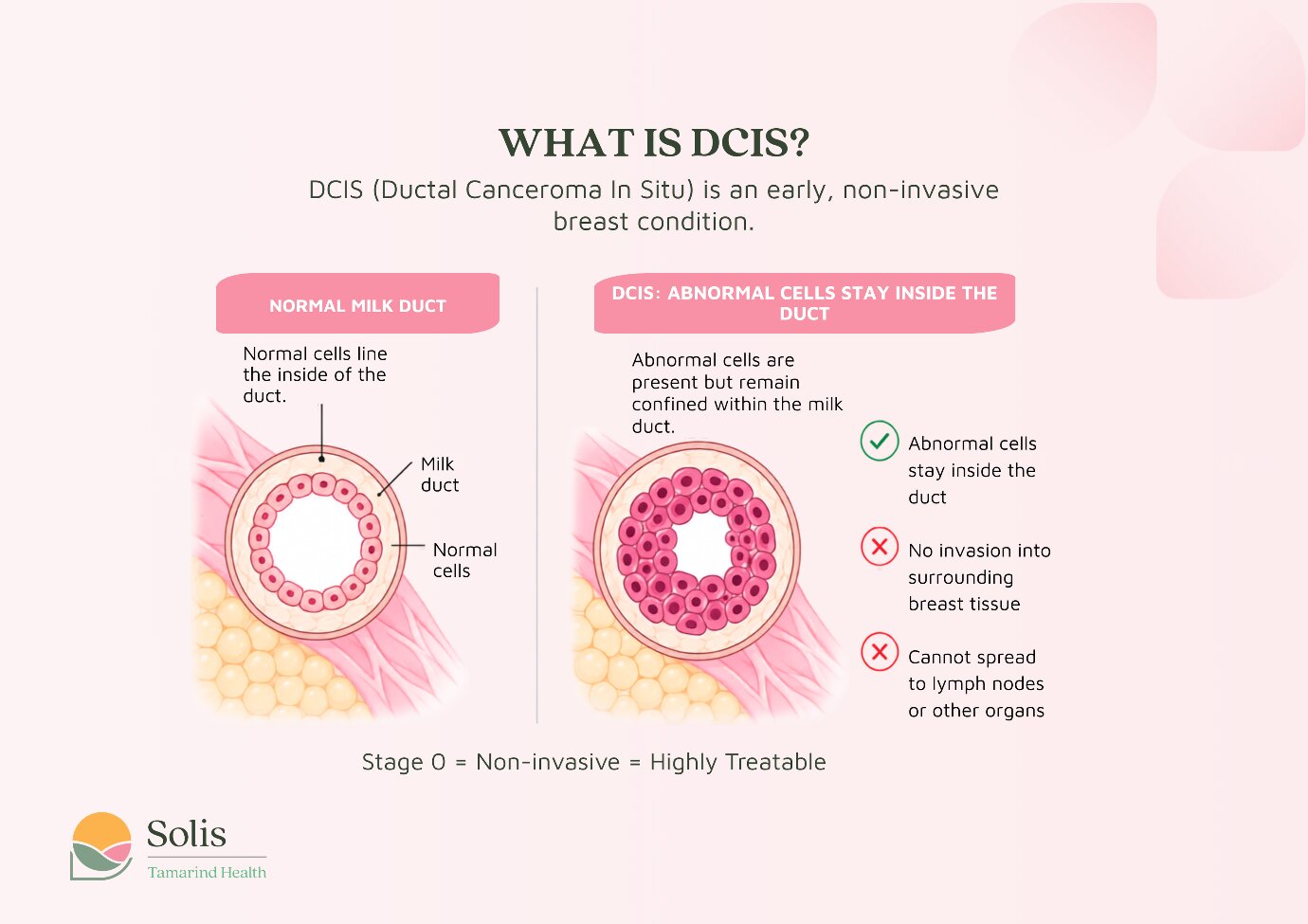
DCIS (Ductal Carcinoma In Situ) is an early, non-invasive breast lesion in which abnormal cells are found within the breast milk ducts but have not spread into the surrounding breast tissue.
It is often referred to as Stage 0 breast cancer because the abnormal cells remain confined within the ducts and have not acquired the ability to invade surrounding tissues or spread elsewhere in the body.
DCIS is highly treatable when detected early and accounts for a significant proportion of screen-detected breast abnormalities. It is often identified before symptoms develop.
DCIS in Singapore: Why it matters
Breast cancer is the most common cancer among women in Singapore. Increasing adoption of mammogram screening, supported by greater awareness of early detection, has led to more cancers being identified at an early stage, including DCIS.
Key Singapore context:
- Over 57% of breast cancers in Singapore are now diagnosed at Stage I or earlier (NRDO, 2024)
- Breast cancer survival in Singapore has improved from ~50% (1970s) to over 83% (2018–2022)
- Widespread mammogram screening has contributed to earlier detection and improved outcomes
How common is DCIS?
Globally, DCIS has become much more frequently diagnosed due to screening:
- DCIS accounts for about 20–25% of newly detected breast cancer cases in screened populations
- Around 70–90% of DCIS cases are detected via mammogram screening
- Incidence has increased several-fold since widespread mammography screening began
In Singapore screening programmes, DCIS is commonly detected through identification of microcalcifications on mammograms.
Symptoms of DCIS
DCIS usually does not cause symptoms.
When present, symptoms may include:
- Breast lump (uncommon)
- Nipple discharge (sometimes blood-stained)
- Changes seen only on imaging
Most cases are diagnosed through routine mammograms rather than physical symptoms.
How DCIS is diagnosed in Singapore
Mammogram screening
- Detects microcalcifications, the most common sign of DCIS
- About 1 in 1000 screening mammograms may detect DCIS
Biopsy
Confirms diagnosis and determines:
- Grade (low, intermediate, high)
- Hormone receptor status
Additional imaging
MRI or ultrasound may be used for further evaluation in selected cases.
Treatment options for DCIS in Singapore
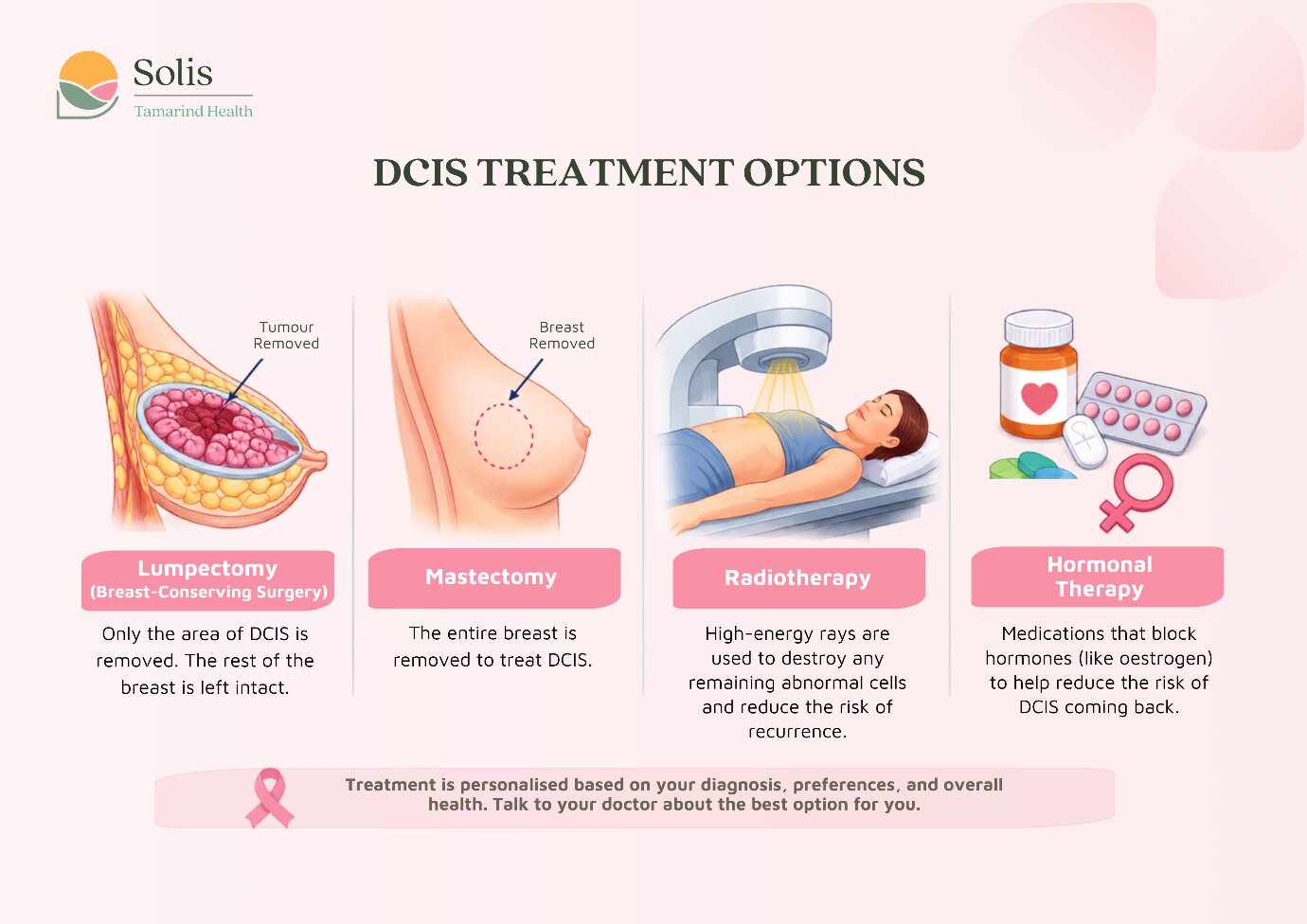
Treatment is highly individualised and guided by multidisciplinary breast care teams.
Surgery
- Lumpectomy (breast-conserving surgery)
- Mastectomy (for extensive or multifocal DCIS)
Surgery remains the mainstay of treatment for DCIS and is generally recommended unless a patient is not medically fit for surgery.
Radiotherapy
- Often recommended after lumpectomy
- Reduces the risk of DCIS or invasive breast cancer recurring in the treated breast
Hormonal Therapy (Chemoprevention)
Hormonal therapy may be recommended for patients with hormone receptor-positive DCIS following surgery.
Its role is primarily preventive (chemoprevention) and may reduce the risk of developing subsequent hormone-sensitive breast cancers by approximately 50%.
However, hormonal therapy does not improve outcomes for the DCIS that has already been treated and does not prevent non-hormone-sensitive breast cancers. The decision to use hormonal therapy should be discussed with your breast specialist, taking into account the potential benefits and side effects.
Prognosis of DCIS
DCIS has an excellent prognosis when treated appropriately.
- DCIS is associated with a 5-year survival rate of over 98% following appropriate treatment.
- DCIS has a very low breast cancer-specific mortality rate when treated
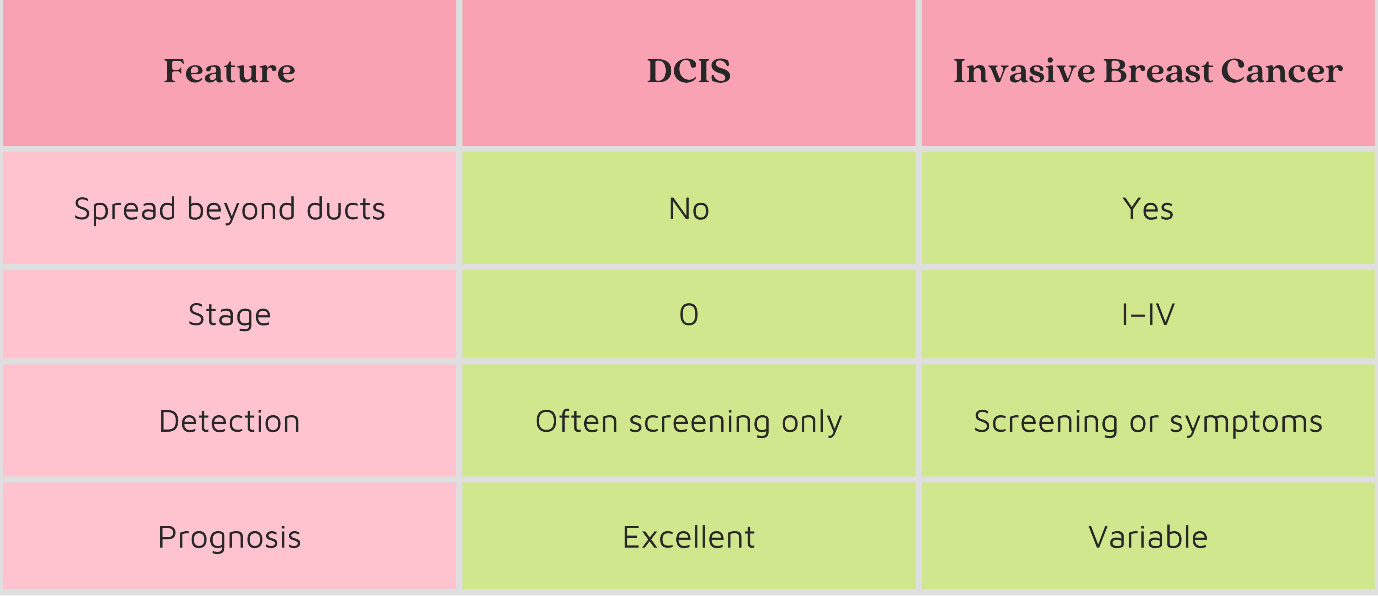
DCIS vs Invasive Breast Cancer
FAQs about DCIS in Singapore
Is DCIS cancer?
DCIS (Ductal Carcinoma in Situ) is not considered an invasive cancer because the abnormal cells remain confined within the milk ducts and have not spread to the surrounding breast tissue.
It is often referred to as Stage 0 breast cancer, reflecting its potential to develop into invasive breast cancer if left untreated.
Unlike invasive breast cancer, DCIS cannot spread to lymph nodes or other parts of the body. However, some untreated cases may progress to invasive breast cancer over time, which is why treatment and follow-up are important.
How serious is DCIS?
DCIS is generally not immediately life-threatening. However, if untreated, it may increase the risk of developing invasive breast cancer.
What is the survival rate for DCIS?
DCIS is associated with a 5-year survival rate of close to 100% following appropriate treatment.
Although the prognosis is excellent, there remains an estimated 3% long-term risk of experiencing a subsequent breast cancer event, such as the development of a new DCIS or invasive breast cancer.
In addition, women who have been diagnosed with DCIS may have a higher underlying risk of developing future breast cancers compared with the general population, which is why ongoing follow-up and breast surveillance are important
Do all DCIS cases need surgery?
Most cases require surgery (lumpectomy or mastectomy). The exact approach depends on:
- Size
- Grade
- Extent of disease
How is DCIS usually found in Singapore?
Most cases are detected through:
- Routine mammogram screening
- Follow-up of abnormal calcifications
Can DCIS turn into invasive cancer?
Yes, some untreated DCIS may progress to invasive breast cancer over time, which is why treatment or careful monitoring is recommended.
What should I do if I have been diagnosed with DCIS?
A diagnosis of DCIS (Ductal Carcinoma In Situ) can feel overwhelming, but it is important to remember that it is an early, non-invasive and highly treatable condition.
After diagnosis, your care will typically move from routine screening into a structured assessment and treatment pathway. This usually involves follow-up imaging, specialist review, and discussion of treatment options such as surgery, radiotherapy, or hormone therapy where appropriate.
It is important to continue follow-up care as advised by your doctor or breast care team. This may include scheduled imaging or clinical reviews at your designated screening centre or specialist clinic.
If at any point there is uncertainty about your diagnosis, imaging results, or recommended treatment plan, seeking a specialist breast assessment can help provide clarity and reassurance.
Where can I seek further clarification in Singapore?
If you would like further clarification, a second opinion, or a more personalised breast assessment, you may consider consulting a breast specialist at Solis Breast Care & Surgery Centre.
With a focus on breast health assessment and management, including diagnostic evaluation, second opinions, and surgical care, Solis aims to help patients better understand their condition and make informed decisions about next steps.
Final Note
DCIS is a highly treatable condition with an excellent prognosis when managed appropriately. A diagnosis can understandably feel overwhelming, but early assessment and treatment can help patients move forward with confidence.
Article contributed and reviewed by Dr Chan Ching Wan, Senior Consultant and Breast Surgeon at Solis Breast Care & Surgery Centre.
References
- National Cancer Institute (NCI), Ductal Carcinoma In Situ (DCIS): Overview of stage 0 breast cancer, diagnosis, and treatment
- Breast Cancer Research / Springer Nature, Long-term outcomes and screening impact in ductal carcinoma in situ (DCIS)
- MDPI Cancers Journal, Radiological detection of DCIS and mammographic screening statistics
- British Journal of Cancer, Incidence trends and the impact of population-based mammography screening on DCIS diagnosis
- Singapore Cancer Registry (NRDO), Singapore Cancer Registry Annual Report 2023: Incidence, Survival and Mortality Trends in Singapore